 3 months ago
119
3 months ago
119

 BBC
BBC
Fake accounts gained 81,000 followers on TikTok and 22,000 on Instagram
Whenever somebody stares at Sasha-Jay Davies in a supermarket, she panics, thinking they recognise her face and are about to confront her.
For almost four years, she has been accused of leading men on, arranging to meet and not showing up, and harassed by complete strangers.
This is because Sasha-Jay's photographs were stolen from her social media accounts and used by someone to build relationships with men and friendships with other women.
South Wales Police is investigating, while online safety lawyer Yair Cohen said people who catfish in this way do so because they are frequently motivated by "low self-esteem" and enjoy the power it gives them.
"I've had boys approach me in person, harassing me and accusing me of texting them, leading them on, or making plans to meet up alongside conversations I never had," Sasha-Jay, who is 19, said.
"I used to go out a lot but now I hardly ever go out because I'm scared what man is going to approach me next.
"It's really difficult and I wouldn't wish it on my worst enemy."
So far the men who have approached her have been nice, but she worries about what could happen, adding: "It is terrifying to be confronted over something you didn't do and to realise someone is using your face to manipulate others."
My identity was stolen to catfish men, says Sasha-Jay Davies
Sasha-Jay, from Aberdare, Rhondda Cynon Taf, says she has had about 20 men and several women contact her on social media, believing they know her.
What is even more chilling, though, is that it is not just her photos the identity thief has taken.
There have been cruel posts relating to her late dad, including a fake pancreatic cancer certificate, and they have also reposted racial slurs that have impacted on her "character and reputation".
Pictures of other women's bodies who have a similar build to Sasha-Jay have also been posted, attracting many strange comments from men which has made her feel "really uncomfortable" and "violated".
"The level of calculation and malice behind this is something I struggle to understand," she said.
"They know absolutely everything about me."
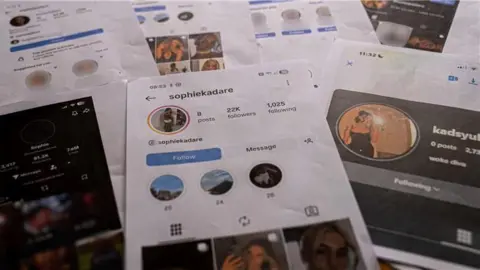
The impersonator continually changed the username linked to the fake Instagram account, which gained more than 20,000 followers, before the platform closed it down
Catfishing is when somebody creates a fake online persona with the intention of deceiving others.
This could be for a variety of reasons, such as extorting money from them, to spark up a romance, or simply for their own satisfaction.
Catfishers often use stolen photographs, lie about their lives, and avoid situations such as video calls, where they would be caught out.
The first time Sasha-Jay was aware of a fake account was in 2022, when she was 16, and had just started college after leaving school.
She says she found someone was using her photographs on TikTok.
As the profile was public and content was being posted daily, it quickly gained followers.
Sasha-Jay reported it to the police, but was told little could be done.
"I thought like, 'oh, well, hopefully they just get bored and do it to somebody else'," she said.
Soon, though, the photographs started appearing on dating apps and Instagram, and fake accounts were even set up using stolen images of her friends, to "make everything look more believable".
Despite making her own accounts private 18 months ago, Sasha-Jay said the identity thief continued to use old photos and AI-edited images.
 Mark
Mark
Mark chatted to Sophie Kadare about their favourite musicians and was shocked when he found out it was a fake profile
The photographs were used on accounts under the name of Sophie Kadare, and one person deceived was Mark (not his real name), 22, from Essex.
In December, he began messaging "Sophie" on Instagram after seeing her videos on TikTok.
"She said she was a Liverpool fan, so I thought I'd follow her," Mark said.
For about a month, they messaged and chatted about things such as football, their days and travelling.
Then, while scrolling on TikTok, Mark came across a video on Sasha-Jay's real account about her boyfriend.
"I felt a bit shocked at first," he said.
"I've never experienced that before."
Mark alerted Sasha-Jay, but when he confronted "Sophie", she blocked him.
"I think she was messaging me for attention," he said.
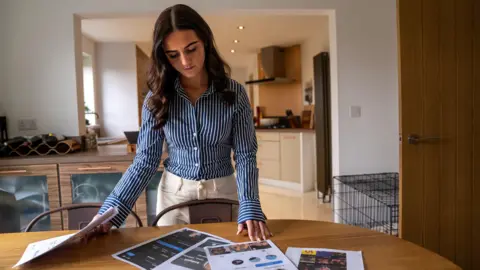
Due to lack of action from social media platforms and police, Sasha-Jay says she has had to do her own investigating
Sasha-Jay wonders if someone she knows is behind it.
She has repeatedly reported the social media accounts, but says the impersonator blocks her friends and family to prevent them doing the same.
The fact the fake accounts gained 81,000 followers on TikTok and 22,000 on Instagram, also made it harder.
"Because they have a bigger following than I do, they look like the real person," she said.
Police initially told her nothing could be done, but after Sasha-Jay recently posted about her experiences on Facebook, she was given an incident number, and they are investigating.
She described feeling scared, anxious and embarrassed.
"I guess at first it didn't really bother me, but it wasn't as big as it is now, this account has literally taken over my whole entire life," Sasha-Jay added.
"Like everybody thinks I am this Sophie person - I can't be my own person.
"Watching someone weaponize my identity and my image has taken a huge emotional toll."
Is Catfishing a crime in the UK?
Impersonation and catfishing are a significant online safety issue, according to Hayley Laskey from the UK Safer Internet Centre.
She highlighted things such as AI-generated profiles and fake images being used in romance scams and sextortion.
About 5% of cases reported to the centre's harmful content helpline service in 2024 and 2025 involved impersonation accounts.
Laskey said catfishing itself is not always illegal in the UK, but related behaviour can break laws such as the Fraud Act 2006, if someone uses a fake identity to obtain money or gifts, or causes reputational or financial harm.
Similarly, impersonating someone else online can also be illegal if it causes harm, reputational damage or financial loss to that person, she added.
Under the Online Safety Act 2023, platforms must act if impersonation leads to illegal behaviour such as threats or fraud.
Laskey advised victims to first report the account using a platform's built-in tools and wait about 48 hours before escalating it to the centre's helpline.
But she said the key is "prevention and education", including limiting personal information online, using strong passwords and two-factor authentication, and being cautious before sending money or personal images.
 Netflix
Kirat Assi was catfished for nearly nine years by someone posing as Bobby, a handsome cardiologist - she recounted her experiences for a Netflix documentary
Yair Cohen, one of the UK's first internet lawyers, represented Kirat Assi in her landmark 2020 civil case against her catfisher, later featured in the Netflix documentary Sweet Bobby.
Cohen said catfishers often know their victims and many enjoy the "trust that is being put in them" created by the false identity.
"They tend to enjoy this power that they are having over the victims, both categories of victims - the person [whose photographs] are being stolen, and the people who they are cheating using the false identity," he explained.
"They don't have to confront anything, they don't have to be themselves.
"They're literally borrowing the identity of somebody else and are using it to enhance their own self-image and sometimes their own image in the eyes of others."
Once the deception begins, Cohen added, perpetrators often "find it very, very difficult" to stop.
"They have to keep playing the game all the way to the bitter end, hence the reason why we nearly always are able to identify them, and because they will keep committing that wrongdoing time and time again until they get caught," he said.
"There is no way out for them."
On Sasha-Jay's experience, Cohen said there should be "very little difficulties in a criminal offence of at least harassment", noting the conduct "clearly is intended to cause her alarm and distress".
Sasha-Jay's local force said: "South Wales Police is investigating a case of identity theft in the Mountain Ash area.
"The victim is being kept up to date during the investigation."
Instagram said it had removed the fake account from its platform.
TikTok declined to comment on the specific case but according to its guidelines it bans impersonation and spam accounts, as well as content that "violates someone else's intellectual property rights".
Since the BBC contacted TikTok, the fake account has been removed.
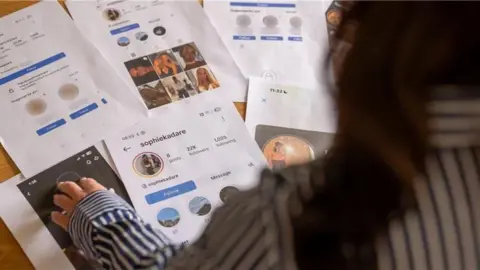
Sasha-Jay is sharing her story in the hope she gets answers and to warn people about the dangers of social media
Meanwhile, Sasha-Jay said she was sharing her story in the hope she gets answers and also wants people to be extra cautious when online.
"I always thought, 'oh, it'll never happen to me', and now it's happened to me," she said.
"Social media is powerful, but there are still not enough safeguards to protect people from long-term impersonation and targeted attacks like this."
She wants social media platforms to introduce identification verification for an account, adding: "A fake profile might look harmless to some, but it can destroy reputations, relationships, and mental health."
Sasha-Jay is urging people to "be cautious about who you interact with online", requesting users to keep profiles private, double-check accounts, report fake profiles immediately and protect personal information.
"And most importantly, understand that what happens online does not stay online, it spills into real life in ways that can be deeply damaging," she said.
"No-one should have to fight to reclaim their own identity or feel unsafe because someone else is hiding behind a screen."
"Impersonating or 'catfishing' as someone else online is a horrible form of abuse that can have distressing consequences for victims both on and offline," a spokesperson said.
"Under the Online Safety Act all in-scope services, including social media platforms, need to protect users from illegal content and criminal behaviour, including false communications offences."
Additional reporting by Greg Davies