 3 months ago
114
3 months ago
114
2 hours ago
Noel Titheradge,Investigations correspondent and Emma Barnett,Presenter of Ready To Talk

 BBC
BBC
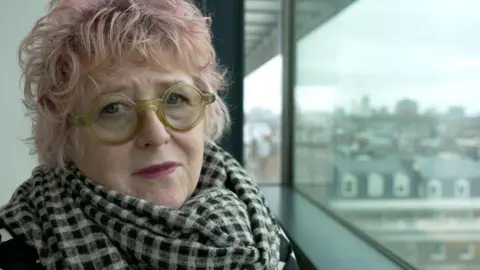
Sally Gardiner says she will live with the consequences of the spending for the rest of her life
When children's author Sally Gardiner's career first took off, friends assumed her extravagant spending was a byproduct of her newfound success.
Lavish spending sprees included a £3,000 bathtub, prints by English pop artist Peter Blake, and trips to Parisian boutiques.
Sally was in her early 40s when her debut book was published, setting her on a path to sales of 2.5 million copies and major literary prizes such as the Carnegie Medal.
"Suddenly, I am in a different place," Sally says, "and for the first time in my life, earning really well."
She says she felt "ashamed" by the amount of money she was splashing out - but was hooked on the dopamine hit.
A 'drumbeat' of compulsive behaviour
Sally would lie to friends about her purchases and deny she was wearing new clothes.
"I had no idea what had happened to me. It was like, 'Who are you? What are you doing?'"
Before long, she had amassed significant debts and was forced to sell her north London townhouse and move into a smaller flat.
Even then, what she describes as the "drumbeat" of her compulsive behaviour didn't stop - she couldn't resist spending tens of thousands of pounds on an interior designer to decorate her new home.
By this point, one of her friends was walking from shop to shop in the town where Sally lived begging staff not to sell anything to her.
Sally had developed a mid-life shopping addiction she could find no explanation for - and thought she was "going mad".
At the same time her literary career was taking off, Sally's doctor started prescribing her dopamine agonist drugs for Restless Legs Syndrome (RLS), a condition she had endured for years.
It meant she suffered from an unbearable urge to move, which typically developed most evenings.
"It was constant: I can't sit down, I can't watch television, I can't go out to dinner," Sally says. "I'd have to stand up the whole time."
Newly divorced with young children, it caused her to develop chronic sleeplessness, just as she was also going through the menopause. Sally says she tried every possible treatment but nothing worked; she would go to bed and lie awake all night.
So when her doctor prescribed a drug, which immediately relieved her symptoms without any mention of psychiatric side effects, she was euphoric.
Only now - 20 years later and more than £500,000 worse off - does Sally realise her compulsive behaviour was the result of taking this medication.
Sally's story is among the hundreds the BBC has heard over the past year and a half, describing the devastating side effects of dopamine agonist drugs.
This family of medications work by boosting dopamine activity and are widely prescribed for a variety of conditions, including RLS, Parkinson's, pituitary gland tumours and some mental health problems.
Hundreds of patients or their families told the BBC they didn't make the connection between impulsive behaviours and the drugs until it was too late. There have been stories of huge debts, broken relationships, criminality and even suicide.
Many people who developed shopping addictions have lost tens or hundreds of thousands of pounds, all while living with debilitating conditions. One couple was left homeless.
People described seemingly irrational spending, filling rooms full of things they had no need for and didn't want. Many women said they felt unable to stop shopping - but believe their behaviour wasn't taken seriously because of their gender.
Sally says she bought the same pair of shoes five times and ten separate dog beds for her Yorkshire Terrier.
"You buy one thing and you get a dopamine hit from it and want that feeling again and again," she explains.
Most of the stories the BBC heard involved compulsive sexual urges which sometimes caused women to go cruising and men to develop addictions to porn.
While Sally didn't develop any hypersexual behaviours, she did depart from writing children's books and published an erotic adult novel under a pseudonym.
On reflection, she now questions whether she would have ever written that book had she not been on the drugs.
Sally contacted the BBC after one of her daughters sent her a link to BBC podcast series Impulsive, released in February 2026, and told her: "We think this is you."
Listening to the series, Sally says she immediately realised her medication had been the cause of her behaviour and asked herself: "How had I not joined anything together on this?"
She says she will live with the consequences of the spending for the rest of her life.
As well as not being warned about side effects by the doctor who prescribed her the drugs for RLS, Sally was also never monitored for the development ofthese side effects.
A doctor only once questioned her behaviour when she arrived for an appointment laden with shopping bags.
 AFP
AFP
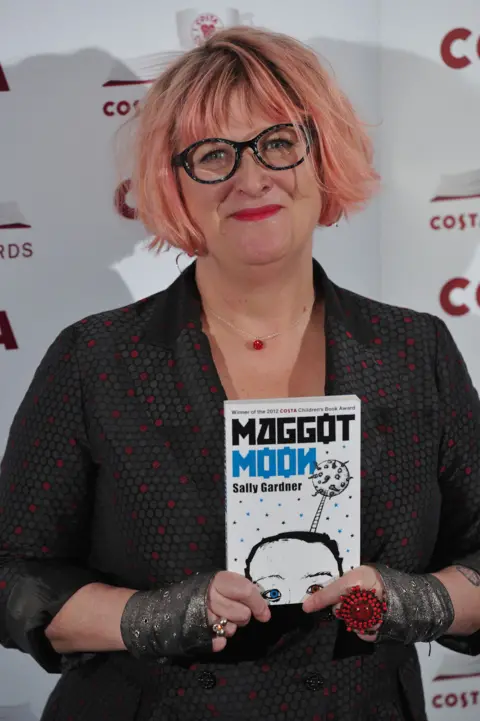
Gardner won the Costa Book Award for Maggot Moon in 2013
Doctors are required to discuss the risk of impulsive behaviours at review appointments for Parkinson's patients, who are disproportionately men, under guidelines from the National Institute for Health and Care Excellence (NICE).
But there are no such guidelines for RLS patients, who are mostly women.
"It's another health scandal where women are sidelined," says Sally.
Dopamine agonist drugs are also now known to worsen the symptoms of RLS over time.
Some RLS patients describe a cycle where the medications begin working before exacerbating the underlying condition over time.
Doctors sometimes address the problem by increasing dosages, which in turn causes more impulsive behaviour.
Friends and family of patients are less likely to recognise compulsive shopping, according to Valerie Voon, a professor of neuropsychiatry at the University of Cambridge.
She says it's broadly as common a side effect as compulsive gambling and sexual urges, but those behaviours are typically detected sooner.
"When you're online shopping, you don't get feedback very quickly," Voon says. "You can just order multiple things online and not be that conscious of what you're doing.
"There isn't the same kind of stigma attached to it, or socially negative feedback, so it's likely it can occur for much longer and in a much more hidden manner than some of the other behaviours."
As a result, Prof Voon says, friends or family can regard the change in behaviour as generosity or extravagance - rather than anything pathological - and so it continues.
- If you have been affected by the issues raised in this story you can visit the BBC Action Line for support
The MHRA says no medicine is risk-free and these drugs have improved many patients' lives.
Manufacturers also say the warnings are clearly stated, the drugs were extensively trialled and they continue to be approved by regulators around the world.
NHS advice is clear: if you are taking dopamine agonist drugs and you have any concerns, you should speak to your doctor.
Since listening to the podcast earlier this year, Sally has reduced her dosage to manage her compulsive behaviour.
However, she remains on the drugs because it's the only treatment that works for her.
"It's there all the time, and I battle with it every day.
"With everything I buy, I have to think, 'Is this compulsive? Am I doing it again?'"
If you have more information about this story, you can reach Noel directly and securely through encrypted messaging app Signal on: +44 7809 334720 or by email at [email protected]
More reporting from Noel Titheradge