 3 months ago
116
3 months ago
116
Daniel De SimoneInvestigations correspondent, Royal Courts of Justice

 Getty Images
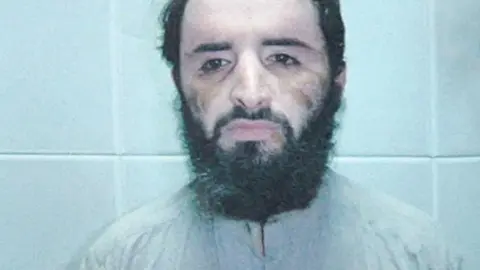
US authorities accuse Abu Faraj al-Libi of being a senior al-Qaeda figure
The government unlawfully trespassed in a barrister's office and seized legal papers from her safe in a major national security case, the High Court has heard.
The case centres on claims of complicity by UK intelligence services in torture by the CIA of alleged al-Qaeda operative Abu Faraj al-Libi, who is held at Guantanamo Bay.
During a hearing in London, his barrister Jesse Nicolls said government security officers had conducted an "unlawful entry, search, sift and seizure" of documents.
Mr Justice Chamberlain directed that "all the material" taken from the barrister's safe be returned to her.
He ordered a further hearing on 25 March, which will consider whether the government's actions were unlawful.
The affected barrister is Rachel Toney, who represents al-Libi's interests in secret hearings which are closed to him and his own lawyers.
Like many cases involving MI5 and MI6, this one takes place partly in secret to allow the government to use evidence it deems too sensitive to disclose publicly, or to al-Libi and his lawyers.
Access to the closed part of the case is available only to the judge, government, and security-cleared barristers known as special advocates who represent al-Libi. Toney is a special advocate in this case and in many others.
The special advocates are separate from al-Libi's own solicitors and barristers, who can only communicate with the special advocates using messages sent via an official go-between - a civil servant - to check that nothing secret is disclosed.
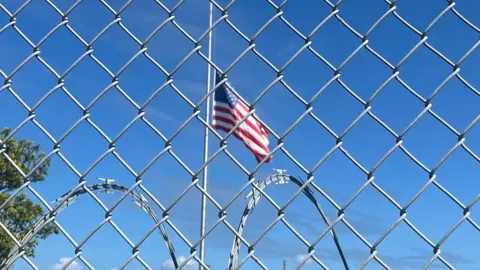
Abu Faraj al-Libi has been imprisoned without trial at Guantanamo Bay since 2006
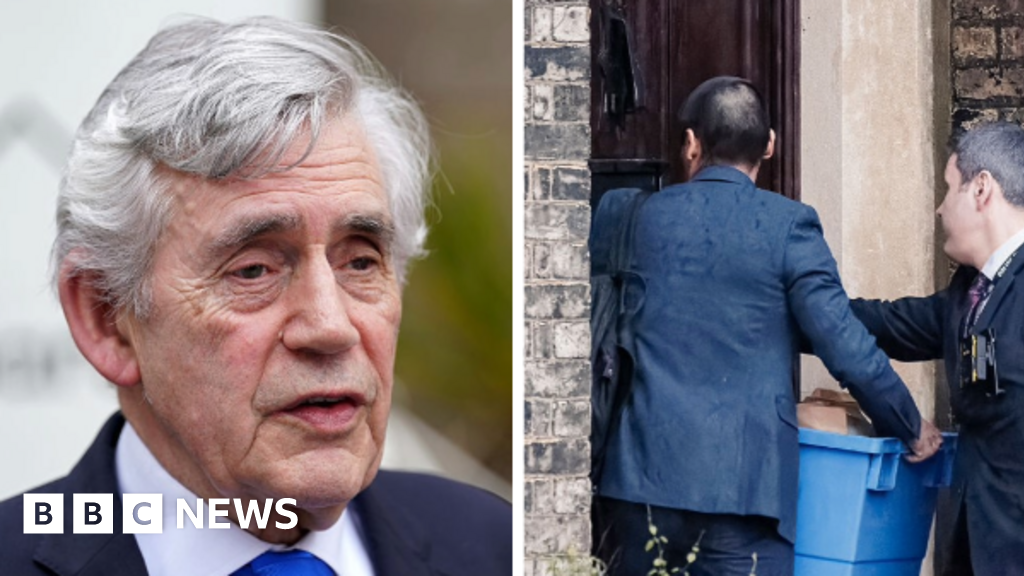
Government security officers entered Toney's chambers last month.
In written submissions, al-Libi's barristers said the government had "proceeded to enter her chambers despite having been refused permission, enter her safe in her absence, and remove the very working material over which consent had been expressly refused, in both electronic and paper form".
In the absence of judicial authority for the search, they argued the move was "obviously unlawful".
They said the government team had sifted through legally privileged material and accessed her laptop before proceeding to delete multiple files.
The government seized and deleted documents relating to another case that Toney worked on - that of a Palestinian man called Abu-Zubaydah - who was tortured by the CIA.
The BBC revealed in January that the UK government had paid him a "substantial" sum of compensation to settle a case in which he said MI5 and MI6 were complicit in his torture.
Al-Libi's barristers said the government's knowledge of CIA torture programmes is key to his case, and that Toney's existing awareness of this subject means she is at "at least as familiar" with the relevant material as the government's own lawyers.
They argued the seizure was therefore "heavily aggravated by the circumstances and appears to have had a doubtful or improper motive". They said this motive was to "gain a litigation advantage" at a time when Toney was being effective and therefore proving "troublesome" for the government.
They asked whether Attorney General Lord Hermer was aware in advance and had given his consent.
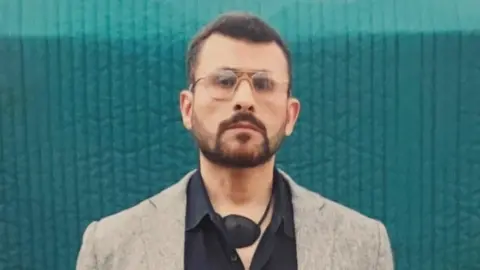
Abu Zubaydah has been held at Guantanamo Bay since 2006
In a legal note by Toney and her fellow special advocate, they said that her access to the Abu Zubaydah material has "unsurprisingly" been important given the similarities between his case and the al-Libi one.
They said the government's actions were "unprecedented" and that the "inescapable conclusion is that Toney has been singled out".
"We are concerned that the motivation is to achieve an advantage in the litigation, and whether that is in fact the motivation, that is its clear effect", they added.
They said, such is their "disquiet" at what has occurred, that they are "considering resigning from this case".
In a letter to al-Libi's lawyers, seen by the BBC, the government said the intelligence services had not consented to the use of material disclosed in the Abu Zubaydah case, and that their position is that Toney is not entitled to use that material.
During the hearing, Rory Phillips KC, representing the government, said the search and seizure was carried out by an independent legal section of the government that deals with special advocates. The judge put it to him that the person who went to Toney's chambers is "your agent", but he denied this.
At the end of the hearing, following a closed session to which the BBC did not have access, Mr Justice Chamberlain said Toney is permitted to use the material to prepare for a hearing in the case later this month. He said this direction was with the consent of the government, which also now consented to giving her the documents back.
Al-Libi, a Libyan national, has been imprisoned without trial at Guantanamo Bay since 2006. He was captured by Pakistani special forces in May 2005 and transferred to US custody within days.
Al-Libi alleges that he suffered torture and extreme mistreatment while held at secret CIA prisons known as 'black sites' in various countries, whilst MI5 and MI6 passed questions for use during his interrogations.
US authorities say he was a senior al-Qaeda figure and had long-term associations with Osama Bin Laden.
Email: [email protected]
Signal: @investigation.56
Click here to learn how to use SecureDrop, an anonymous whistleblowing tool that works only in the Tor browser and follow the advice to stay secure.