 3 months ago
92
3 months ago
92
Paul SeddonPolitical reporter

 PA Media
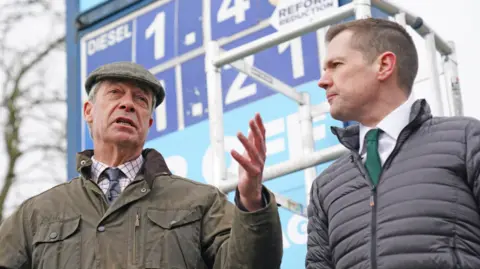
Reform leader Nigel Farage and Treasury spokesman Robert Jenrick visited a petrol station in Derbyshire
Chancellor Rachel Reeves is facing growing calls from opposition parties to reverse a planned hike to fuel duty as the conflict in the Middle East continues.
The tax rate on petrol and diesel is due to rise from September, when a 5p cut made after Russia's full-scale invasion of Ukraine is set to be phased out.
But Reform UK, the Conservatives and the Lib Dems are all arguing that the war in Iran means the chancellor should keep the cut in place.
Energy prices have risen since the US and Israel began strikes on the country, amid fears the conflict would cause lengthy disruption to supplies.
On Tuesday, Reform UK set out a series of cuts to green levies it says it would use to cover the cost to the Treasury of keeping the lower rate in place.
This includes scrapping government grants to encourage people to buy heat pumps and electric cars, and £9.4bn in subsidies for carbon capture and storage projects allocated by ministers for the next three years.
At a news conference at a petrol station in Derbyshire, the party's Treasury spokesman Robert Jenrick said the situation in the Middle East meant it was the "worst possible moment" for fuel duty to rise.
Alongside Reform leader Nigel Farage, he posed for photographs in front of a price board covered in the party's branding, where a reduced price for a litre of diesel was shown alongside a sign reading "Reform reduction".
The Conservatives, who are also calling for the rise not to go ahead, published a motion on Tuesday in a bid to trigger a future vote on the issue.
Speaking in the Commons, Reeves said the "most important thing" ministers could do to keep fuel prices down was to help "de-escalate" the conflict.
She added that the government last month launched a scheme to provide motorists with real‑time data on forecourt prices, which would help them "shop around".
And she hinted that she could in future raise the tax-free amount drivers can claim back in mileage expenses, noting that motoring costs had "evolved significantly" since 2011, when the current 45p a mile rate was set.
The 5p cut to fuel duty was announced by Tory chancellor Rishi Sunak in 2022 after Russia's full-scale invasion of Ukraine caused a worldwide spike in energy costs.
Originally billed as a temporary measure that would last 12 months, it was extended in 2023 by the previous Conservative government, before being extended again by Labour upon entering office.
Reeves prolonged the cut again at last year's Budget, alongside plans to phase it out from September, with the 5p reduction fully unwound by March 2027.
It has been the longstanding policy of successive governments to raise fuel duty in line with inflation, but this has not happened since 2011.
Also speaking at the news conference, Farage branded the government's green levies "lunatic" and hit out at Labour's restrictions on new oil and gas exploration in the North Sea.
But he also faced questions over his party's stance on the Iran conflict, after mixed messages from some of the party's frontbench MPs in media interviews.
There were "differing opinions" about whether the UK should "physically" join strikes on the country, he added, but the UK should not have rejected the initial US request to use British bases for strikes on missile sites used to target allies.
He argued that the US and Israel would have launched the strikes "whatever we said or did", but in any case the UK was unable to "get involved directly" due to previous defence cuts.