 3 months ago
101
3 months ago
101
Peter Hoskinsand Nick Edser,Business reporters

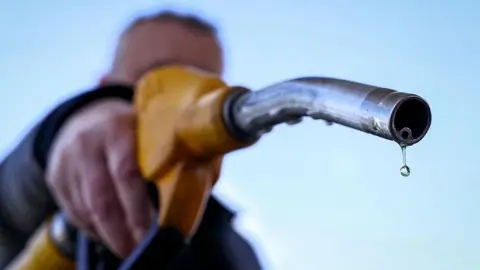 AFP via Getty Images
Oil and gas prices fell sharply on Tuesday after US President Donald Trump said that the war in Iran was "very complete, pretty much".
Crude almost reached $120 a barrel on Monday over fears that the conflict would cause lengthy disruption to energy supplies from the Middle East, but dropped back to below $90 following Trump's comments.
Although oil prices are still significantly higher than they were before the war, global stock markets rebounded.
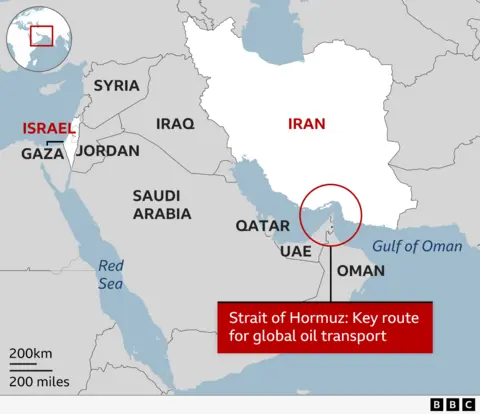
The boss of Saudi Arabia's Aramco, the world's biggest oil exporter, has warned of "catastrophic consequences" if the Strait of Hormuz, a shipping route crucial to global energy supplies, remains blocked.
About a fifth of the world's oil usually passes through the narrow waterway, but traffic has all but halted since the war started more than a week ago.
Aramco's chief executive, Amin Nasser, warned that global stockpiles of oil were at the lowest for five years and the supply bottleneck meant these would be used at a faster rate.
"The longer the disruption goes on... the more drastic the consequences for the global economy," he said.
On Tuesday, the International Energy Agency (IEA) held a second meeting with G7 nations to discuss options for stabilising the global oil market, including releasing millions of barrels of crude from countries' stocks.
The IEA is holding a meeting of member governments later "to inform a subsequent decision" on whether or not to make emergency stocks available.
On Monday, Trump told a news conference in Florida: "We took a little excursion because we felt we had to do that to get rid of some evil. Then, I think you'll see it's going to be a short-term excursion."
He later wrote on social media: "If Iran does anything that stops the flow of Oil within the Strait of Hormuz, they will be hit by the United States of America TWENTY TIMES HARDER than they have been hit thus far."
The Islamic Revolutionary Guard Corps said "in response to Trump's nonsense", Iran's armed forces will "not allow the export of a single litre of oil from the region".
Trump's comments raised hopes that the war would not be drawn-out, and Brent crude fell to $88.80.
However, it is still much higher than it was before the US-Israel war with Iran began on 28 February when Brent was priced at around $73 a barrel.
Gas also dropped, with UK prices for month-ahead delivery falling sharply to 119p a therm, well below Monday's peak of 171p.
The fall in oil prices has given traders a moment to "exhale", but energy markets remain in a state of "total tug-of-war", said Alberto Bellorin, founder and managing director oil and gas investment firm InterCapital Energy.
Oil trading will "remain incredibly twitchy", he said, and prices are likely to spike if the conflict escalates and fall if it seems to be easing.
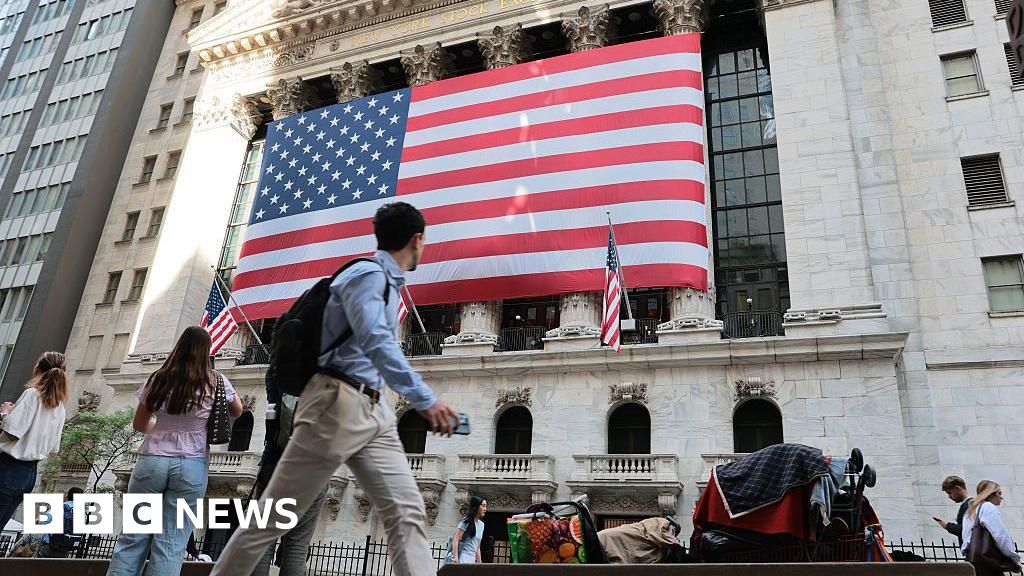
The hopes of a swift end to the conflict lifted European stock markets. London's FTSE 100 rose 1.6%, Germany's Dax index climbed 2.3% and the French Cac 40 rose 1.8%.
Earlier in Asia, Japan's Nikkei 225 had closed up 2.9%, recovering some of Monday's losses, while South Korea's Kospi gained 5.4%.
US markets fell in early trade but then headed higher, with the S&P 500 and Dow Jones both up by around 0.5%.
On Monday, G7 nations said they were ready to take "necessary measures" to address the global supply of energy in the light of surging oil prices.
A meeting between G7 leaders and the IEA ended without a final decision on whether the nations would release oil from stockpiles, though the matter was discussed.
Robin Mills, chief executive of Qamar Energy, an energy consultancy based in Dubai, told the BBC that there was a reluctance to use this option too early as "once the strategic reserves are gone, they're gone".
However, he acknowledged it was a tough decision.
"If you believe the war is over, as Donald Trump says, then you don't need to use them. But if you believe the disruption is continuing, now is the time to put a bit of oil back and calm the market," he said.
Chancellor Rachel Reeves said on Monday that the UK had used the G7 meeting to urge "immediate de-escalation" in the Middle East and guaranteed security for vessels in the region.
"I stand ready to support a co-ordinated release of collective IEA oil reserves," she said.
Before the Iran war, financial markets had been expecting a cut in UK interest rates at some point this year. But these expectations vanished after the spike in oil prices raised the prospect of higher inflation.
The yield, or interest rate, on two-year government bonds - which indicates how much it would cost to borrow money for two years - was down to 3.86% having peaked at 4.15% on Monday. Before the conflict began the yield stood at 3.5%.
Watch: How worried are Americans about rising petrol prices from the Iran war?