 3 months ago
95
3 months ago
95
Jonah FisherEnvironment correspondent
Watch: Octopuses filmed by divers off the coast of Cornwall this year
A wildlife charity has declared 2025 "the Year of the Blooming Octopus" after record numbers were spotted off the south-west coast of England.
In its annual marine review the Wildlife Trusts says octopus numbers were this summer at their highest level since 1950.
Warmer winters, which are linked to climate change, are thought to be responsible for the population spike, which is known as a "bloom".
The charity's findings are backed up by official figures which show that more than 1,200 tonnes of octopus was caught by fishermen in UK waters in the summer of 2025.

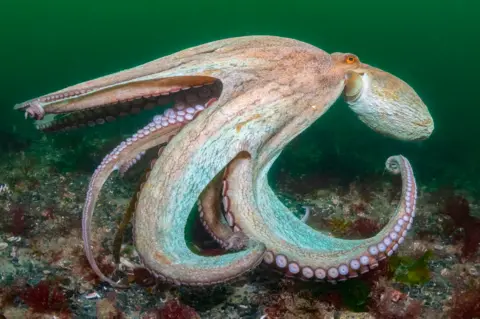 The Wildlife Trusts/Kirsty Andrews
The Wildlife Trusts says the highest number of octopuses has been seen off the south coast of Devon and Cornwall since 1950.
It's a dramatic increase on previous years. Only once since 2021 has more than 200 tonnes of octopus been landed.
Experts say most of those spotted are Octopus vulgaris a species commonly seen in the warmer Mediterranean Sea. Wildlife Trusts volunteers in Cornwall and Devon reported an increase in sightings of more than 1,500 percent on 2023 figures along one stretch of the south coast.
"It really has been exceptional," says Matt Slater from the Cornwall Wildlife Trust. "We've seen octopuses jet-propelling themselves along. We've seen octopuses camouflaging themselves, they look just like seaweeds.
"We've seen them cleaning themselves. And we've even seen them walking, using two legs just to nonchalantly cruise away from the diver underwater."
It's unclear at this point whether the rise in numbers is permanent or cyclical, which would mean octopus numbers returning to more typical levels after this year's bloom.
The eight-armed cephalopods eat shellfish such as lobster, crabs and scallops so the Wildlife Trusts warn that if population numbers remain high, both fishing and eating habits may have to change.
"They are having an impact on those (shellfish) species around our shores. And as a consequence, they will be having an impact on our fishing industry who target those species as well," Ruth Williams the head of marine for The Wildlife Trusts told the BBC's Today programmme.
"But there are opportunities and our fishing industry are doing some research into that at the moment to try and evolve with the changing fisheries that we're seeing as a result of climate change."
Government data shows crab landings down on previous years but catches of lobster, crawfish and scallops stable.
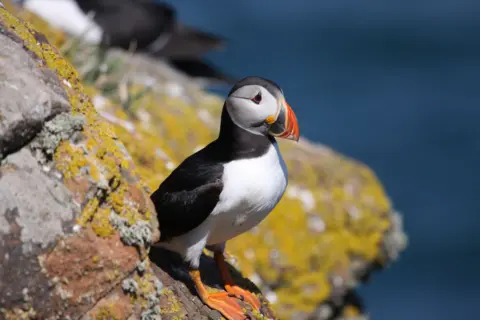 Wildlife Trusts of South and West Wales/Lynne Newton
A record number of puffins were recorded on Skomer Island in Pembrokeshire this year.
Alongside good news for octopus lovers, the Wildlife Trusts' marine review contains more sobering news.
The Trusts say this year was bookended by environmental disasters, with a collision between an oil tanker and a container ship in the North Sea in March spilling huge quantities of plastic resin pellets, and nearly 4.5 tonnes of bio-beads released from a water treatment plant in Sussex in November.
There was some better news for wildlife elsewhere, with a record 46,000 puffins recorded on Skomer, Pembrokeshire, while the charismatic black and white bird has made a comeback on the Isle of Muck following conservation efforts by Ulster Wildlife Trust to remove invasive brown rats.