 3 months ago
147
3 months ago
147

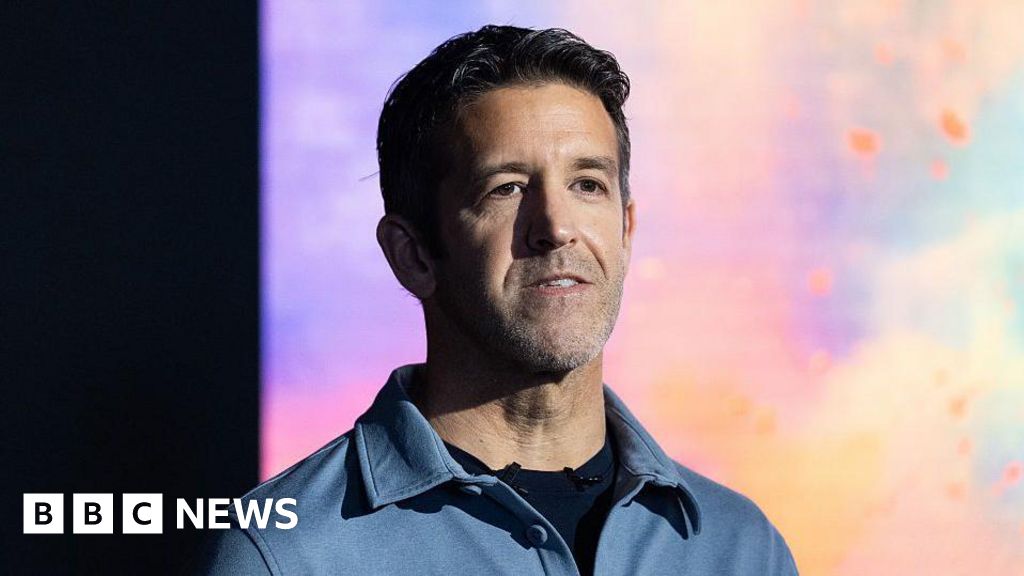
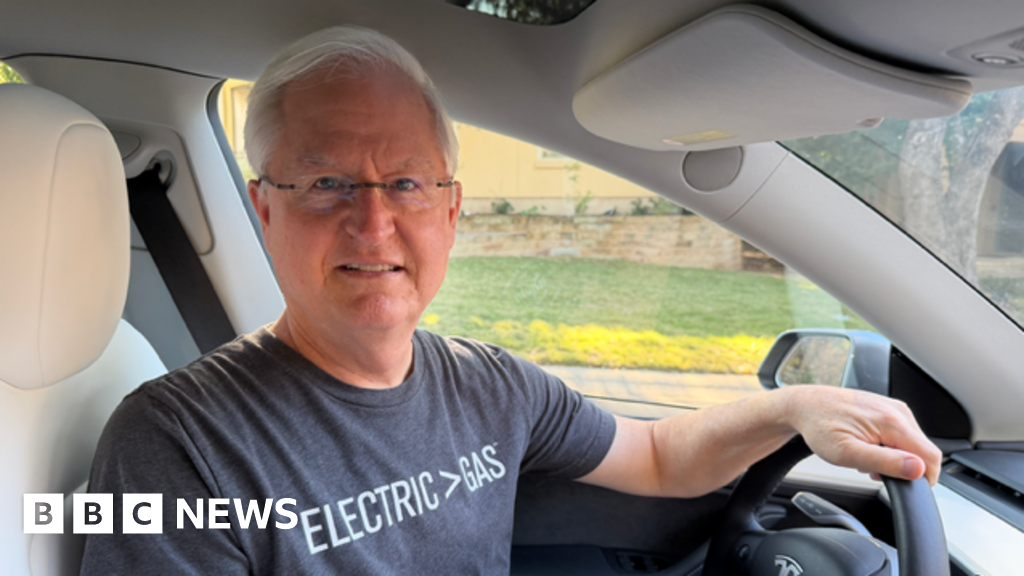
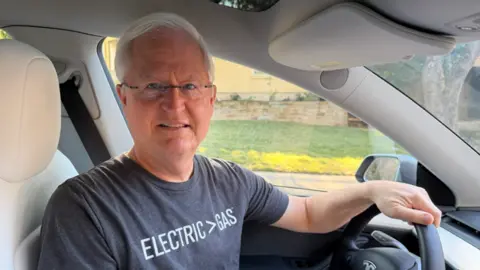 Geoff Perlman
As self-driving cars get closer to reality, Tesla is striving to remain a big player. But is it sacrificing safety to stay in the game?
For the past few weeks, Geoff Perlman, a 61-year-old technology executive from Texas, has been testing a free trial of Tesla's latest self-driving software as he travels around Austin.
He's impressed: it can handle confusing lane adjustments and park itself in busy lots better, he thinks, than the average human. He's expecting to recommend that his 89-year-old father-in-law upgrades his own Tesla with the system, which costs an extra $8,000 (£5,950), to help out as old age closes in.
But his confidence has its limits. For now, he says, he keeps his eyes on the road and does not pick up the phone to text.
"Staring at the phone when you're in a several thousand pound vehicle travelling down the highway at this point seems crazy to me," he says.
Tesla boss Elon Musk doesn't appear to share his qualms. Last month, he told investors: "We're going to look closely at the safety statistics, but we will allow you to text and drive essentially".
And when asked on X: "Wait… am I able to text and drive on [the latest software]?" Musk replied: "Yes, depending on the context of surrounding traffic."
Tesla did not respond to requests for comment to clarify this remark.
But the move has renewed alarm among safety advocates about what they perceive as Musk's willingness to take safety short cuts, as advances by rivals like Google's Waymo raise pressure on the firm to deliver on its promises of self-driving cars.
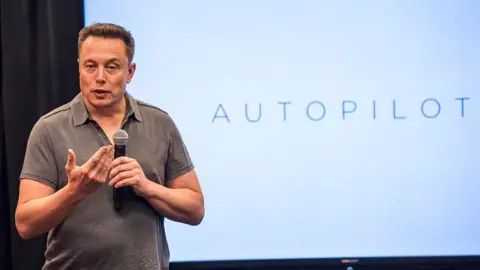 Bloomberg via Getty
Elon Musk, introducing Autopilot in 2015, said drivers could not "abdicate responsibility. That will come at some point in the future"
"Tesla doesn't always seem to have full grasp of what the consequences of its technology changes would be and I think this is kind of a very big example of that," says Michael Brooks, executive director of the Center for Auto Safety. "Essentially what Tesla is saying here is they are going to allow their drivers to break the law."
Tesla's automated options for car-buyers range from Autopilot, which has features such as automatic lane centring, to a more advanced software it launched in 2020 as Full Self Driving or FSD.
Currently only available in North America, Australia and New Zealand, FSD has additional powers, like the ability to summon your car via app, or have it park and navigate itself.
Both systems technically require driver supervision at all times, bringing the firm's decision to make it easier to text in tension with laws in the US, the UK and elsewhere that make texting while driving illegal.
Musk has argued that if a driver is going to text - a practice surveys indicate is common - it is preferable to do it while using the firm's software than without, due to safety benefits.
For example, according to the company, cars with its FSD features have seven times fewer major collisions.
 Austin American-Statesman via Getty Images
Tesla is facing competition from Waymo and other players
'Serious concerns'
But experts have questioned the reliability of the data that Tesla uses to support its safety claims - the company does not share it for outside review or present with any information to compare it to.
Regulators in the US have also opened numerous investigations into how well Tesla's software works, after reports of issues including random braking and cars failing to comply with basic traffic safety rules, such as stop signs.
Regulators have also flagged safety issues at rivals.
Waymo, for example, recently issued a software recall after its robotaxis were found to illegally pass school buses, while Ford is facing investigation of its hands-free driving system after two fatal collisions.
But critics say Musk's boasts about the powers of Tesla's technology – including his comments on texting - are lulling customers into a false sense of safety and encouraging risky behaviour.
"We have serious concerns about a driver who has any responsibilities behind the wheel engaging in texting," says Cathy Chase, president of the Advocates for Highway and Auto Safety. "Until we have assurances, independent assurances, that any vehicle is able to perform all of the driving tasks, then it should not be permissible to be distracted behind the wheel."
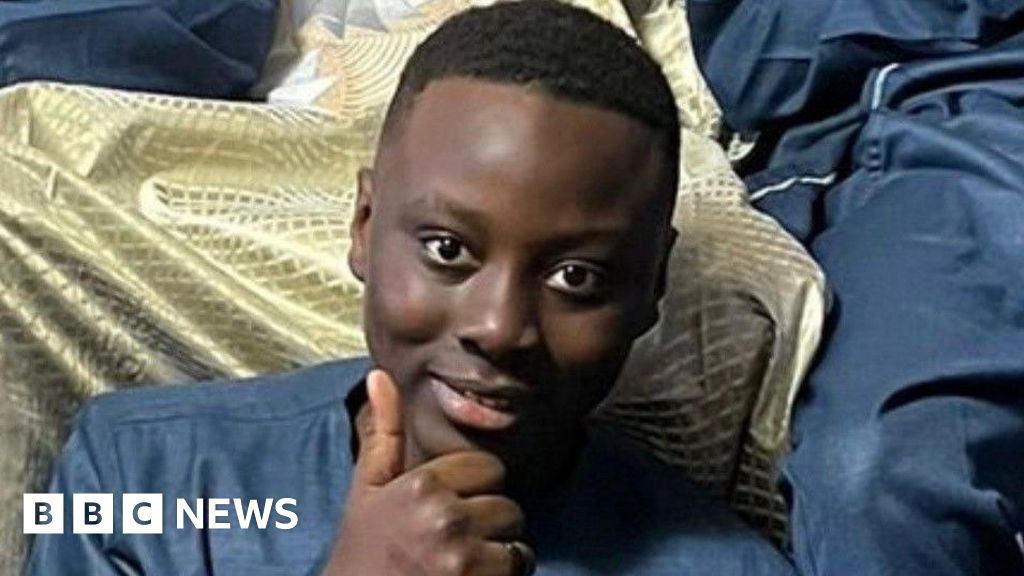
 Youssef Kamal
Youssef Kamal admits to checking his phone while in his Tesla
New Jersey Tesla owner Youssef Kamal says he would not rely on Tesla to navigate while typing out a long message, but even when using an enhanced version of Autopilot, he has overall confidence in the system. Even though it's illegal, Mr Kamal frequently checks his phone for texts during his highway commute, despite dashboard warnings and a recent near-accident.
"As far as the goal of getting from point A to point B, it's clearly working," he says.
Others disagree.
Ernie Gorrie says his car still performs erratically, stumped by signals like flashing yellow lights, five years after he received the first FSD software.
He still thinks Musk will achieve his aims one day, but with the hardware in his car growing too old for the latest software updates, he fears it will be too late for him.
"It has improved substantially but it remains far from anything resembling a full self-driving car," the 73-year-old from Canada says.
 Ernest Gorrie
Ernie Gorrie bought a Tesla in 2019, inspired in part by Musk's talk of self-driving cars
Driver monitoring
Last year, in the face of regulator pressure, Tesla added the word (Supervised) to the title of its FSD software. This month an administrative judge in California ordered the firm to change its name for Autopilot or face a temporary sales ban in the state.
The firm is also the target of lawsuits from customers and shareholders related to its self-driving systems, which allege violations from fraud to design defects. It has successfully fought some of those suits and settled others.
Separately, Tesla has come under scrutiny over what it does to prevent drivers from using its systems improperly.
The National Highway Traffic Safety Administration is investigating changes to driver monitoring that Tesla promised in 2023, after a previous probe found "foreseeable" misuse of Autopilot had played a role in more than a dozen fatal accidents.
But the US does not currently have clear rules governing how much responsibility carmakers have to ensure that drivers remain attentive, leaving that question in contested legal territory.
In August, a Miami jury ordered Tesla to pay $243m million in damages over a fatal 2019 crash involving Autopilot after finding, in part, that the company did not have adequate guards in place to track driver attentiveness or prevent the system from being used on unsafe roads.
In its appeal, which is ongoing, Tesla says the fault lies with a reckless driver.
Falling behind?
 CFOTO/Future Publishing via Getty Images)
Manufacturers in China and other places have introduced unmanned vehicles, raising pressure on Tesla to deliver on its promises
This month, the company started sending its robotaxis onto the roads in Texas without a human behind the wheel.
The announcement helped send its share price to a record high, a reminder of how important self-driving technology is to the firm, at a time when some analysts say it is at risk of falling behind.
Tesla critic Dan O'Dowd says Musk's comments on texting are part of a wider effort to prop up his company by confusing people about its advancements, despite the risks.
"He's trying to make people think that they're in the same league as Waymo. They're not," says the software entrepreneur, who has been engaged in a years-long quest to expose Tesla's alleged failings, even paying for an advert at the Super Bowl. "Waymo has been ahead of them for a decade and is now way ahead."
Waymo currently dominates the robotaxi space in the US, with a fleet of more than 2,500 fully driverless taxis and plans to operate in more than 15 cities next year, including London.
And of the eight firms approved in California to test or deploy unmanned cars, Tesla is not one of them.
Meanwhile, outside the US, regulators have already approved hands-off technology from several Chinese carmakers, and Mercedes, for certain driving conditions.
'High risk game'
As Tesla pushes to expand FSD into new markets, Simeon Calvert, professor of automated driving at the Delft University of Technology in the Netherlands, says it will have to satisfy regulators on safety questions.
In Europe, for example, where Musk has said he hopes to win approval for FSD as soon as February, carmakers are mandated to have effective strategies to warn inattentive drivers.
"They're playing a high-risk game," Prof Calvert says. "By trying to be on the market early, they're hoping to get ahead of the competition. But if their systems do struggle and there are many incidents then that's just going to damage their reputation."