 2 months ago
88
2 months ago
88
Michael BuchananSocial affairs correspondent

 BBC
BBC
Few revolutions have been seeded in Easterhouse. Situated in the east end of Glasgow, the area was, at one point, a case study in how not to build new housing developments. Built as part of Glasgow's vast post‑war housing scheme, the area saw poor‑quality homes erected with few shops or transport links, and by the 1970s and 1980s it was weighed down by boredom, alcohol and hopelessness. Gang violence flourished.
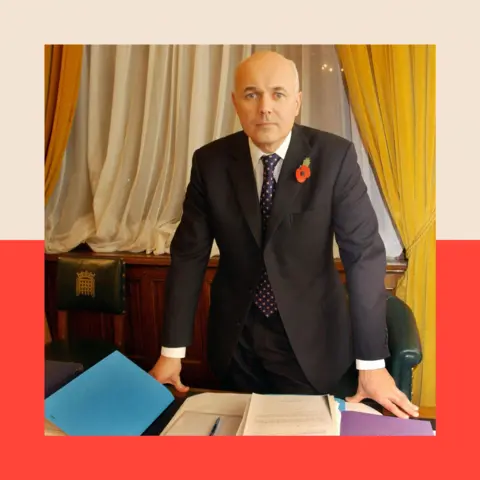
But on a dreary February day in 2002, a visit to Easterhouse by the Conservative leader at the time, Iain Duncan Smith, was to ignite a generational overhaul of the welfare system that still resonates today.
The change that was set in motion during that visit would later become Universal Credit, a benefit that now supports more than eight million people. Duncan Smith's basic idea was to make work pay, to incentivise people into a job.
 Getty Images
Easterhouse is situated in the east end of Glasgow
But as the rollout of the benefit finally nears completion over the next few weeks, albeit nine years behind schedule and hundreds of millions of pounds over budget, the questions the welfare system now struggles with are different.
For example, there are now 700,000 graduates unemployed and claiming benefits — an increase of more than 200,000 - or 46% - since 2019, according to the Centre for Social Justice (CSJ).
And most glaringly, while back in 2002 when Iain Duncan Smith visited Easterhouse, around a quarter of recipients of incapacity benefits were for mental or behavioural reasons; today, it's close to half.
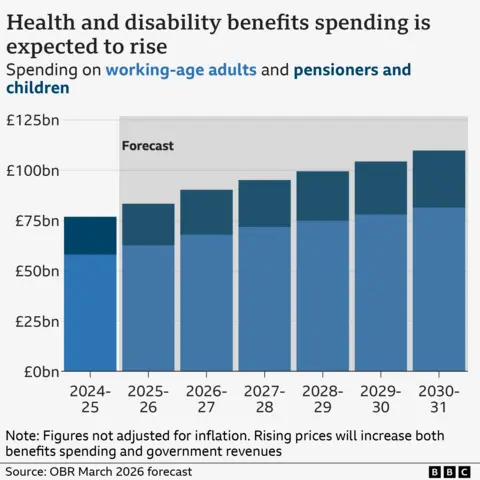
Numbers and costs are set to rise rapidly, with spending on health and disability-related benefits forecast to increase from £65bn a year currently to £100bn by 2029.
The government describe the current arrangements as "a system which encourages sickness" and say their reforms will fix this. But can Universal Credit and the work and benefits system more generally reshape itself to meet this new reality?
Beyond the obvious, the dilapidated housing and the poverty, what struck Duncan Smith in Easterhouse was the hopelessness, the sense that being on benefits was a destination, not a bridge.
Over subsequent years, working mainly through the CSJ, the think tank he founded, Duncan Smith devised a system that he believed would not just simplify the benefits system but, crucially, make work pay.
 AFP via Getty Images
Iain Duncan Smith visited Easterhouse in 2002
Six benefits paid to people of working age would be rolled into one monthly payment.
The key to "making work pay" was to remove the disincentive in the existing welfare system to take a job. Universal Credit aimed to change that by allowing people to keep more of the money they earned.
"You needed a maths degree to work out whether you were better off moving into work under the old system," said Joe Shalam, director of policy at the CSJ and a former special adviser in the Department for Work and Pensions (DWP) when the Tories were in power.
"I think a lot of people across Britain, and indeed internationally, look at the Universal Credit system as a hugely simplifying upgrade in the way the welfare system works, that has restored those incentives for hundreds of thousands of people [to get a job]."
In 2019, the then government said that their welfare changes had cut the number of workless households by one million since 2010.
But Universal Credit doesn't exist in a bubble.
When the Tories won the 2015 election, they introduced a four-year freeze on working-age benefit levels, eroding the value of the payment. The difficulty that families have had in the past decade or so in making ends meet – evidenced most clearly by the huge rise in food bank usage – has long been blamed by anti-poverty campaigners on the value and design of Universal Credit.
In order to mimic work, particularly monthly salaried employment, new claimants have to wait five weeks for their first payment. But many low-income households don't have the savings to last that long and so have to borrow, incurring debt.
The DWP will pay an interest-free advance, equivalent to the first month's payment, but will then automatically recover the money from subsequent Universal Credit payments, for up to two years.
Citizens Advice say that in 2025 two-thirds of the people they helped in relation to repaying loans to the DWP also needed help accessing food banks.
The five-week wait needs "urgent attention", says David Mendes da Costa, principle policy manager at Citizens Advice charity.
"Universal Credit is meant to be a safety net, not to trap people in debt from day one, but that's exactly the situation our advisers see every single day."
Unemployed Olivia Diss from Essex says the standard £317 a month under-25s allowance "gives some sort of income but it's not enough to live on." She's having to rely on her parents to help out, but bemoans the need for them to do so.
"It assumes," says Diss, "that parents will bridge the monetary gap. It fails to factor in an effective way of exiting unemployment and entering the world of work as a self-sufficient adult."
Increasing the basic allowance
Many Jobcentre Plus staff and welfare advisers privately believe that the basic, standard rate of Universal Credit is not enough to live on. And it is thought this may be contributing to more people claiming the health element of Universal Credit, something acknowledged in a paper published by the government last year.
It said the low level of the standard benefit "creates a logical – but perverse - incentive for people to claim the health element too".
And people on the health element of Universal Credit have not received the same support to get into work, with the effect, according to the paper of "trapping people out of the labour market many of whom want to work."
Someone over 25 on the basic allowance currently receives £400 a month but could add another £423 if they are assessed as being unable to work due to ill health.
Ministers are therefore going to increase the basic allowance by 6.2% in April - well above inflation – and have plans to do so for every year until 2029/30. At the same time, they are going to halve the value of the health top-up for most new claimants.
By the end of this Parliament therefore, according to calculations by the Institute for Fiscal Studies think tank, the basic allowance will pay £427 (in today's prices) and £628 if they are in ill health (down from the current £823).
The government hopes that reducing the gap will mean fewer people will be incentivised to apply for health benefits, meaning more remain eligible for employment support and available for work.
The concern among some groups is that the lower amount will impoverish people who are ill and have little prospect of getting a job anytime soon.
This reduction "will potentially push more people with disabilities and health conditions into poverty, exacerbating their condition and pushing them further away from the labour market", said Debbie Abrahams, the Labour MP who chairs the Work and Pensions Select Committee.
Shadow Work and Pensions Secretary Helen Whately has criticised the fact that Labour's reforms were only focused on new claimants. "These permanent protections embed inequality, discourage work, and destroy the very savings Labour promised," she said.
The new reality of there being increasing numbers of disabled people in the workforce is well illustrated by the story of a government programme called Access to Work, which helps people with either physical or mental health conditions into jobs, by paying for support or adaptations they might need. It was little used for years – once dubbed the government's "best-kept secret" for employment support – but is now in high demand.
 Getty Images
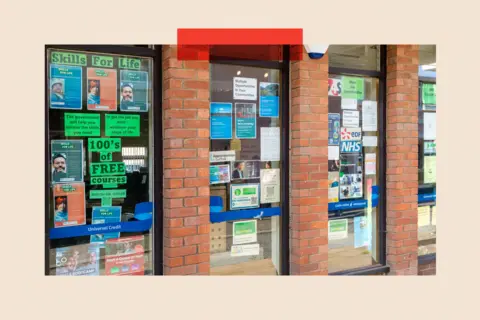
Many Jobcentre Plus staff are unconvinced the basic rate of universal credit is enough to live on
However, the scheme is currently dealing with large backlogs, with stories of people having to give up work due to problems accessing help. Ministers say they've recruited dozens of new case workers since the start of the year and were working to "streamline our processes". They also argue that employers should pay for many of the adaptations that are currently paid by taxpayers.
Supporters of the scheme point out, however, that small businesses may be less likely to employ a disabled person if they have to spend money upfront on special desks or chairs, for instance.
The future for young people
While Universal Credit is a digital service, enforcement of its obligations has long been delivered through Jobcentres, where work coaches are employed to help people find work.
But appointments are sometimes as short as 10 minutes and last year a committee of MPs wrote: "Jobcentres are not working. Rather than centres for jobs, they have become centres for monitoring compliance with benefit conditions."
Jobcentre users I've spoken to have painted a picture of them as frightening, punitive environments, where people are told what they must do, or face losing their benefits. And the very thing they're meant to do, provide job opportunities to claimants, isn't something they're widely able to do as many employers don't advertise with them, believing they won't get quality candidates.
Turning those perceptions around is going to be crucial to getting more people into work and potentially cutting the welfare bill.
Following a pilot project in the Highlands, North and Mid Wales and Greater Manchester, the DWP is going to expand its "Jobcentre on Wheels" initiative. The scheme involves vans travelling to areas far from a jobcentre, trying to reach people where they are.
A government source says the initial pilot had shown that people who haven't traditionally engaged with employment support have been tempted by the vans, which are seen as more welcoming than the usual, green-fronted town centre locations, a visible example of a different approach.
The key, say ministers, is to turn jobcentres into employment support hubs. Several initiatives have been announced as part of a multi-billion-pound package, heavily focused on getting employment for young people.
Companies will be paid bonuses of £3,000 for recruiting a young person who's been out of work for six months with a further £2,000 available if a small or medium-sized business hires young apprentices.
"We want to give young people hope, to give them the chance to use their talent and energy to the full," said Pat McFadden, the Work and Pensions Secretary in a recent speech.
 Getty Images
Universal Credit aims to allow people to keep more of the money they earn compared to previous systems
Some benefit recipients will also get a "Right to Try," a work trial where disabled people and those with health conditions keep getting their benefits while working for a company – without earning a wage – to see if the job is suitable for them. The scheme is intended to overcome the fear that some jobseekers have that they'll have no money for weeks if they take a job that doesn't work out.
But the DWP's own advisers say ministers have not done enough to reassure claimants, including those described as having "fluctuating" conditions, that "undertaking work‑related activities might lead to reassessment", and hence lower benefit awards.
Or as one claimant told the BBC: "If you have a relapse after starting employment that took you off [health benefits] then you're going to be worse off. So why would you even bother?"
The experience of Olivia Diss from Essex highlights another challenge. She graduated with a master's degree in French and Spanish last year.
The latest data shows 700,000 graduates are unemployed and claiming benefits and Diss says her case suggests they require a different sort of help.
"While work coaches are well intentioned and help you as much as they can, they are often unequipped to advise postgraduate students like myself on specialised sectors that are suited to their degree.
"This leaves postgraduates in a professional no-man's land, where we are left to navigate a highly competitive job market alone while being pressured to follow a system that prioritises immediate placement over a sustainable career."
The future of Universal Credit
As the rollout nears completion, the government is currently holding a consultation on the future of Universal Credit, the first system-wide review since it was launched in 2013.
It focuses on three areas – tackling poverty, making work pay and maximising the benefit's potential.
Large numbers of people do struggle with many aspects of Universal Credit, from the self-employed to those needing childcare. Yet for many of its 8.3 million recipients, digitally savvy and good at budgeting, the system functions as intended.
However, with a million or so young people who are classed as Neets – not in education, employment or training – the future is stark.
According to the Keep Britain Working report, produced by Sir Charlie Mayfield last year, a young person in their 20s going on benefits could lose out on £1m of lifetime earnings – the same figure as the state would then spend supporting them.
Meanwhile, a poll published last month by the National Centre for Social Research showed that a near record high number of people, 42%, were opposed to the government spending more money on welfare.
And for the first time in a decade, a majority of British adults believed the generosity of the welfare system stopped people supporting themselves, despite academic studies showing that the UK has one of the least generous welfare systems among industrialised nations.
For the next few weeks, there will still be a small group of people who will claim Employment and Support Allowance and Housing Benefit, two of the benefits Universal Credit replaces. The DWP says they are the hardest claimants to move to the new system.
The end of the Universal Credit rollout marks an important milestone in the revolution that was seeded in the east end of Glasgow. But, much like Easterhouse itself, the welfare system faces new challenges to ensure it is fit for the next 25 years.
Top picture credit: PA / Getty Images

BBC InDepth is the home on the website and app for the best analysis, with fresh perspectives that challenge assumptions and deep reporting on the biggest issues of the day. Emma Barnett and John Simpson bring their pick of the most thought-provoking deep reads and analysis, every Saturday. Sign up for the newsletter here