 3 months ago
103
3 months ago
103
Glenn CampbellScotland political editor

 Getty Images
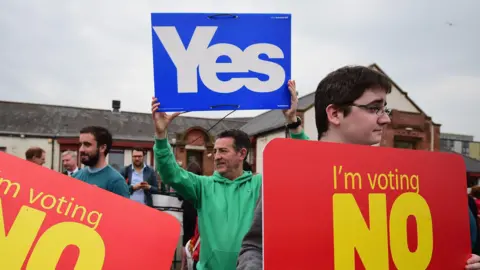
The independence referendum vote took place in 2014
It was a moment of elation for those who campaigned for continued political union with the rest of the UK, but a moment of despair for those who made the case for Scottish statehood.
In the early hours of Friday 19 September 2014, we watched live as the declaration in Glenrothes took the No campaign over the winning line in the Scottish independence referendum.
The Fife result – with 45% voting yes, 55% voting no - mirrored the Scotland-wide picture.
As presenter of the BBC's results programme, I explained the significance of the result. The referendum was over.
But it would have been wrong to think support for independence would wither away.
Take a look at the latest research.
While 47% of those asked said they would vote yes to independence, 44% said they would vote no, with 8% undecided.
Excluding the undecideds, that translates to 51% for yes and 49% for no.
That is of course a snapshot of opinion - the views of a particular group of people at a particular moment in time - but it is in line with the polling trend.
Politics professor Sir John Curtice of Strathclyde University says: "Scotland remains more or less divided down the middle on the subject. It's now been in that position since 2019.
"Around the time when there was a parliamentary stalemate at Westminster over Brexit that saw a rise in support for independence and that rise in support for independence has never been reversed."
Sometimes yes is a little ahead of no, sometimes it's the other way around. Yes is typically stronger than it was in the actual referendum.
The link with Brexit is interesting. In our survey, 65% were in favour of joining the European Union with 25% preferring to stay out.
In Dunfermline - the Fife city that was Scotland's ancient capital and is the burial place of Robert the Bruce - I found the independence arguments clearly expressed at Townhill community centre.
In its art class, Anne Pack told me that the people in Scotland "should be in charge of their own affairs.
"I think we do things differently in Scotland. We have more social aspect to our outlook on life and I think we should do it our way."
In the chair-yoga class, it was argued that Scotland was economically stronger inside the UK and that there was no need to revisit the issue.
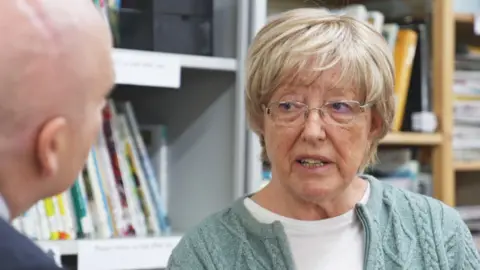
Anne Pack says people in Scotland should be in charge of their own affairs
Margaret Gent said: "I wouldn't go independent. I would stay.
"I think for a start, you don't need to spend money on another referendum. They had one and the people made their choices."
That choice was made before Brexit, Covid and the war in Ukraine - developments both sides use in support of their arguments.
The Savanta research offers another consideration - how much priority do people place on revisiting the question of Scotland's future relationship with the rest of the UK?
That was identified as a top three priority by only 13% - that's roughly 1 in 8 of those surveyed.
By comparison, 62% mentioned the cost of living in their top three issues. That was the hottest topic ahead of the NHS, the economy and migration.
Pro-UK parties - the Conservatives, Labour, the Liberal Democrats and Reform UK - argue that the Scottish government needs to focus on the responsibilities it already has.
Independence-supporting parties such as the SNP and the Greens argue that the additional powers that come with statehood would better equip Scotland to deal with the challenges it faces.
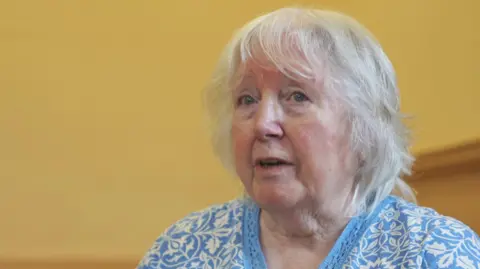
Margaret Gent does not want money to be spent on another referendum
Whatever the prevailing mood, there seems little prospect of another referendum in the near future.
That's been the case since the UK Supreme Court ruled that any further vote would require the agreement of the UK government, which in its current form seems determined to exercise its veto.
The SNP argues that if it can win a majority of seats at Holyrood in this year's election that opposition would crumble - as it did when the party achieved that outcome in 2011.
A few caveats. Back then, the SNP was more popular than it is now, the world seemed more stable and the public had never been given the chance to express themselves in a referendum.
That said, if an outright majority of seats for a pro-independence party was not enough to secure another referendum it would be reasonable to ask: "What is?"
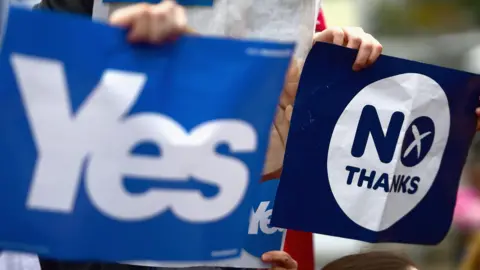 Getty Images
Independence remains an important motivator for some voters on both sides of the debate
The case for independence will be threaded through the SNP's campaign, partly in an effort to rebuild the coalition of support that has sustained it in power for many years.
It wants to win back pro-independence voters who have drifted away and in some cases switched to Labour at the UK general election.
Independence is significantly more popular than the SNP itself.
Every time the idea is promoted in the coming weeks will provide an opportunity for those on the pro-union side to express their opposition in the hope of galvanising their support.
Independence does not feel as potent an issue in 2026 as it has done in previous Holyrood election campaigns but it remains an important motivator for some voters - both for and against Scotland going it alone.