 3 months ago
95
3 months ago
95
Oliver Smith,Business reporterand Lucy Hooker,Business reporter

 BBC
BBC
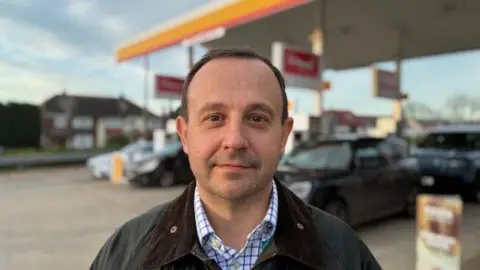
"No one's benefiting here," says Goran Raven - looking around the forecourt.
It's 17:00 GMT on a Friday afternoon, and it's busy. There's a steady stream of customers pulling in to refuel, but Raven isn't as happy about that as you'd expect.
His petrol station in Romford has been in the family for four generations, and this is one of the most challenging periods they've been through.
The price of oil has surged since the start of the war in the Middle East two weeks ago and drivers are feeling the impact, with petrol reaching an 18-month high, and diesel seeing the biggest increases for more than two years, according to the RAC.
As a result, as well as fluctuating prices, Raven and his staff are also often facing angry customers.
"Our prices have just absolutely exploded," he says.
"No one likes to put up their prices for the consumer. It's the worst thing you can do as a business."
But Raven says smaller businesses like his have had no choice.
Larger petrol retailers and supermarkets buy their fuel in advance which often means that rising wholesale costs filter through to the pumps more gradually. They also purchase higher volumes of fuel which means they can often secure a better rate.
But many smaller independent petrol stations pay what is known as daily spot prices, meaning they pay for fuel at the live market price on that day, leaving them more exposed to the surging price of oil.
"When the tanker turns up, we're paying the price the market is demanding that day, not a price that was set a couple of weeks ago."
The storage at his petrol station are small, they can only hold just over a day's worth of fuel.
"The tanker comes in, delivers to us in the morning, and at 08:00 that day, we receive the new price," he says.
He often won't know what the price is until after his fuel tanks have been filled.
"Whatever that price is, we have to pay it. We've got no bargaining power. This can lead to some really horrific shocks for us.
"We can find out that a petrol tanker load might cost us £2,000 more on a Tuesday, than it did on a Monday."
As a small family run business, absorbing those kinds of price rises is very difficult.
Harder still is absorbing the hostility he and his staff are facing from customers.
Raven has gone out of his way to explain why prices are rising, talking to drivers while they are filling up, and posting about the situation on social media.
"We've tried to be transparent and open. We're trying to get the message out on what's happening but unfortunately some people are coming in and being vile to my team," he says.
He understands why people are upset, but says it is not fair to take it out on his staff. Fuel theft has risen too, he says.
The Petrol Retailers Association (PRA), which represents operators in the sector, has criticised what it calls the government's "inflammatory language", which it says could encourage poor behaviour.
Energy Secretary Ed Miliband said this week the authorities were on the look out for price gouging - exploiting rising prices to make bigger profits - and would step in if customers were being "ripped off".
The PRA rejects the suggestion that is happening now. It says some of its members could even find themselves making a loss on diesel, which has seen its price shoot up particularly sharply.
But the Competition and Markets Authority has in the past identified a lack of transparency and competition in the sector and is primed to monitor prices closely now. It is likely report any findings in April.
In the meantime a new fuel finder app, which makes prices available to motorists, and now covers more than 90% of fuel retailers, should help to ensure a more competitive market for fuel.
"I can understand concerns around profiteering," says Raven. But he doesn't think that is what is happening - certainly not in his case, he says.
"We're working on a 4% profit margin. This is hardly profiteering."
Raven says he hopes the situation in the Middle East will settle sooner rather than later, and when it does, he'll adjust his prices straight away.
"The second we get our savings, we'll pass it onto our customers," he says.