 1 month ago
73
1 month ago
73
37 minutes ago
Jonathan BealeDefence correspondent

 Getty Images
Lord George Robertson's comments about "corrosive complacency" on defence will sting the government.
He was the former defence secretary handpicked by Labour to carry out its Strategic Defence Review (SDR).
That highlighted serious gaps in the UK's armed forces - which ministers said would be addressed in its much-delayed defence investment plan.
The delays come alongside reports of the Ministry of Defence facing a £28bn funding shortfall over the next four years.
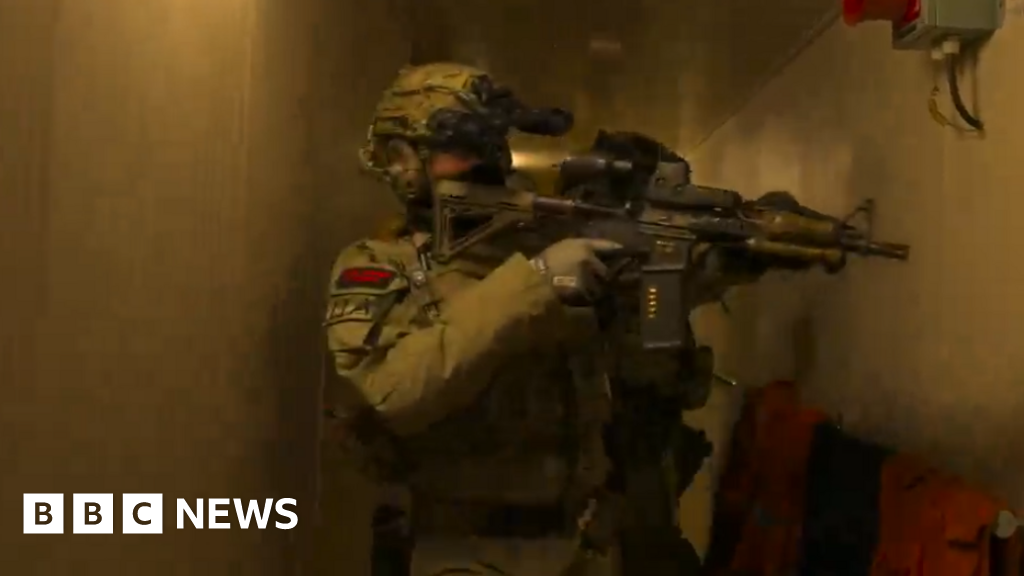
Speaking last month, General Sir Richard Barrons, another one of the authors of the SDR, said the British Army could no longer do "anything substantial", and was so depleted it could only "seize a small market town on a good day".
Troop headcount is also down and some ageing equipment is in a poor state.
Labour came to power promising to reverse the hollowing out of the armed forces, but they remain pretty threadbare.
It is increasing defence spending to 2.5% of national income next year - something it came to power thinking would be enough of a commitment in this parliament.
But as global events have thrown up new challenges, it is now tied to a vaguer pledge to meet a new Nato spending target of 3.5% by 2035.
This investment follows the long tail of a decrease in defence spending during the last decade, dropping by 22% between 2009 and 2017 - only recently returning to 2010 levels.
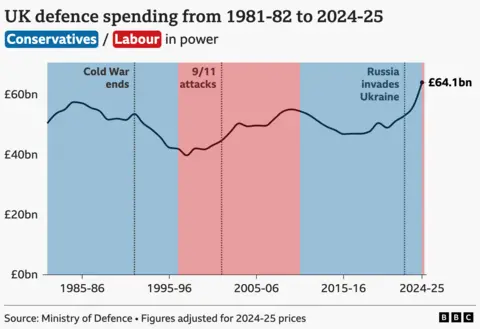
Many in the defence sector believe the increased spending is coming too late.
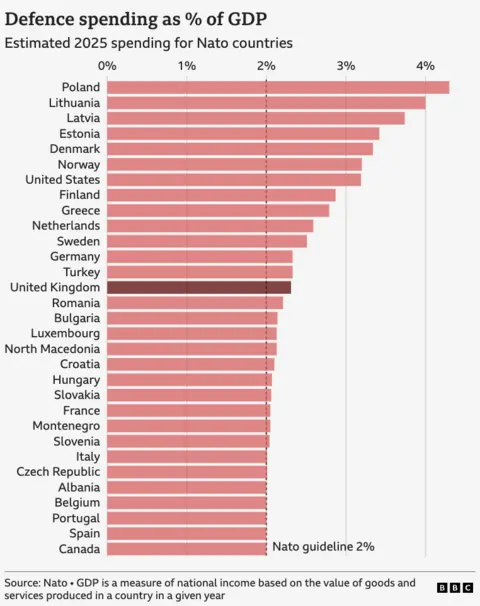
Britain is already falling behind many allies. Whereas it was the fourth largest defence spender in Nato in 2020 – it has now dropped to 14th.
Most Nato allies have ramped up defence spending much faster, and the government's claim to be a leading member of the alliance is becoming less convincing.
There have been several reviews and reorganisations, but, so far, relatively little to show for it.
All of this comes as the government has repeatedly highlighted the rising threats – from Russia, Iran and China.
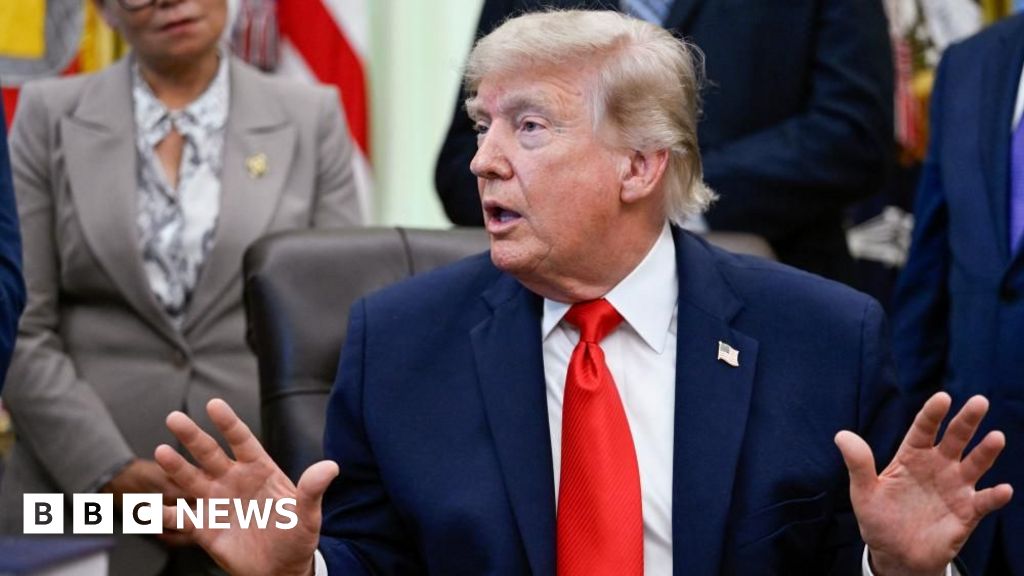
US President Donald Trump has also piled on the pressure.
The strain in the transatlantic alliance and the so-called special relationship raises serious questions for the UK and its armed forces.
If the UK cannot rely on the world's most powerful military any longer, then it will need to do more on its own.