 3 months ago
196
3 months ago
196
Just now
Emer MoreauBusiness reporter

 Ugur Karakoc/Getty Images
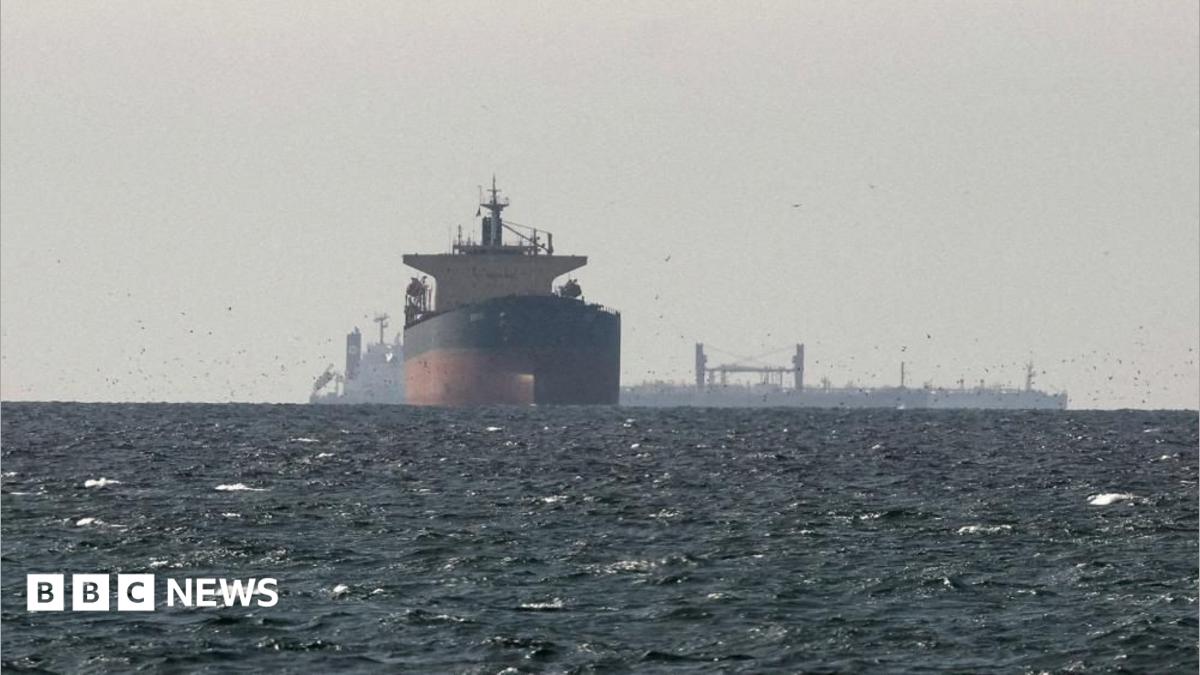
The UK's economy saw surprise growth in March, despite the month seeing the first impact of the Iran war.
The economy grew by 0.3%, confounding analysts' forecasts of a small contraction, although the impact of the conflict is expected to hit growth later this year.
The Office for National Statistics (ONS) said there were signs that consumers and businesses brought forward spending in March due to fears over future price rises brought about by the war.
Chancellor Rachel Reeves said the figures showed the government had "the right economic plan", but warned a Labour leadership contest risked "plunging the country into chaos".
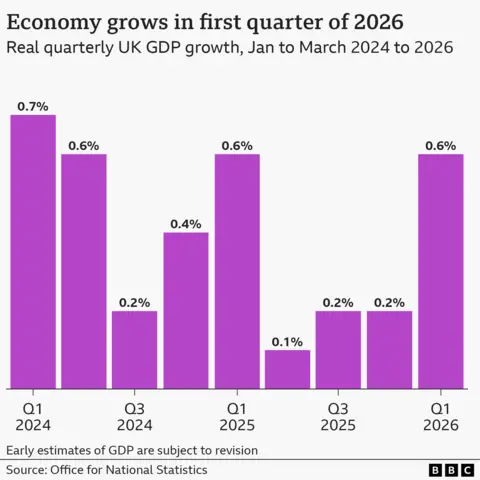
Economic growth in the first three months of the year was 0.6%, the ONS said, led by a rebound in areas such as retailing and construction.
The statistics body said there had been signs of so-called front-loading in March, with some businesses it surveyed "cited activity being bought forward in anticipation of increases in costs because of conflict in Iran".
One such area was car sales and leasing. The ONS said retailers had reported that motorists were stocking up on fuel as prices rose sharply.
Danni Hewson, head of financial analysis at AJ Bell, said some drivers may have been given a "nudge" to buy an electric vehicle (EV) in March because of rising fuel prices.
Yael Selfin, KPMG's chief economist, said the impact of the Iran war was likely to be more pronounced in the second quarter of the year.
"Households are under renewed pressure as energy and petrol prices climb. Food costs are also expected to rise, with disruptions to fertilisers and other essential inputs," she said.
"These increases are likely to weigh on disposable incomes, dampening demand and posing a significant challenge to economic activity over the coming months."

Siblings Boston and Kennady Mace run the Mace Playce play centre in Chelmsford
Siblings Kennady and Boston Mace run a play centre in Chelmsford, Essex. They have noticed how families are having to cut down on spending.
"We've got our own children so we appreciate how expensive a day out can be," Boston said.
"Everything's going up… we've got a limit on what we can charge so the profit margin is getting smaller and smaller."
Kennady added that where families used to use the centre as an all-inclusive venue, there are more visitors paying for activities but not food – "which is understandable … money's a lot tighter".
Boston said the centre has endured the Covid pandemic, a fire, a flood and a theft, but "this seems [to be] the most difficult period we've had" in their 13 years in business.
Chancellor Rachel Reeves told the BBC the economy "is growing strongly" and that she would set out more support for families and businesses affected by the war next week.
But in a reference to the current speculation about the prime minister's position, Reeves said: "We shouldn't put [economic stability] at risk by plunging the country into chaos at a time when there is conflict in the world but also at a time when our plan to grow the economy is starting to bear fruit."
Shadow chancellor Mel Stride said the "chaos surrounding the Labour leadership is destabilising Britain's economy".
"This week, borrowing costs hit their highest level in 30 years as Labour leadership contenders competed to promise even more spending, borrowing and fantasy economics."
Liberal Democrat Treasury spokesperson Daisy Cooper MP said the latest growth figure was "already in the rear-view mirror" because of the war.
"Instead of tackling the cost of living, the government is consumed by infighting."
'Immediate price increases'
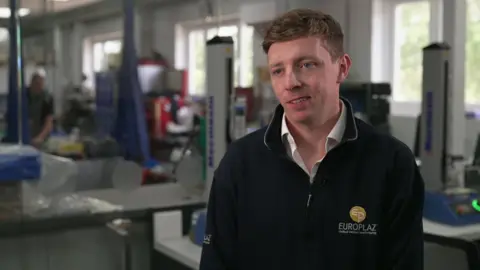
Rory O'Keeffe of Europlaz Technologies said they started to see price increases as soon as the war broke out
Europlaz Technologies, a medical device manufacturer based in Essex, started seeing price rises as soon as the war broke out.
The firm's commercial director, Rory O'Keeffe, said the price of polymers, which is crucial to their operations, has increased by "five to 10%".
"We're seeing pretty much immediate price increases coming through from those suppliers," he told the BBC, but other areas are also affected.
Some of the company's suppliers are even saying "they can't confirm the price until the point of transaction".
"It's hard to run a business at that level and plan."
Ruth Gregory, deputy chief UK economist at Capital Economics, said the latest growth figures would "be the high point for the year" given the effects of the war in Iran.
"We would be very surprised if growth doesn't weaken from May as the temporary boost from stockpiling unwinds and the squeeze on households' real incomes from higher energy prices intensifies.
"In our adverse scenario, the economy suffers a mild recession. So the economy will probably give whoever is prime minister a rough ride."
GDP figures can be revised up or down in future months. While March's growth was higher than expected, the estimate for February was revised down from 0.5% to 0.4%, and January's was reduced from 0.1% to zero.