 3 months ago
164
3 months ago
164
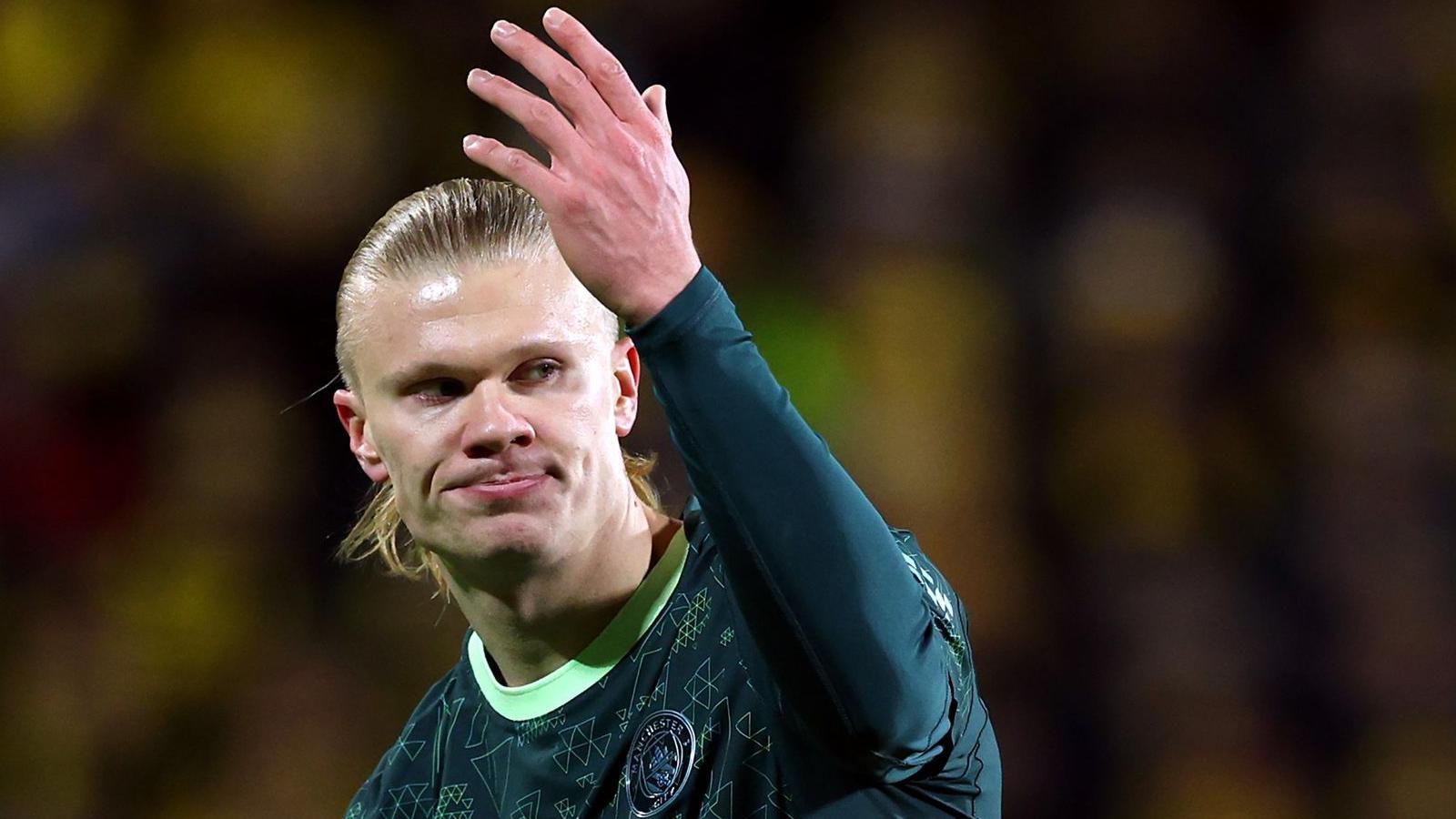 Image source, Getty Images
Man City striker Erling Haaland has managed only one goal in his past eight games
By
Manchester City reporter
The robot is malfunctioning and in need of a reset.
Erling Haaland made a blistering start to the season but that prolific run of form has suffered a glitch.
Though the Manchester City and Norway striker has scored a remarkable 39 goals in just 36 games for club and country this season, he has hit a sticky patch of form with only one goal in his past eight games.
This has coincided with Pep Guardiola's men falling off the pace in the Premier League title race and suffering a monumental shock at Bodo/Glimt in the Champions League.
Guardiola pointed to a lack of energy in last Saturday's derby defeat by Manchester United, but has the 25-year-old played too much football this season and should his manager have taken him out of the firing line?
Haaland takes 'full responsibility'
Haaland's recent struggles in front of goal were summed up during Tuesday's cold and miserable trip to the Arctic circle.
Having surprisingly fallen 2-0 behind, City needed a spark of inspiration to claw themselves back into the contest and just before half-time a gilt-edged chance fell to Haaland eight yards out from goal - but he smacked his first-time effort wide.
That effort would no doubt have rippled the net earlier this season but the striker now finds himself without a goal from open play in his past eight games - it is his longest run while playing for Borussia Dortmund and City with only one penalty scored in that sequence.
"I don't have the answers," a disconsolate Haaland told TNT Sports after the game. "I take full responsibility for not being able to score the goals I should do, so I apologise to everyone and every single Manchester City supporter that travelled today.
"I don't want to speak about how I feel, I do my best whenever I am on the pitch and I am on the pitch quite often because we play ridiculous amount of games. I try to do my best, that is my job and I try to get ready for the next game."
Haaland has played 31 games and 2,568 minutes in all club competitions so far this season, which puts him 12th among all Premier League players for time on the pitch.
However, in terms of forwards from Europe's top five leagues, Haaland ranks second behind only Crystal Palace's Jean-Philippe Mateta, who has played two extra matches but just 52 more minutes than Haaland.
With 16 league games remaining and the possibility of reaching the finals of the Carabao Cup, FA Cup and Champions League (avoiding the play-off round), plus Norway's two friendlies in March, Haaland could potentially add another 33 games to his tally - meaning he could have played a total of 69 matches this season for club and country before reaching the summer's World Cup.
Haaland will 'come good again'
Not only have the goals dried up since last scoring from open play against West Ham over a month ago, but there is a drop-off in many attacking metrics.
Since that game, Haaland is taking a shot fewer per 90 minutes, his touches in the opposition box have fallen from 6.7 to 4.3 and his expected goals (xG) has gone from 0.98 to 0.42.
There has also been a stark decrease in the big chances that have come his way, going from 1.94 per 90 minutes to 0.81.
Injuries to key defenders Ruben Dias and Josko Gvardiol may have hampered how quickly City get the ball up the pitch, Rodri is trying to find his best form following a long injury lay-off, and Phil Foden has not managed a single goal or assist since the West Ham match.
Haaland has taken responsibility but perhaps Guardiola should look to himself too, having made the decision to give his player so much game time this season.
Fielding him for 45 minutes in the 10-1 FA Cup third round trouncing of League One Exeter City was particularly curious as teenager Divine Mukasa could have started a match that the hosts were not likely to lose.
Guardiola, though, has been stung by November's shock 2-0 home loss to Bayer Leverkusen in the Champions League when the decision to make 10 changes to the starting line-up backfired spectacularly.
But with Omar Marmoush returning from Africa Cup of Nations duty and January signing Antoine Semenyo having the ability to play anywhere up front, the burden of goalscoring responsibility should be relieved from the shoulders of Haaland.
Although Haaland had another off night on Tuesday, former Premier League striker Chris Sutton told BBC Radio 5 Live he does not think there should be worries about the City player's form.
"He is a striker who has pretty much scored goals all the time," said Sutton. "He will come good again.
"Anyone who wants to write him off should do so at their peril."
Tactical analysis: Are Man City playing to Haaland's strengths?
By
Football tactics correspondent
This question feels odd to ask given Haaland is the Premier League's top scorer with 20 goals in 22 games, but in City's past eight games in all competitions, Haaland has scored no goals in open play.
Now, Guardiola has spoken about the fixture pile-up but has anything else changed on the pitch to explain this alarming form?
Throughout his career, the Norwegian striker has thrived running in behind, more vertically. The ideal chance created for Haaland looks like a through ball that gets him running on to the ball, before shooting across goal from the left half-space.
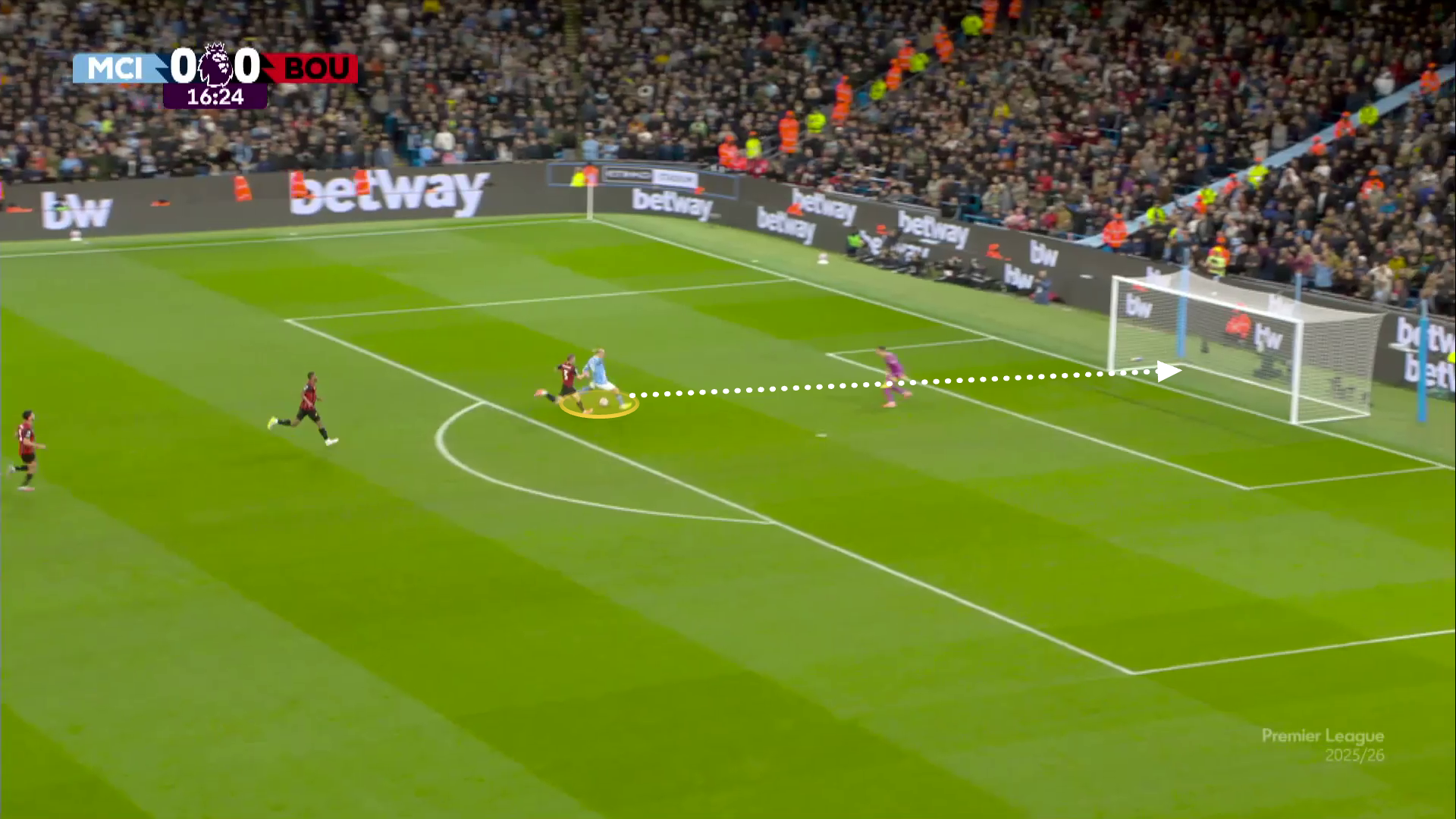
For this goal against Bournemouth this season, Haaland started his run in his own half before getting on the end of the through ball and scoring
City leaned into playing in a more transitional and direct style of play at the start of the season, making use of the pace of players like Jeremy Doku, Tijjani Reijnders and of course, Erling Haaland - scoring more fast breaks this season than during their 2023-24 and 2024-25 seasons combined.
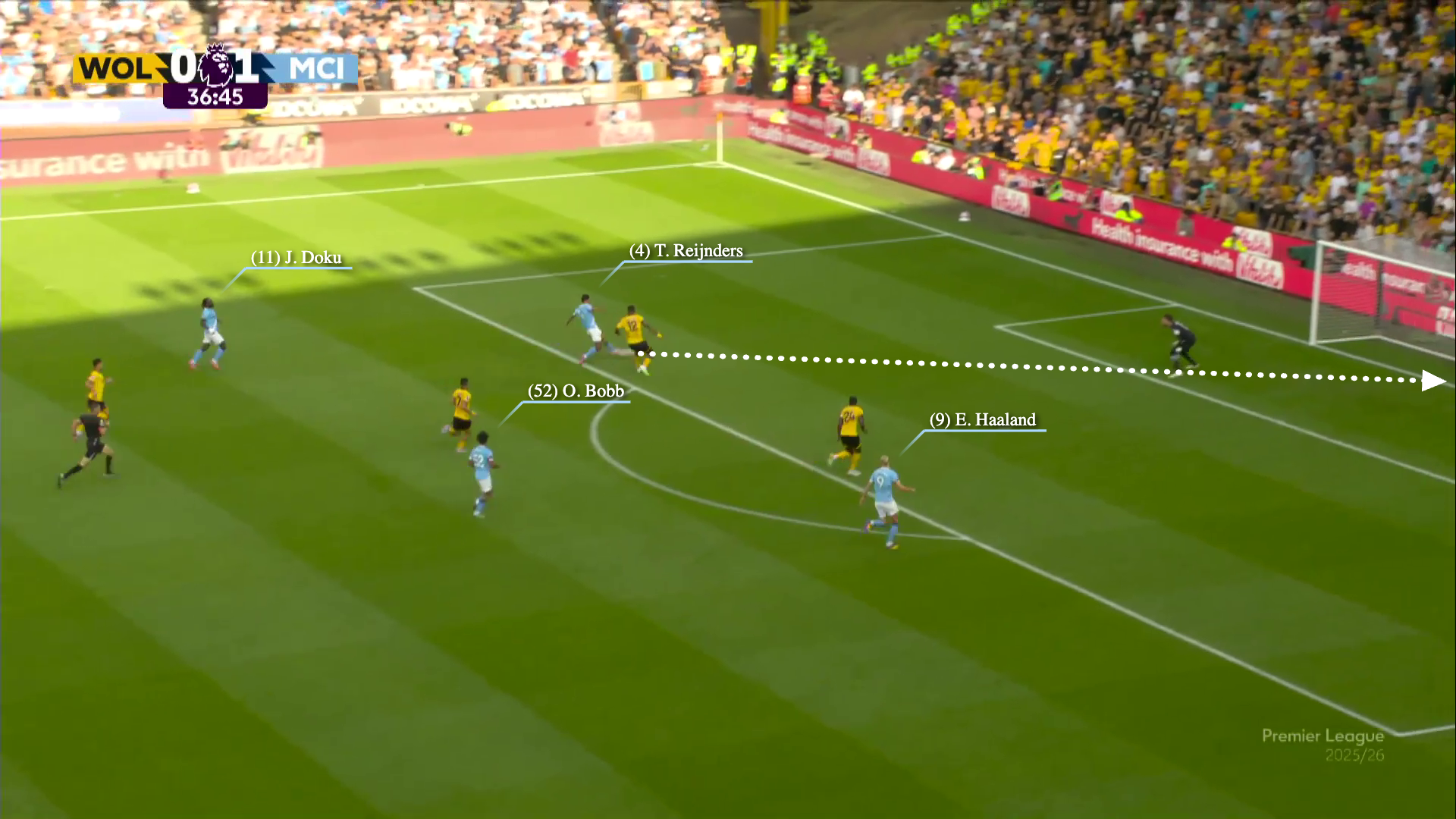
Reijnders' goal against Wolves is a great example of the style of goals City scored at the start of the season, with many coming via fast breaks
This suited Haaland massively, but attacking in a quicker fashion has implications for how the team defends. By attacking quickly, teams are more likely to lose the ball and find themselves with fewer players behind the ball, before getting counter-attacked themselves.
Guardiola spoke on this version of City, subtly hinting at wanting to reintroduce a more measured approach in line with his previously successful sides, saying: "I love [how much we run], last season we didn't have that. But it's not enough, we have to play better [so] we could run less," after their 3-0 win against West Ham in December.
This appears to have been the case as the season has progressed. By playing in a more controlled way, in theory, City would both concede fewer counter-attacks whilst also facing more low-block.
However, recent injuries to many City players have impacted their ability to perform these tactics both technically and physically.
What does this mean for Haaland?
The loss of ball-playing defenders reduces how quickly City can get into dangerous positions. There are fewer passes played from deep for Haaland to run on to. There is also a decrease in City's ability to pin teams in.
Gvardiol ranks second for both line-breaking passes (11.9) and progressive carries (11.7) per 90 minutes in the Premier League this season. Without him, City are often stuck in between the two situations Haaland has shown quality against.
If City can push teams back, Haaland usually has two answers.
The first is that Haaland will make a darting run in the box before stopping or slowing down. The defenders around him will continue moving towards their own goal, often in response to a winger's movement. A cut-back then finds Haaland in open space to score from.
Doku's ability to push defences back before pulling the ball back into space in front of defences has been a method of chance creation Haaland has missed, with the Belgian yet to find the same form he showed at the start of the season. Foden and Nico O'Reilly as natural left footers have shown that same quality at times too.
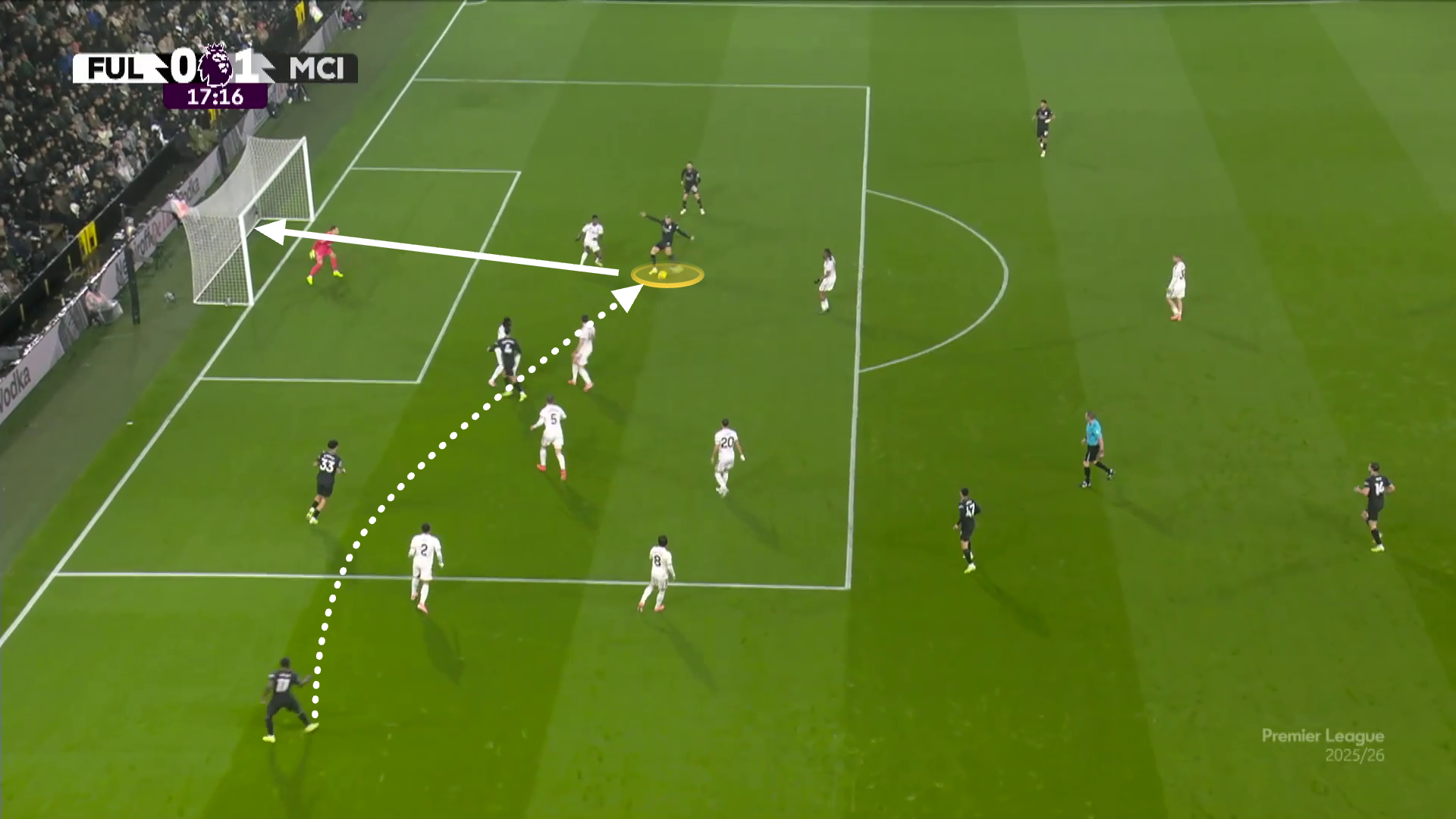
Doku's dribbling quality allows him to get past defenders, which pushes the entire defensive line back, before cutting the ball back to Haaland. This is how he scored the opener against Fulham this season
The other common solution Haaland opts for against low blocks is moving to the back-post to receive crosses. He does this far more frequently than attacking at the near post. The space at the near post is often free for a teammate to attack – in the past, Ilkay Gundogan, and at present Phil Foden or Reijnders.
Reijnders has picked up some of the scoring load by attacking these spaces, with teams applying significant pressure to City's number nine, sometimes with two players and in a man-marking fashion.
Matheus Nunes' recent absence doesn't bode well for Haaland's numbers either. His crossing ability is an underrated part of his game and with 10 assists, only Kevin de Bruyne (22) has provided more for Haaland at City.
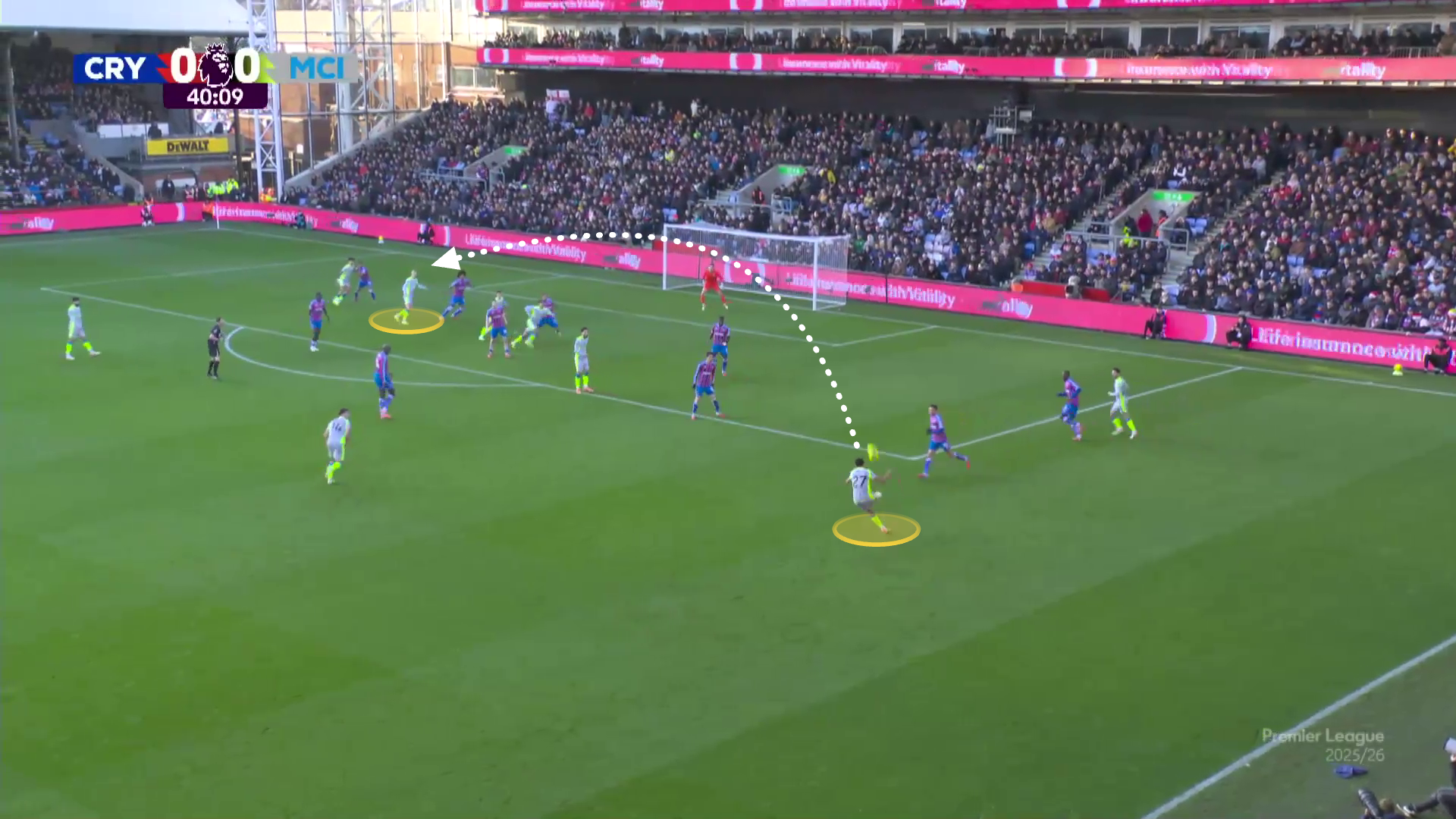
Nunes has assisted Haaland through accurate crosses to the back post on more than one occasion this season
Most weeks, teams will set up to give Haaland as little space as possible with the exception of the high-pressing Bournemouth - who Haaland scored twice against earlier this season.
City must therefore create space for him, whether that be through direct dribbling or runs off the ball that push defences back, or by being willing to speed up play and attack quickly.
Otherwise, Haaland will hope the wide men will be able to find the six foot five attacker at the back post more often than they have.