 3 months ago
126
3 months ago
126
Ballard sent off as Wolves hold Sunderland to 1-1 draw
ByAlex Brotherton
BBC Sport journalist
Handballs, offsides and the impact of video assistant referees (VAR) have been huge points of contention in recent years, but is it now time to add hair pulling to the list?
Sunderland defender Dan Ballard became the third player this season to be sent off for pulling an opponent's hair in Saturday's 1-1 draw at relegated Wolves.
It happened in the 24th minute when he challenged home forward Tolu Arokodare for the ball.
Referee Paul Tierney initially took no action, but showed the red card to the centre-back after the VAR advised him to check the incident on the pitchside monitor.
As Sunderland fans chanted 'this isn't football', Ballard joined Everton's Michael Keane and Manchester United's Lisandro Martinez in being sent off for a hair pull this season.
Nigeria striker Arokodare has been on the end of two of the three hair pulls this term - the first involving Keane on 7 January.
Everton and Manchester United both failed in their appeals to get the red cards, and resulting three-game bans, overturned, so it is unlikely Ballard and Sunderland will be successful should they make a challenge.
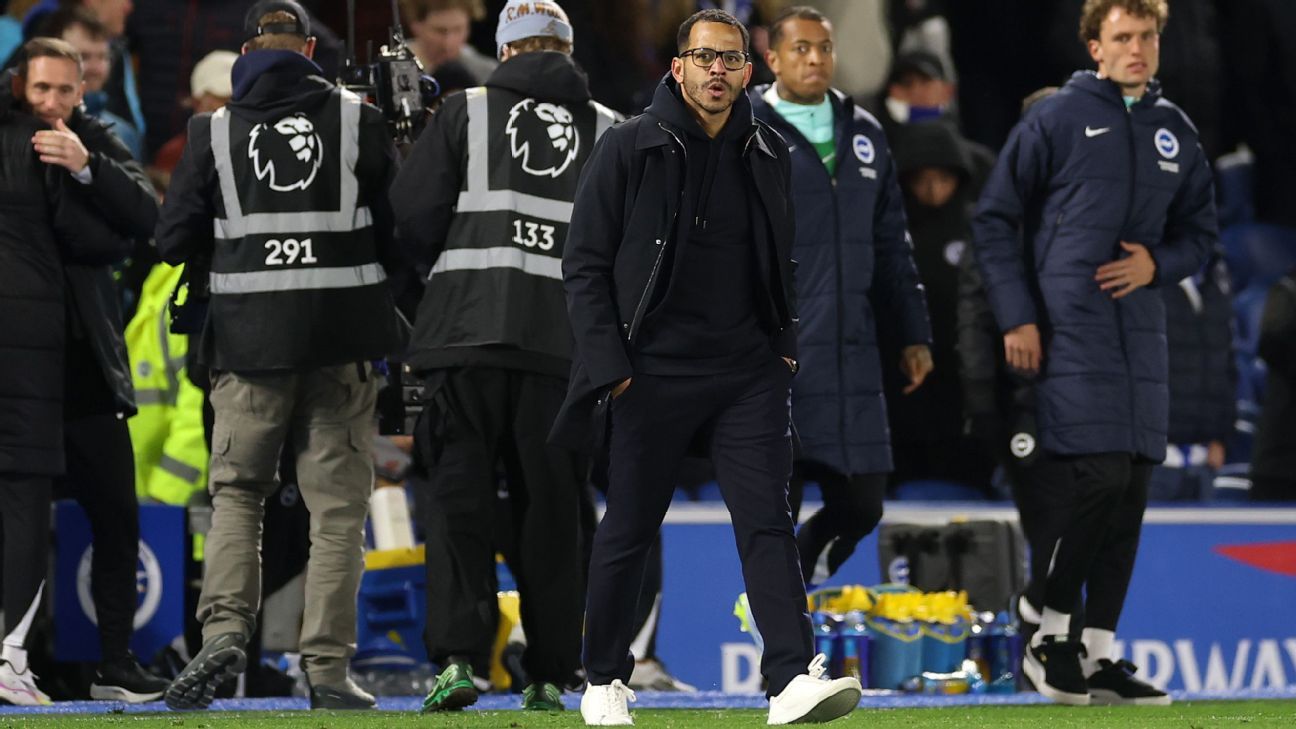
"I think, when it's not intentional, it was an accident. It's hard to execute the rule like it was intentional," said Sunderland manager Regis le Bris.
"So sometimes handball is the same, there is always a grey area and, probably, with this rule we are in that stage."
'When the forward has long hair, it's hard'
When it comes to hair pulling, there isn't a specific law.
It currently falls under the remit of violent conduct, in the same way that pushing someone in the face or elbowing an opponent in the head does.
As hair pulling is treated as an act of violent conduct, referees' body Professional Game Match Officials Limited (PGMOL) made it clear to clubs at the start of the season that it will always be considered a red-card offence.
"It's really hard to digest because I don't think it was an intentional and violent conduct. It was a duel in the air and with a tall striker," added Le Bris.
"So in the air 20 times in the game many things can happen but it wasn't intentional.
"If the rule is the rule when you face a striker with long hair you'll have problems because you can't defend, anything can happen."
It's a grey area though.
Fulham defender Kenny Tete escaped a red card for an apparent hair pull on Manchester City forward Antoine Semenyo during his side's 3-0 Premier League defeat on 11 February.
It's also an issue in the women's game. On 1 April, Arsenal's Katie McCabe remained on the pitch despite pulling the hair of Chelsea winger Alyssa Thompson in a Women's Champions League quarter-final.
Le Bris said: "I think it's important for the referees and the Premier League to be clear with the rule because in this case, you can't play a duel in case you accidentally grab something. I hope we will have a conversation with the referees to adjust this rule and make it better.
"When the forward has long hair, it's hard. It's important to have this conversation and make the rule clearer."
What cannot be questioned is Tierney followed the directives at Molineux.
"It's the letter of the law. We've had it twice with Tolu [Arokodare] this season," said Wolves manager Rob Edwards.
"I'm not saying it's a deliberate thing - but it's happened."
'It's clear some hair pulls are extremely violent and others are not'
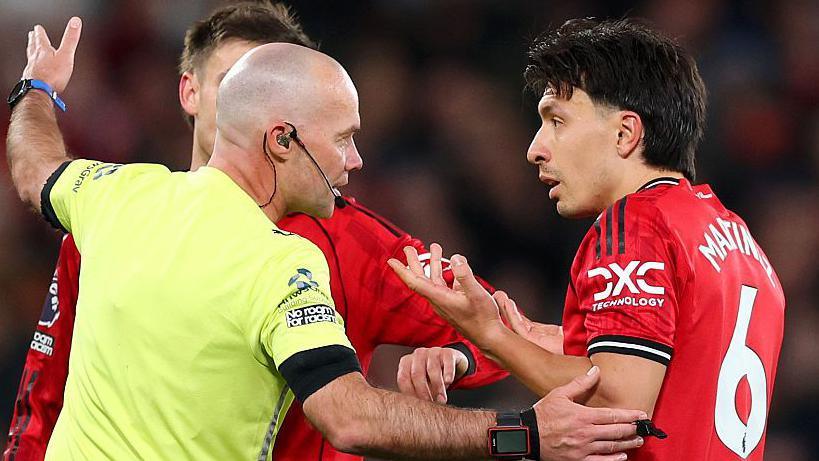 Image source, Getty Images
Manchester United's Lisandro Martinez was confused when Anthony Taylor sent him off for a hair pull on Leeds striker Dominic Calvert-Lewin
But some hair pulls - such as the one by Argentina centre-back Martinez on Leeds striker Dominic Calvert-Lewin last month - appear to be more accidental than violent.
So could the rules be changed?
"Understandably, some may feel that Martinez's actions were not particularly violent, but this is merely the red-card category into which all hair pulls are assigned, irrespective of the level of force," former Premier League referee Darren Cann told BBC Sport.
"Is it time to reconsider where hair pulling should sit? I think so.
"One solution worthy of consideration would be to make 'pulling an opponent's hair' a separate category.
"There is precedent for this. 'Biting or spitting at someone' is an act of violent conduct but, as far as a ban goes, it is treated separately.
"Those offences carry a minimum six-game ban, hence the need for a different category. It is clear that some hair pulls are extremely violent and others are not.
"Removing it from the violent conduct category would allow a sliding scale of, say, a one, two or three-game ban - depending on the severity of the hair pull."
'The world of VAR has changed the perception'
By
Football issues correspondent
A few years ago the idea that someone could be sent off for pulling someone's hair was unheard of.
But the world of VAR has changed the perception.
A video review means the grasp of hair unseen by the referee might be picked up by someone watching on television.
So why is it a big thing now?
It's difficult to put your finger on, or not, but it really has blown up this season.
It started with Keane's red for Everton against Wolves and then Manchester United's Martinez getting sent off against Leeds.
Since then, fans have found several examples of what fans think is hair pulling. So what is the difference?
The VAR is looking for clear evidence, that the opponent's hair is in the grasp, not only touching it.
The furore has created the perception that any evidence of the hand touching the hair is enough for violent conduct, but it isn't.