
Jesse RogersDec 19, 2025, 07:00 AM ET
- Jesse joined ESPN Chicago in September 2009 and covers MLB for ESPN.com.
As the hot stove season plays out and we wait to see where the top remaining free agents sign, MLB teams are already looking ahead to how they'll use a major rule change coming to the sport in the new season.
After more than a decade of the video review challenge system being used for plays on the bases, MLB is set to do the same for balls and strikes. Beginning in 2026, the batter, catcher or pitcher will be allowed to challenge a ball/strike call made by the home plate umpire, utilizing a system that's been in use in the minor leagues for several seasons. Teams are initially allowed two challenges per game, and if successful, they can keep challenging. But after losing two, they are out of luck for the rest of the game.
Those parameters open the door for strategic use of challenges. Managers undoubtedly won't want to lose their two challenges early -- especially in low-leverage moments -- only to need them later when the game is on the line. Since only the pitcher, catcher or batter can ask for a challenge -- and by rule it has to happen instantaneously, meaning no time to look at a monitor and signal in instructions -- managers are going to prep their teams ahead of time on when it is best to use a challenge.
Teams are in the early stages of formulating their challenge strategy, but at the winter meetings earlier this month, ESPN asked managers for a peek inside their thinking as spring training inches closer. One thing became clear: Managers won't be relying on -- or perhaps even allowing -- pitchers to challenge calls.
What are your initial thoughts on the challenge system?
Arizona Diamondbacks manager Torey Lovullo: "I like it. I think initially in early 2010-ish, '11, when they started talking about things that were going to change -- I'm a baseball purist. I love baseball. But out of necessity, the times have changed, and I welcome the fact that they're going to go to this system."
Philadelphia Phillies manager Rob Thomson: "I really want to sit down with our minor league people, especially our Triple-A staff, because they know more about it than I do. I think I'm going to really like it. I liked it last year in spring training, and I think the players really liked it for the most part.
"There's a couple of guys that weren't real keen on it, but I think for the most part, guys liked it."
Milwaukee Brewers manager Pat Murphy: "I don't know enough about it, like I want to know. Obviously, I know how it works, and we did it in spring training. ... I want to dive in even more, get as much information as I can to try to figure out what the best way to handle it is and bring it to the club.
"What I love is it's player-driven, you know what I mean? And it requires the players to embrace it, understand it, understand the strategy of it. It's all good for our game, that's what I'm thinking."
How will you go about formulating a challenge strategy?
Detroit Tigers manager A.J. Hinch: "I've spent some time talking to our player development group and even some of the players who have gone up and down [to the minors]. I think, similar to the replay, there are subtle little adjustments that everybody's had to make around some new rules. It will fall into a good rhythm and a good understanding of it. I think the first month will probably be the hardest month. Maybe spring will help a little bit. But in the spring, you can try and fail, and it's not that penal.
"You do that in San Diego or Arizona or a home opener against St. Louis, and it's a little more costly. We'll have a running tab on who's good at it and who is not. Because there might be some position players who get their optionality taken away from the challenge call."
Murphy: "As far as reserving or holding the challenge, I'll instruct them on the impact of the game determining if you should or shouldn't. I just don't want somebody up there randomly, in the bottom of the second inning, wasting our last challenge and saying that's the end of it. I want us to be smart about it.
"We'll instruct them. We'll talk about it. We have very smart baseball players. They'll be able to make that adjustment."
Cincinnati Reds manager Terry Francona: "We have a camp in early January. I think they call it battery camp. Got a lot of our player development people out there, and that is one of the things on the agenda to talk about."
Minnesota Twins manager Derek Shelton: "This is one of those things that you're not going to get a really good barometer in spring training because it doesn't really matter in spring training. I think we're going to have to make it matter a little bit in spring training. I think how we train for it in spring training, whether it's using bullpen situations to be able to educate your group of what's a strike and what's not a strike."
Pittsburgh Pirates manager Don Kelly: "We're really relying on our minor league staff to come up with some parameters. We'll dive in to develop a system to maximize things when they get here."
Colorado Rockies manager Warren Schaeffer: "We're bouncing back and forth about specific game situations. In low leverage, do you want to even risk it? Balancing that with the level caliber guy that knows the strike zone. You give them free reign in spring training. Find out who knows the strike zone.
"Nobody on two outs in the second, probably not. Late innings? Maybe if it's the sixth inning and bases loaded, maybe you use it."
St. Louis Cardinals manager Oliver Marmol: "I'll spend a ton of time on it with our staff. And of course down below [in the minors]."
Shelton: "We've talked about it a ton. I don't know if anybody has an idea. I guarantee you're going to see a lot of copycat. You're going to see every organization watching other organizations and how they attack it."
There's been chatter about not allowing pitchers to challenge. How do you see it?
Lovullo: "Based on some of the questions that I've asked and the conversations that I had with people in player development that are very familiar with it, and what I saw in spring training [last year], I'm going to try not to allow the pitcher to make the [call]. They get very emotional. They hit their spot, and they want that inch and a half off the plate. I think that's just what baseball has done over the course of the time. They hit their spot, the glove's there, the catcher receives it well, the umpire is going to call it. I'm going to mostly rely on the catcher first and then potentially the hitter. I'd allow them to do it."
Shelton: "My early thought -- I don't know if I should say this -- I don't think the pitchers should ever challenge. I think pitchers think everything is a strike. So I think there's going to be strategy -- that's going to probably piss off some pitchers -- I think there's a strategy to it."
Hinch: "We haven't gone that far yet to say that they're not. I have to have some conversations with pitchers who definitely want to.
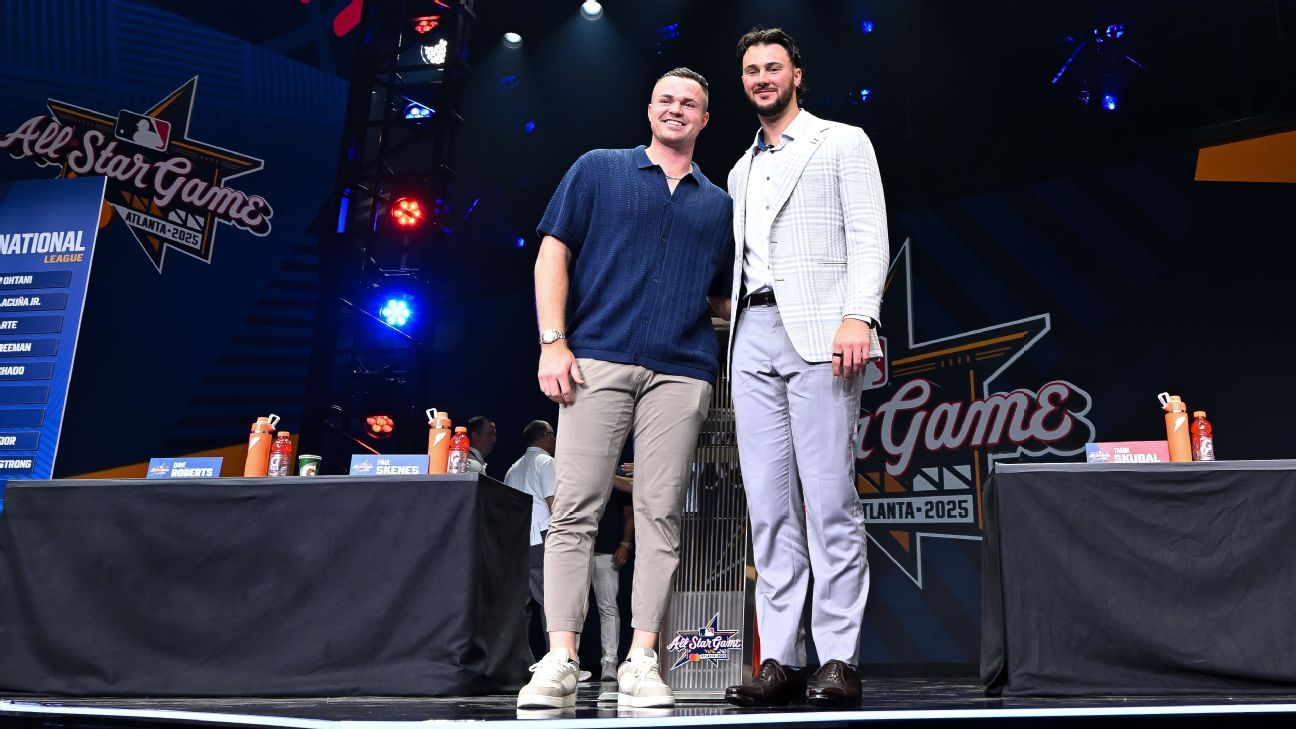
"Tarik [Skubal] already had a little bit of a trial at the All-Star Game. I don't know if it's fortunately or unfortunately, but I think he got it right. That probably helps his case, but we've got to go over that by the time we get to spring. And ideally, we'd like to leave that up to the catcher. Not because I'm an ex-catcher, but because of the vantage point and the understanding of where that strike zone is. But I will have my work ahead of me with a few of our guys."
Schaeffer: "When I managed in Triple-A, that was a rule. Because it's emotional for them."
Francona: "My guess is most of the teams will not allow their pitchers to do it. That would be my guess."
Murphy: "I don't think you can do that. I think you have to trust your players. You've got 26 active. You've got to trust them. You try to educate them, try to give them as much information as possible. We'll see how it rolls."