 3 months ago
122
3 months ago
122
Jennifer McKiernanPolitical reporter
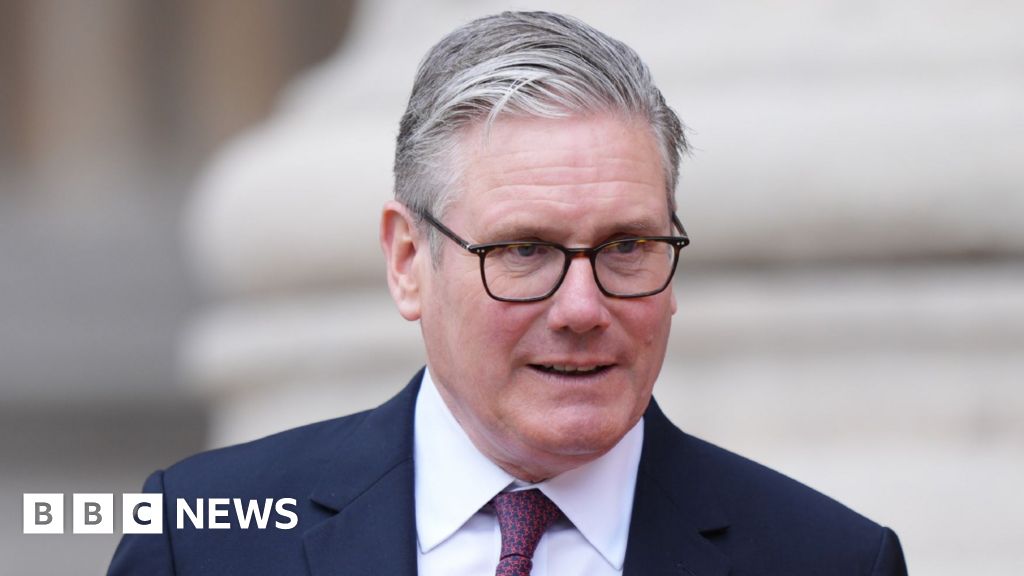
Prime Minister Sir Keir Starmer has told the BBC he regrets welcoming British-Egyptian activist Alaa Abd El Fattah to the UK, following the emergence of old social media posts which included calls to kill Zionists.
Speaking to the BBC's Sunday with Laura Kuenssberg programme, Sir Keir again called the posts "abhorrent" and said he "should have been made aware and I wasn't".
The Conservatives, Reform UK, and some senior Labour MPs have called for Mr Abd El Fattah to be stripped of his British citizenship as a result of the posts.
The prime minister has launched a review into what he called a "failing in the system".
The UK has long lobbied for Mr Abd El Fattah to come to the UK under both Conservative and Labour governments, but politicians at the top of successive administrations appear to have been left in the dark about his social media history.
On Boxing Day, Sir Keir said he was "delighted" the activist had arrived in the UK and had been "reunited with his loved ones" following his release from an Egyptian jail.
Speaking to the programme, Sir Keir said "of course I regret that", stressing that Mr Abd El Fattah's posts had been "abhorrent".
He said: "As I've made clear, I didn't know about those comments at the time of welcoming El Fattah to this country."
Pressed by Ms Kuenssberg on why nobody in government appeared to have "bothered to check" Mr Abd El Fattah's background, the prime minister said he had asked the same question of the team involved "because I do think I should have been made aware and I wasn't made aware".
He added: "Yes, it's a failing within the system, it shouldn't have happened and I wasn't very pleased about it when I found out, hence we're taking remedial action."
The prime minister also explained that Mr Abd El Fattah's case had been treated as a "consular case" by embassy officials because the government had a duty to step in where a British national was "being treated in an improper way in another country".
"That's why I acted in this case," he said, adding: "Actually, previous prime ministers acted in exactly the same way in the actions they took to try and get him released, because that's what happens in consular cases."
Mr Abd El Fattah had been the most prominent of Egypt's political prisoners, with human rights groups saying he had been unfairly detained for 12 years, with his latest conviction being for sharing a Facebook post about torture in the country.
The 44-year-old is a dual national, who was granted UK citizenship in December 2021 through his London-born mother - when the Conservatives were in power and Dame Priti Patel was home secretary.
His release from prison followed a long campaign by his family - backed by celebrities such as actors Judi Dench and Olivia Colman - and lobbying by the British government.
Mr Abd El Fattah flew to the UK to be reunited with his 14-year old son in Brighton on Boxing Day, but social media posts originally made in 2012 quickly resurfaced.
In one, Mr Abd El Fattah appears to say he considers "killing any colonialists and specially Zionists heroic, we need to kill more of them".
Another appears to say, "I am a racist, I don't like white people", and in another he is accused of saying police do not have rights and "we should kill them all".
The Board of Deputies of British Jews said the case was of "profound concern" and demonstrates an "astonishing lack of due diligence by the authorities".
Adrian Cohen, the board's senior vice-president, said: "His previous extremist and violent rhetoric aimed at 'Zionists' and white people in general is threatening to British Jews and the wider public."
Shadow justice secretary Robert Jenrick said Mr Abd El Fattah's social media showed he had "extremist views that are completely incompatible with British values" and he should "be made to live in Egypt or frankly anywhere else in the world".
Reform UK leader Nigel Farage said previous Conservative and Labour governments had "opened our doors to evil people", adding that he would change the law to strip Mr Abd El Fattah of his British citizenship and have him deported.
Mr Abd El Fattah has "unequivocally" apologised for the tweets, saying the comments were "expressions of a young man's anger".
However, within hours of his apology, BBC News established that his Facebook account had liked another user's post which described criticism of him as a "relentless smear campaign" being waged by "the richest man in the world, a couple of Middle East intelligence services, and a few Zionist organisations".
Stripping a person of their British citizenship has typically only been done in cases linked to terrorism or serious organised crime where someone is deemed a national security threat.
Sign up for our Politics Essential newsletter to read top political analysis, gain insight from across the UK and stay up to speed with the big moments. It'll be delivered straight to your inbox every weekday.