 4 hours ago
15
4 hours ago
15

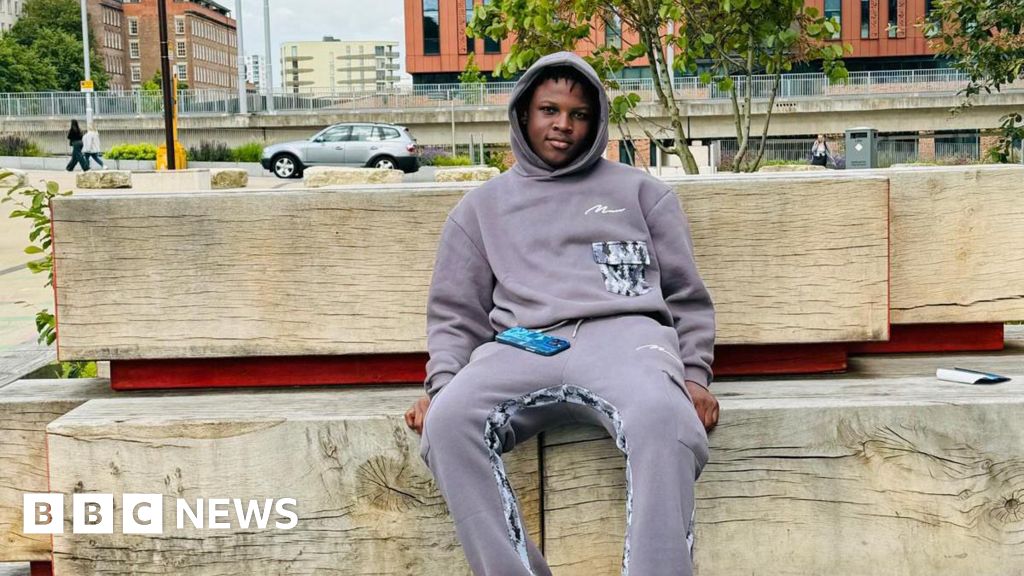
Holly Ratchford has decided to speak out publicly for the first time
ByJane McMullen
BBC Panorama and BBC Radio 4
Holly Ratchford still cannot believe that the man who moved into the residential complex she once managed would go on to be accused of involvement in the darkest day in recent US history.
"It's almost impossible for me to wrap my head around who he said he was, and who he really is. I still struggle with that," she tells the BBC.
The man, Omar al-Bayoumi - a Saudi in his early 40s - moved to the complex in San Diego, California, with his family in September 1999.
The new resident at number 152 Parkwood Apartments quickly became a regular at Ratchford's pool parties. "He was always so bubbly and smiling," she recalls, "and just very, very friendly."
A few months later, Bayoumi would introduce Ratchford to two apparently unassuming, "polite" men, who would also become her neighbours.
The pair would become infamous for hijacking American Airlines flight 77, and crashing it into the Pentagon, in the 9/11 attacks.
Ratchford has been haunted by her connection to these three men for the past 25 years. She feels she was taken in by Bayoumi from the start.
"Whenever I had parties he would come and be a part of the activities," she recalls, adding that his family would invite her in for food.
"I enjoyed going over."
But Bayoumi, the one-time resident of 152 Parkwood, is now at the centre of the $1 trillion (£733bn) lawsuit brought against the Kingdom of Saudi Arabia by several thousand families of victims and as well as survivors of 9/11.
On 11 September 2001, four passenger aircraft were hijacked by 19 members of the Islamist extremist network, al-Qaeda. In addition to the crash at the Pentagon - the US military's headquarters near Washington DC - two planes were flown into the twin towers of the World Trade Center in New York, causing both buildings to collapse. A fourth crashed in a field in Pennsylvania, following resistance from passengers on board.
In all, almost 3,000 people were killed, including about 300 firefighters and other emergency workers at the World Trade Center.
 Image source, Getty Images
The aftermath of the attack on the Pentagon on 9/11
Bayoumi is alleged to have facilitated the 9/11 plot through the support he provided for the first two hijackers to arrive in the US - Nawaf al-Hazmi and Khalid al-Mihdhar - who lived at Parkwood for several months prior to the attacks.
The federal judge in the 9/11 families' lawsuit in New York found a year ago that the evidence created "a reasonable inference" that Bayoumi and a Saudi diplomat based in the US had been "co-ordinating with the Saudi government when providing assistance to the hijackers".
The judge's ruling has allowed the families' case to move forward. Saudi Arabia is appealing it and, together with Bayoumi, has always denied the allegations.
Ever since the attacks, Bayoumi has been the subject of reporting and speculation.
Ratchford - who saw him interacting with the hijackers and witnessed him providing a crucial act of support for them - has given a sealed declaration to the New York court.
But she has never spoken publicly about what she saw.
 Image source, Holly Ratchford
Ratchford was property manager of Parkwood Apartments in the late 1990s
Finding Holly Ratchford was not easy.
After unwittingly becoming embroiled in the investigation into what the US government has described as "the most egregious criminal act on American soil in modern history", she moved about as far from humanity as you can get in the United States.
I tracked her down to the high desert in the western US - rattlesnake country. She told me she avoided the news, and definitely did not speak to journalists. But, to my surprise, she agreed to talk.
Her interview with me casts doubt on the version of events Bayoumi has told police, the FBI and the New York court, and features in the BBC Radio 4 podcast, Intrigue: A 9/11 Story, and an upcoming BBC Panorama, 9/11: The Saudi Connection.
Intrigue: A 9/11 Story
Twenty-five years on from the deadliest terror attack in history, Jane McMullen asks why thousands of grieving families are still fighting for answers.
In early 1999, Ratchford landed on her feet. Life before then had been untethered - she had moved around, been married, pregnant and divorced before she was 21. But now, aged 27, she had a job she loved and a home.
As the new property manager of Parkwood Apartments, a squat complex of 175 low-rise apartments and townhouses in the San Diego suburbs, she says she excelled. Properties were never empty for long. But it was not the paperwork, nor the healthy pay check, that made the job a dream, it was the people.
Ratchford not only worked at Parkwood, she lived there too. Her clients were also her neighbours. And many were more than that - she says they became her friends.
"I always told my staff: 'You make them feel like this is their home, and they'll stay,'" she recalls.
As Ratchford made her mark at Parkwood, she was happy and secure in the world she had built - a world in which she knew everyone and everything.
Then, things fell apart in a dramatic and unexpected way.

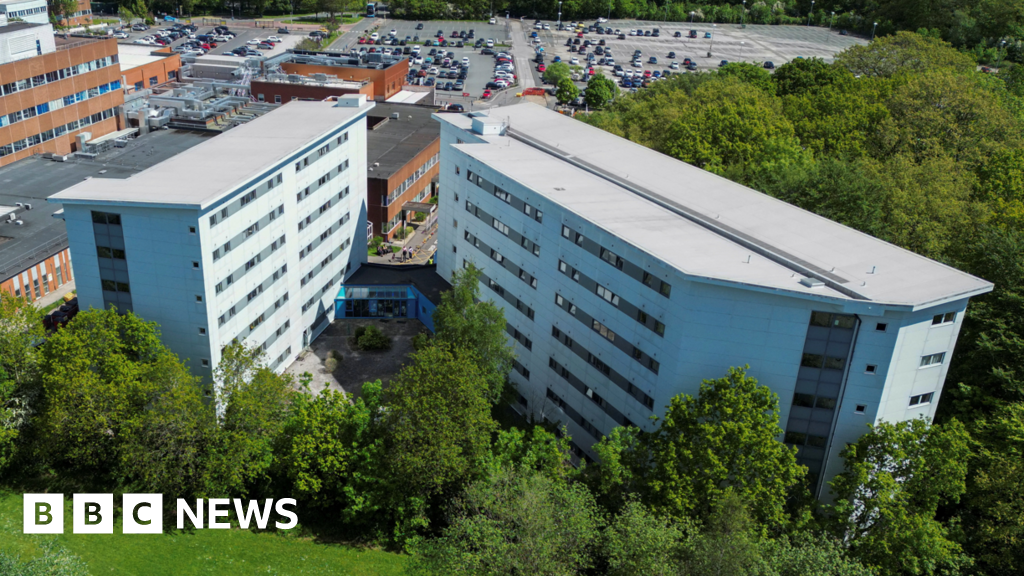
The Parkview Apartments complex, seen here today, in the San Diego suburbs
Omar al-Bayoumi moved into Parkwood claiming to be a mature student.
"I knew he was going to school. I'm not sure, other than that, what he did," Ratchford says.
More than two decades later, declassified FBI documents and court filings would reveal that Bayoumi's studies had, in effect, come to a halt in 1998. He was spending much more time organising religious activities in the Muslim community, which he often videotaped.
His constant filming, and his inquiring questions, aroused suspicions.
"It was a general consensus of people in the San Diego Muslim community that Bayoumi was an operative of the Saudi intelligence service," Richard Lambert, who led the city's FBI office investigation after 9/11, tells me.
But it was not Ratchford's business to pry. What mattered to her was whether he could pay the rent. And he could.
The FBI would later discover he was being paid about $90,000 (£55,600 at the time) a year.
Home videos show Bayoumi visiting Las Vegas and SeaWorld, and playing poolside with family
Bayoumi presented himself as an ordinary family man.
The Bayoumi who Ratchford saw was captured on his never-before-broadcast home movies - throwing a ball around with his family by the Parkwood pool, laughing when it drifted into the water.
Another video reveals him on an excursion to Las Vegas with his family. Wearing a floral shirt, he points out the rollercoaster by the New York, New York hotel casino.
"I bought into everything that he told me. I really thought that's how he was," Ratchford says.
But that version of Bayoumi is at odds with the man who emerges from other videos.
In summer 1999, Bayoumi filmed the United States Capitol in Washington DC from different angles, noting a "plan", and turning the camera on himself to deliver a reporter-style commentary.
The 9/11 families' lawyers allege he was surveilling the building as a potential target for the attacks. The Kingdom of Saudi Arabia maintains it is a tourist video.
In his August 2025 judgement, the New York judge found that "all the Court can conclude" from the video is that Bayoumi "visited Washington DC and that he filmed the city".
 Image source, SDNY
Bayoumi noted a "plan" while filming outside the Capitol
On 3 February 2000, Bayoumi brought two young men into Ratchford's San Diego rental office. In an obvious hurry, she says, he perched on the filing cabinet as he told her that the two men were from his mosque and were staying with him while they looked for a place to rent.
"There was absolutely nothing unusual about them. They were nice, they were polite," she recalls.
The two men spoke no English, but Bayoumi took charge. Ratchford says he asked her what the two men would need to show in order to qualify for a Parkwood apartment.
"They didn't meet the income criteria at all, or the bank account. They had none of that," she tells me.
Ratchford had rules. It was a quick no.
But the two men did have several thousand dollars in cash. Bank records show that, the following day, Bayoumi took them to the nearest bank and helped them open an account.
Back at Ratchford's office on the third day, he figured a way around the problematic income criterion. He would co-sign their lease - becoming the legal guarantor for their apartment.
The rental agreement shows Bayoumi's multiple signatures. He was their guarantor, their friend, their emergency contact, and his Parkwood home was listed as their current address.
Without further delay, the two men moved into number 150, a one-bed apartment just a few doors down from Bayoumi's poolside townhouse.
The two men Bayoumi was assuming legal responsibility for - Nawaf al-Hazmi and Khalid al-Mihdhar - would become 9/11 hijackers.
 Image source, SDNY
Nawaf al-Hazmi and Khalid al-Mihdhar
Holly saw the pair repeatedly in the following few months.
"I would have cookies and tea with them. It wasn't like they were just someone that came into the office and rented from us," she says.
Hazmi and Mihdhar stayed in their apartment until the end of May that year, and then moved out. Ratchford thought no more about it.
Sixteen months later, as America reeled in shock and grief in the days following the 9/11 attacks, she says a woman called asking her for a rental reference for them. Without thinking, she rattled off their details.
But the woman was not a property agent - she was a reporter.
Her next question shook Ratchford: "Did you know that they were two of the terrorists that flew their plane into the Pentagon?"
"And I went, 'What?'"

Bayoumi was arrested by the Metropolitan Police's anti-terror branch
Then, the FBI came knocking.
On 14 September 2001, two special agents interviewed Ratchford in her Parkwood office.
She gave them Bayoumi's guarantor form, triggering an investigation into the man they would come to see as the main facilitator of the two hijackers' lives in San Diego.
Richard Lambert, now retired from the FBI and working as a consultant to the 9/11 lawsuit families, says "as we began to identify the hijackers' associates, what became clear is that there was a network headed up by Omar al-Bayoumi".
The FBI found that Bayoumi's contacts had helped Hazmi and Mihdhar obtain California driver's licences, apply to flight schools, receive Middle Eastern wire transfers, and even arrange dental treatment.
The FBI agents wanted to interview Bayoumi. They traced him more than 5,000 miles (8,000km) to the UK, to Birmingham, where he had moved just before 9/11.
On 21 September 2001, he was arrested by the Metropolitan Police's anti-terror branch and detectives began questioning him.
Seeming unflustered, and at times indignant, Bayoumi initially denied knowing any of the hijackers.

Richard Lambert, now retired from the FBI, says Bayoumi headed up a network that involved the hijackers
He said he had often helped people find accommodation but, when detectives pressed him, said he could not remember the names of anyone for whom he had guaranteed an apartment.
A day later, he said he remembered helping two individuals, "Nawaf" and "Khalid" - the first names of Hazmi and Mihdhar.
He admitted they were the only two people to whom he had given this level of support.
Bayoumi claimed he had met the pair in Los Angeles, after briefly overhearing them speaking Arabic in a restaurant. He said he had told them that if they ever went to San Diego, he could help them.
The next day, he told the British detectives, the men had shown up at his local mosque in San Diego saying they needed a place to live. He had then driven them back to Parkwood to see Ratchford about finding them an apartment.
After Hazmi and Mihdhar had moved in, Bayoumi said he had avoided them. He said he had left town, and that when he returned, he found they had moved on.
In his account, Bayoumi's association with the future hijackers was fleeting. But his story does not match Ratchford's version of events.

Ratchford refutes Bayoumi's claim that his interactions with the hijackers were fleeting
"I know that's what he said, and I know that's bullshit," she says.
Before he brought the hijackers to her office, Ratchford says Bayoumi had asked her several times about finding an apartment for two people.
"I would tell him what would be available and he'd be like, 'oh no, no, I want that one'," she says. "He wanted something near him, and he was hoping for the least expensive place."
She also contradicts Bayoumi's claim that he hardly saw the hijackers after he secured their apartment, explaining that she had seen them together over the weeks that followed. On one occasion, the three of them had come to her office for tea and cookies.
"It's not like he just found them an apartment and never talked to them again," she says, adding that the three men "were definitely friendly".
Ratchford also told the FBI that when the hijackers had fallen behind with paying their rent, Bayoumi had paid it.
The Met Police held Bayoumi for seven days - the maximum at the time. The US Department of Justice (DOJ) decided not to extradite him to face charges.
On 28 September 2001, Bayoumi was released.
Ratchford is still stunned.
"I can't believe he got away," she says.
 Image source, SDNY
Bayoumi has never been prosecuted but the 9/11 families have pursued him through the courts
The FBI continued to build a case against him, however.
San Diego agents discovered that two companies linked to the Saudi Ministry of Defence were providing Bayoumi with his $90,000 pay, but that he never went to work and accrued "outrageous" expenses.
His pay more than doubled just after the two hijackers' arrival in San Diego, agents found, and fell again after they left the US west coast.
Meanwhile, agents from the New York FBI office combed through a trove of documents received from the Met Police, following the search of Bayoumi's properties in Birmingham, the BBC has learned.
The FBI uncovered letters to a Saudi government-linked charity with direct ties to al-Qaeda, materials which they assessed could "demonstrate Omar al-Bayoumi's anti-American sentiments and beliefs", and writings by Bayoumi himself which they determined "can be interpreted as jihadist".
But none of this led to an indictment or prosecution.
The DOJ told the BBC it was unable to comment on matters and decisions from 25 years ago, involving staff who no longer worked there.
Bayoumi left the UK for Saudi Arabia in August 2002.
Two years later, he was, in effect, cleared when the US's 9/11 Commission - the independent inquiry into the attacks - concluded he was "obliging and gregarious" and "an unlikely candidate for clandestine involvement with Islamist extremists". The FBI had not shown the Commission all the evidence it had gathered - and declined to comment when the BBC asked about this.
Meanwhile, the 9/11 families had started their attempts to pursue him through the courts, adding him as a defendant to their $1tn suit against various individuals, companies and governments for allegedly supporting al-Qaeda.
For years, the families campaigned for the FBI's investigation to be declassified. The wait was agonisingly slow, but since 2018 tens of thousands of pages of documents have been released to the New York court and via a presidential order signed by Joe Biden - including the FBI's interviews with Holly Ratchford.
In August last year, having considered the entire body of evidence, the judge in the 9/11 families' legal case said the evidence did not support the conclusion that Bayoumi had been "just an innocent participant".
Judge George B Daniels also noted later in his judgement that there was "a reasonable inference that all the apartment-related assistance he [Bayoumi] provided for the hijackers was not just acts of a good Samaritan, but rather that he was following" instructions from the Saudi government.
Saudi Arabia denies any involvement in 9/11 and has consistently argued that Omar al-Bayoumi was not a Saudi agent and did not have any involvement or foreknowledge of the attacks. It maintains that, under US law, it has sovereign immunity - official exemption of a ruler or state from certain types of civil suit and criminal prosecution - and that the case should be struck out.
The case is now with the US Court of Appeal, which will hear oral arguments in October.

Ratchford now lives in an isolated area in the west of the US
9/11 was a catastrophe that wrought personal trauma on tens of thousands of people - the families of the victims, the survivors, first responders and witnesses.
For Holly Ratchford, all the certainties and securities of her years at Parkwood came to an abrupt end.
Nothing was as it had seemed.
"I know a lot of peoples' lives changed immediately during 9/11. For me, within a week or two, my life, my ideals, my beliefs, everything changed so quickly. It was like a flip of a switch," she says.
"I felt so stupid. I trusted and I cared about people that did bad things. I don't ever want to be as blindsided as I was by them not being who they said they were."
Soon after 9/11, Ratchford quit Parkwood, property management, and the big city.
She moved first to the beach, then to a reservation, and later, to the middle of nowhere - all in an effort to escape the feeling she was being tricked.
Ratchford kept to herself, she tells me, interacting only with people she absolutely trusted.
"9/11 made me afraid of people," she says.
"Now I just prefer to be away from people that might be lying about who they are. You can't keep a secret when you live in a small town and that makes me feel more safe. I like being in a place where I can trust people."
But even as she has sought to escape further and further from the outside world, she is haunted by questions about what happened at Parkwood.
"Part of me wonders if there's something I could have done if I was more strict," she says.