 2 months ago
113
2 months ago
113
Alison HoltSocial affairs editor

 BBC
BBC
"A moment of truth." That was the verdict of a group of nurses in Darlington after a legal judgement that said NHS bosses had violated their dignity by allowing a trans woman colleague to use the female changing room.
Yet in the highly contentious world of gender and trans politics, "a moment of truth" for one group can lead to anger, distress and push-back from another.
The NHS is the UK's largest employer. Last year 1.5 million people worked in services run by NHS England alone. So, when anything goes awry, it is not surprising that people watch closely to see what they can learn.
For the NHS as well as employers and their staff more generally, the question is: what next?
 PA Wire
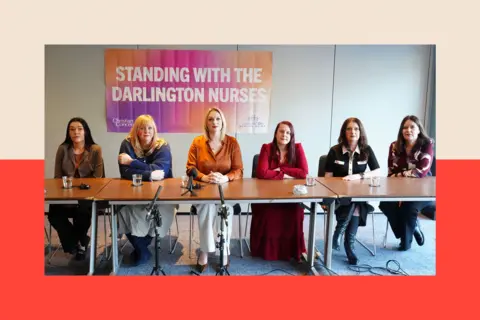
A tribunal concluded that the Darlington nurses had been indirectly discriminated against by the NHS Trust
In the summer of 2023, Bethany Hutchison was leaving the female staff changing room on the first floor of Darlington Memorial Hospital, as another staff member, Rose Henderson, was walking in.
Hutchison, a nurse in the day surgery unit, told the tribunal she was "shocked" because the person passing her "looked so masculine".
Rose, an operating theatre practitioner, is a trans woman, a biological male who identifies as a woman. Rose's first name was used by the tribunal along with they/them pronouns.
The tribunal was told that in the changing room Rose was "seen wearing boxer shorts" and "bearing stubble". Other nurses voiced their discomfort. One said that Rose's presence and conduct in the changing room had triggered flashbacks to childhood abuse. Another nurse said that she "had initially been uneasy about raising any concern as she was concerned she may be seen as bigoted or transphobic".
The nurses first complained to County Durham and Darlington NHS Trust in the summer of 2023. In April 2024, 26 nurses wrote voicing their concerns. In the end, eight nurses took legal action against their bosses, although one later paused her case because of illness.

The tribunal said there was no improper behaviour by Rose Henderson
Criticisms of Rose were dismissed. The panel said they "found no improper behaviour on the part of Rose personally". The BBC has asked if Rose wishes to comment but has had no response. During the tribunal hearings, Rose said they believed they had a right to use the female-only changing room.
Last week, the employment tribunal judgement concluded that the NHS Trust indirectly discriminated against the women, when it allowed Rose to use the female changing room.
The tribunal concluded "real accountability" for Rose's presence in the changing room was down to NHS managers who had given Rose permission to be there and not offered a suitable, dignified alternative.
It rejected claims that the Trust had victimised the nurses but said they had been harassed by them. It found their complaints had not been taken seriously, which created a "hostile, humiliating and degrading environment".
It was also said to have prioritised "the perceived rights of Rose" over those of the nurses.
The NHS Trust has said it will take its time to consider the judgement.
In a press conference after the judgement, one of the nurses said they felt they had been "gaslighted" by NHS managers.
But perhaps the real question now is, how did a dispute in a changing room reach this point - taking two and a half years to resolve? And what lessons does it offer to the NHS and other employers?
Employer policies vs court rulings
An employment tribunal does not set a legal precedent - it is only binding on those directly involved. However, it is an indicator of how laws and regulations governing employers and services are being interpreted in practice.
Perhaps the key finding in the 134 pages of legal argument in the Darlington case is that the County Durham and Darlington NHS Foundation Trust misunderstood equalities law.
The Trust's Transitioning in the Workplace (TIW) policy said that a person, who is recognised as transgender from the moment they inform the trust they are trans or intend to transition, is "legally allowed to use any toilet facility they prefer", and if "others do not wish to share the gender specific facilities, they should use alternative facilities".
The tribunal goes as far as to say the policy was unlawful.
At the time, it was a policy mirrored in many other NHS Trusts.
 PA Media
The cases involving the NHS have left those running businesses and services awaiting further guidance around single-sex spaces
The policy was withdrawn last year, shortly after the Supreme Court ruled that in the 2010 Equality Act the definition of a woman is based on biological sex. The court ruling clarified that if a trans woman - a biological male identifying as a woman - is given access to a single-sex space for females, then it could be argued that other biological men should be able to use it. Effectively the space ceases to be single-sex.
It also emphasised that both women and transgender people have protections under equality law.
As the Supreme Court is the highest court in the land, the Darlington tribunal used the judgement as the legal lens through which it interpreted the Equality Act and workplace regulations.
Dr Michael Foran, associate professor of law at the University of Oxford and an expert in equality and anti-discrimination law, says that although the ultimate outcome of the Supreme Court case was about the Equality Act, "the way it got to that was by telling us things about the law in general and by providing a test" that courts could use in future.
"It said if you have established that it is lawful to require a single-sex space, then it will be proportionate" to exclude all people of a different biological sex, Foran says.
An 'excruciatingly difficult' debate
In Darlington, more than 80% of the nurses employed by the Trust were female and the tribunal was told of two transgender staff. One of them was Rose. The other person was said to prefer to use an alternative changing room.
The tribunal said the aim of the TIW policy, to create an inclusive workplace, was "admirable", but they had found no legislation that suggested there was "a positive 'right' on the part of a trans woman to use the female changing room (or for that matter of a trans man to use the male changing room)".
It said Rose's rights could have been protected by the offer of an alternative space as a changing room.
The gender critical women's campaign group Sex Matters said this "should have been common sense" but it was "relieved and delighted" by the tribunal's findings.
Trans rights campaigners Translucent say that for many trans people the debate is "excruciatingly difficult", that these cases are rare and when rights "clash" then that needs to be handled in a proportionate way.
How employers are left to read the runes
Translucent points to two other recent employment tribunals, which it says are consistent with Darlington in showing that "employers have a duty to cater for trans people and gender-critical people in providing workplace facilities, so that everyone can be accommodated".
The two employment tribunals, which both gave judgements in December in Scotland, offered slightly different interpretations of the law to the Darlington nurses case.
One of the cases involved a nurse called Sandie Peggie who complained about a trans woman doctor using the female changing room.
The starting point of the judgement seemed to be an acceptance of an automatic right for a transgender person to use single-sex spaces that matched their stated gender identity.
It said "initially it had been lawful" for NHS Fife to allow the doctor to use the changing room, but once Peggie complained that her rights under equality law were being infringed, the doctor's "permission should have been revoked on an interim basis", whilst alternative arrangements were made.
 PA Media
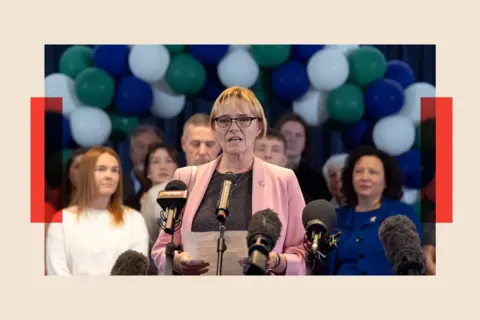
The legal team representing NHS Fife nurse Sandie Peggie have confirmed they will appeal the employment tribunal ruling
It concluded that when this didn't happen the Trust's actions amounted to harassment.
Other allegations of discrimination and victimisation were dismissed.
The ruling is being appealed by Sandie Peggie.
Another tribunal in Edinburgh dismissed harassment and discrimination claims brought by a woman named Maria Kelly, an engineer, after Leonardo UK - the aerospace company she worked for - allowed trans women to use female toilets.
The tribunal found that there were alternative toilets Kelly could use and she was not treated unfavourably. The hearing was also told the company had "received legal advice that they had a legal obligation" to allow transgender colleagues to use the facilities of their choice.
Kelly is also planning to appeal.
Dr Michael Foran expects lawyers and employers to be looking closely at all three decisions but believes the two involving the NHS have the clearest impact.
If you look at the bigger legal picture in both the Peggie and Darlington cases, he argues, the NHS policy of allowing trans people to self-identify into single-sex spaces has been found to amount to unlawful harassment of women on the grounds of sex.
He says it would therefore be "foolish" in legal terms for the NHS to continue with that policy.
However, he also argues that the Peggie judgement did not take into account legal limitations on the findings it could make, and the judgement effectively proposed case-by-case decisions.
He says that seemed to suggest a complex test, including whether the trans person passed as being of their lived gender, or whether they had had surgery.
With at least two of these tribunal judgements facing appeal, and other potential cases on the horizon, there is likely to be a long wait for courtroom battles to settle how people should navigate the line between the rights of women and the rights of transgender people in single-sex spaces.
In the meantime, those running businesses or services are trying to read the runes.
"Employers are worried about the impact of the Supreme Court's judgement regarding their exposure to claims," says Joanne Moseley, a solicitor with Irwin Mitchell who advises companies and individuals on employment law.
Many of the businesses she deals with have policies which allow staff to use the facilities where they feel most comfortable, and she says, "employees are starting to challenge these and are asking for them to be changed".
To comply with the law, some already have fully enclosed lockable facilities, but those that do not are looking at other ways to provide gender-neutral spaces in addition to separate-sex facilities and improving signage to make it clear who has a right to access those facilities.
Waiting for guidance
Normally, services and businesses would be able to turn to guidance from the Equality and Human Rights Commission (EHRC) for help with the practicalities.
The EHRC handed new guidance, which it updated following the Supreme Court ruling, to ministers in September 2025.
In November, the BBC saw a leaked draft, which said that single-sex spaces should only be open to people of the same biological sex, and that there could be occasions where it is proportionate for trans people to be asked whether they should be using a facility based on their physical appearance or behaviour.
Ministers have said they will take their time to get this right, but there is no indication how long this might take.
With each legal case, the pressure increases on the government to publish the EHRC guidance - or reject it and tell people why it has done that.
Joanne Moseley says that, while in her view the Darlington ruling correctly interprets the Supreme Court's judgement, the lack of official advice is "causing confusion".
She warns that if a staff member does take legal action against a company, it will "not help any organisation's defence to say they were waiting for guidance".
Workplaces, whether the NHS or other employers, are at their best when all their staff feel included and welcome. In this heated area, a lack of guidance can make it that bit harder to get the balance right.
And when the courts end up providing direction over how changing rooms, toilets and other single-sex spaces should be organised, that can be corrosive when it sets colleagues against each other.
There is a financial cost for the employers, and an even higher emotional cost for the individuals, both women and transgender people, who feel they are having to fight to have their voices heard.
Top picture credit: Getty Images

BBC InDepth is the home on the website and app for the best analysis, with fresh perspectives that challenge assumptions and deep reporting on the biggest issues of the day. Emma Barnett and John Simpson bring their pick of the most thought-provoking deep reads and analysis, every Saturday. Sign up for the newsletter here