 3 months ago
171
3 months ago
171
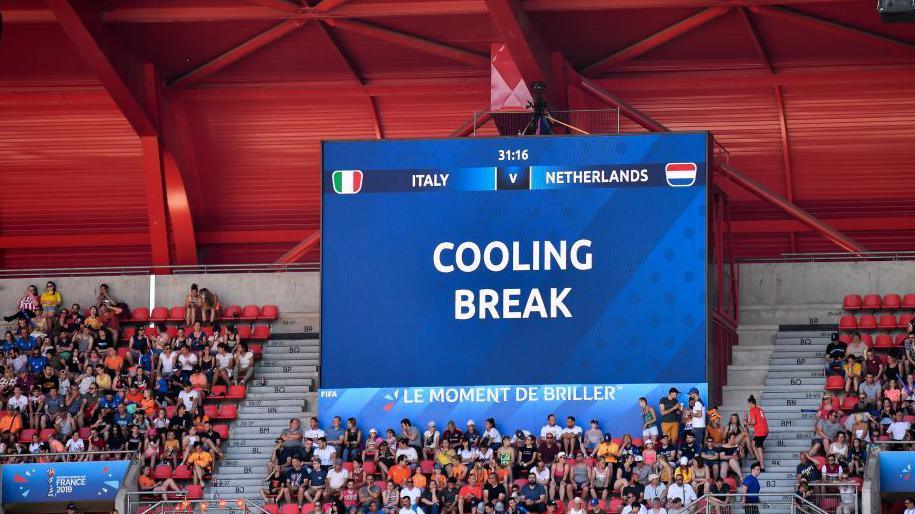 Image source, Getty
BySimon King
Lead Weather Presenter
With just a month to go until the biggest football tournament in the world begins, attention is turning not just to the teams and venues, but to the weather.
Heat, thunderstorms and even poor air quality from wildfires are all features of summer across the United States, Canada and Mexico, where the tournament will be held.
Humidity may also be a key factor in any disruption to the World Cup caused by the weather.
Fifa have acknowledged that hot weather could be an issue and, as part of their "commitment to player welfare", have introduced mandatory three-minute cooling breaks in each half of every match for the tournament.
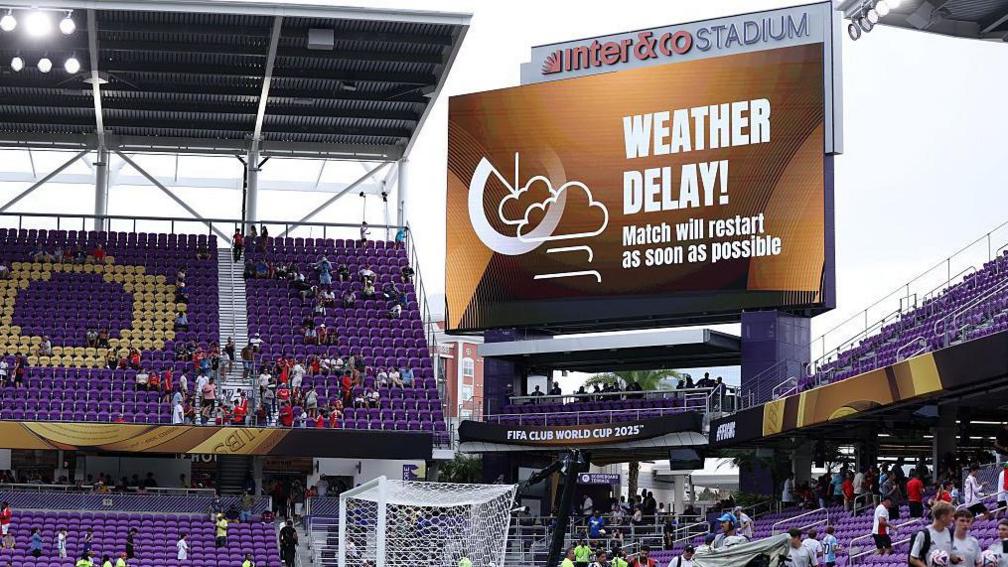 Image source, Getty
Thunderstorms during the Fifa Club World Cup in 2025 meant there were multiple games delayed
During the Fifa Club World Cup last year, six football matches were disrupted due to heat and thunderstorms, including a two-hour delay during a match between Chelsea and Benfica. It prompted the Chelsea manager Enzo Maresca to say the US is "probably not the right place to do the competition".
How hot is it likely to get?
Many of the host cities are accustomed to high summer temperatures.
In parts of the southern United States and northern Mexico, average daytime highs are typically in the low to mid-30s C (mid 90F) and can rise towards 40C (104F) during hotter spells.
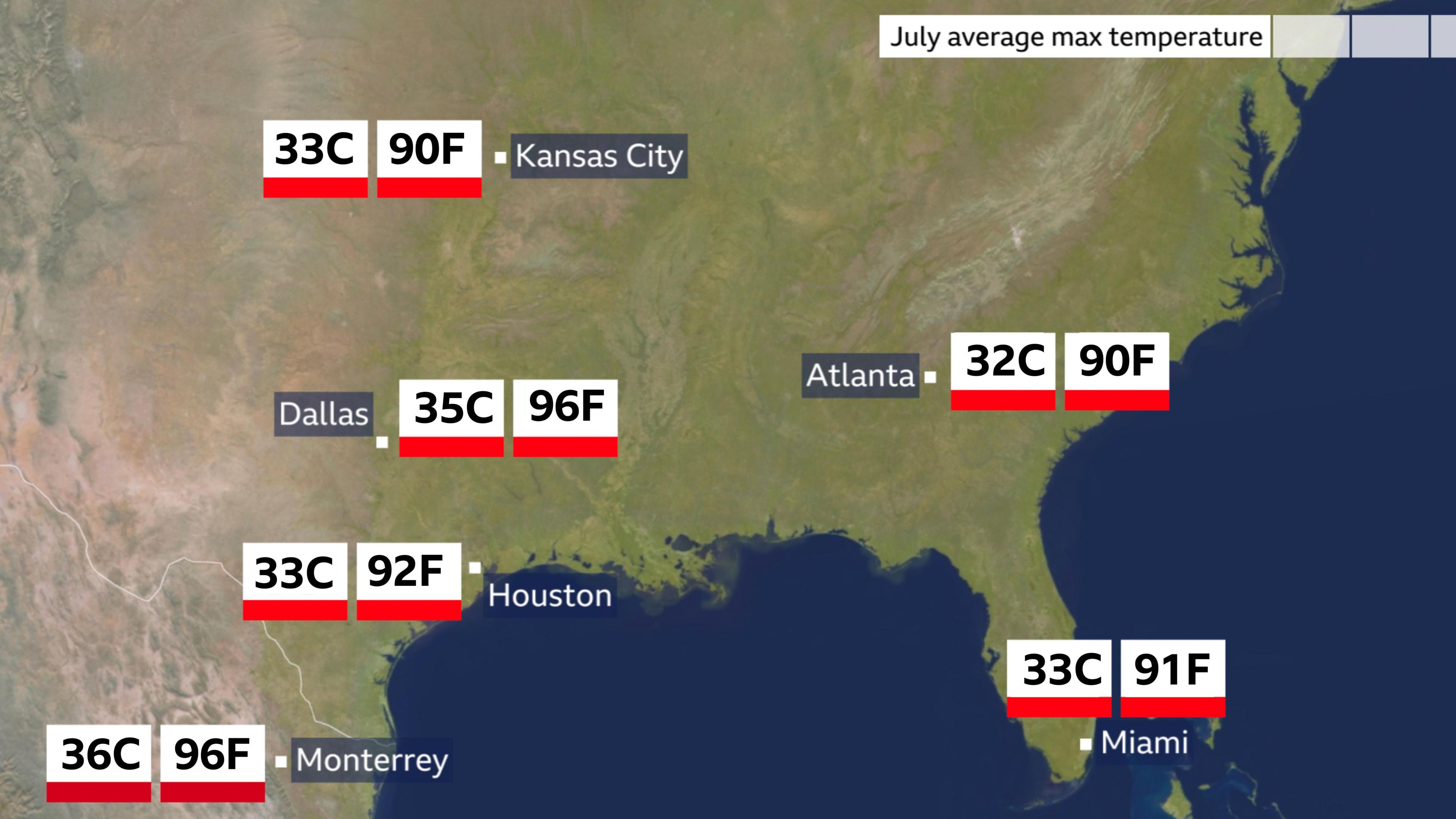
When temperature, humidity, wind speeds and the strength of the sunshine are factored in, players in these World Cup host cities are at greatest risk of experiencing extreme levels of heat stress on the body
When you add humidity into the equation, making it more difficult for the body to cool itself effectively, things start to feel hotter still.
There are two heat indexes you will get to hear a lot about this summer.
One is the 'feels like', which is how your body feels the heat rather than what the thermometer says. In Miami, for example, a typical air temperature of 32C (90F) in summer would regularly feel like 43C (109F).
There is also the Wet Bulb Globe Temperature (WBGT), which assesses physical heat stress on the body. A WBGT of around 28C (82F) is widely considered a threshold at which heat stress becomes a significant concern for elite athletes.
In a 2025 study published in the International Journal of Biometeorology, scientists concluded that "14 out of the 16 host locations exceeded WBGT's of 28C (82F) in a summer afternoon, external."
There are six host cities (Miami, Houston, Dallas, Monterrey, Kansas City and Atlanta) where the WBGT could feasibly reach at least 32C (90F) during the afternoon which would be considered as extreme heat stress where the body really struggles to keep itself cool.
To reduce these risks, matches are generally scheduled outside the hottest part of the day, with many kick-offs taking place in the late afternoon or evening. Scotland's group C game against Brazil in Miami, for example, will have a kick-off time of 18:00 ET (23:00 BST).
Some venues, including stadiums in Houston and Dallas, also have retractable roofs and climate control to moderate conditions.
Summer heatwaves are also a common occurrence in North America and Mexico where temperatures can rise 10C (50F) or more above average, potentially pushing conditions into much more challenging territory for both players and fans.
In New York for example, the location of this year's World Cup final on 19 July at 15:00 ET (20:00 BST), a typical heatwave could result in air temperatures in the mid-30sC (mid 90F) and WBGT of around 30C (86F) leading to extreme heat stress.
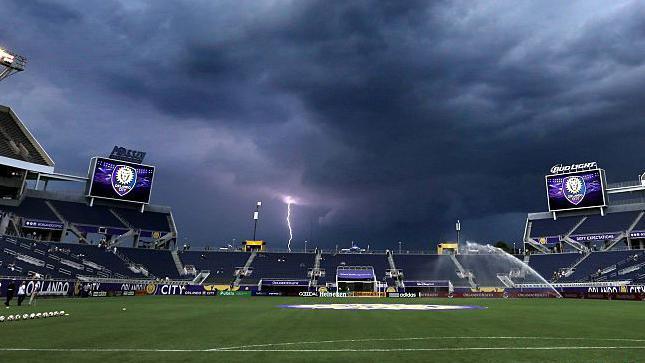 Image source, Getty
Thunderstorms will immediately stop play at US host cities for at least 30 minutes
Thunderstorms may present the greatest potential for visible disruption to matches.
Summer thunderstorms are widespread but particularly common in cities such as Miami, Houston and Atlanta, where warm, humid conditions can trigger frequent afternoon and evening storms.
If lightning is detected within 10 miles of a stadium, US official recommendation and standard practice is that play is suspended until 30 minutes after the last lightning strike.
Recently the Miami F1 Grand Prix was brought forward by three hours due to the risk of thunderstorms and lightning.
The circuit sits alongside Hard Rock Stadium, which is set to host multiple World Cup matches.
While match times could be adjusted, thunderstorms are inherently difficult to predict precisely, making them one of the more unpredictable risks facing organisers.
Wildfires and poor air quality
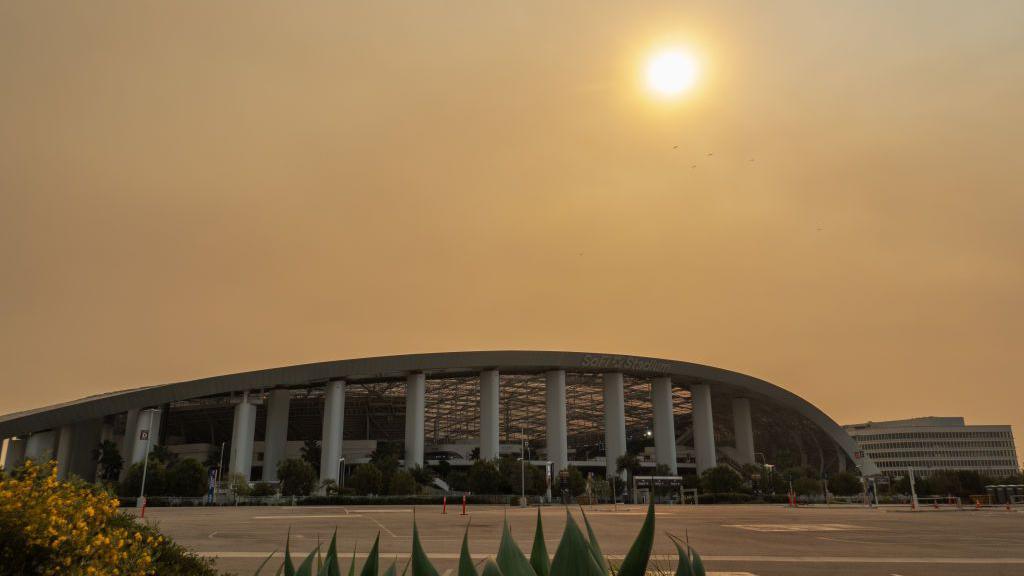 Image source, Getty
Wildfire smoke brought very poor air quality to the SoFi stadium in Los Angeles last year
The 2026 wildfire season has started early in the US with an above average number of wildfires already burning.
In 2023, large wildfires in Canada led to smoke spreading across much of North America, affecting cities thousands of miles away.
Air quality reached hazardous levels in parts of the United States, including New York, leading to widespread disruption and the cancellation of sporting events.
There is no fixed Fifa threshold for air quality at which matches must be stopped so any decision to delay or suspend play would be made using real-time conditions and local public health advice.
What could all this mean for fans?
For players and organisers, managing extreme weather will be an ongoing part of the tournament. For fans, the effects may be felt in different ways.
High temperatures could make conditions in stadiums and fan zones uncomfortable, while thunderstorms could lead to delays or temporary evacuations.
But delays and postponements could also mean transport plans may be disrupted, with matches finishing late into the night with hotel bookings also impacted.
For fans watching at home in the UK, the time difference already means many matches will take place in the evening or overnight - any weather-related interruptions could extend viewing and make it a very late night for some.