 3 months ago
91
3 months ago
91
Theo LeggettBusiness Correspondent

 Getty Images
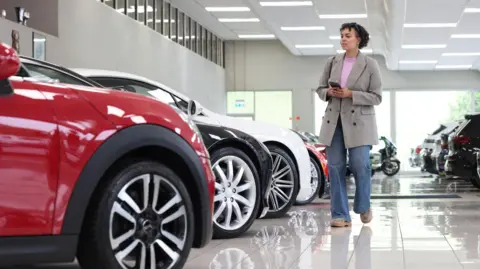
Government discounts for electric vehicles are "unsustainable", a major motoring group has warned, as the number of new cars registered in the UK exceeded two million last year for the first time since the pandemic.
Nearly 500,000 of the new cars sold were electric, according to new figures from the Society of Motor Manufacturers and Traders (SMMT).
Its chief executive, Mike Hawes, welcomed what he called a "reasonably solid result amid tough economic and geopolitical headwinds".
But electric car sales were still not increasing fast enough to meet official targets, he said, warning of a growing gap between consumer demand and the government's ambitions. Discounts worth thousands per vehicle were "unsustainable", he said.
In total, 2,020,373 new cars were registered in 2025. This was the third successive year of growth, and the highest total since the pandemic. However it was still well short of the 2.3 million sold in 2019.
Electric cars accounted for 473,340 new registrations last year, giving them a market share of 23.4%.
That was a significant increase on 2024, but still below the government's headline target of 28%, under what is known as the Zero Emission Vehicles Mandate (ZEV Mandate).
The mandate stipulates that carmakers which fail to sell enough electric cars, as a percentage of their overall sales, can face heavy fines.
However, there are concessions built into the rules which can enable them to avoid penalties, for example by reducing emissions from other vehicles in their fleets, or by buying surplus 'emissions credits' from manufacturers which exceed their own targets.
These 'flexibilities' were extended in April, following heavy lobbying by some manufacturers, while the fines for failing to comply were reduced.
But Mr Hawes warned that even so, carmakers were having to offer hefty discounts in order to sell enough electric models. The SMMT estimates those discounts were worth more than £5bn last year, or some £11,000 for every electric vehicle sold.
Mr Hawes said this was unsustainable, especially with manufacturers expected to meet a more arduous target of 33% this year. He called on the government to bring forward a planned review of the ZEV Mandate, due to be carried out in 2027.
"It is increasing the number of battery electric vehicles (BEVs) being sold," he said. "The question is, at what cost?"
Such a review, he suggested, should look at factors which have changed significantly since the targets were first planned, including a marked increase in energy prices and higher costs for raw materials, which have made life more difficult for car manufacturers.
He stopped short, however, of explicitly calling for the rules to be diluted further.
"Don't get me wrong – the industry is not diverting course," he insisted.
"It needs to sell these vehicles because it has invested so heavily in them. But you need to make sure the market reflects more closely the actual level of demand."
Some commentators are more positive about the ZEV Mandate, however.
Colin Walker of the Energy and Climate intelligence Unit, an environmental research group, welcomed the latest registration figures.
"2025 has been another bumper year for EV sales, with nearly one in four cars sold in 2025 being an EV," he said.
"This policy in turn will boost the UK's second-hand market where the majority of us buy our cars, easing cost of living concerns for drivers."
The government has brought forward a number of measures to support the take-up of electric vehicles over the past year.
They include the £1.3bn Electric Car Grant Scheme, which provides up to £3,750 towards the cost of buying an electric vehicle, as well as significant funding for charging infrastructure
However, in the autumn budget, it also announced plans to introduce a 'per mile' tax on electric vehicles – a measure designed to offset some of the reduction in fuel duty revenues caused by the transition to electric vehicles.
The independent Office for Budget Responsibility said the move was likely to result in 440,000 fewer electric cars being sold over a five-year period.
"This is one of the challenges we see," said Mr Hawes.
"To have a technological shift like this, you need consistent, coherent and compelling messaging and support… Even the announcement of a tax specifically on EVs will send a very conflicting message to consumers."