 2 months ago
93
2 months ago
93
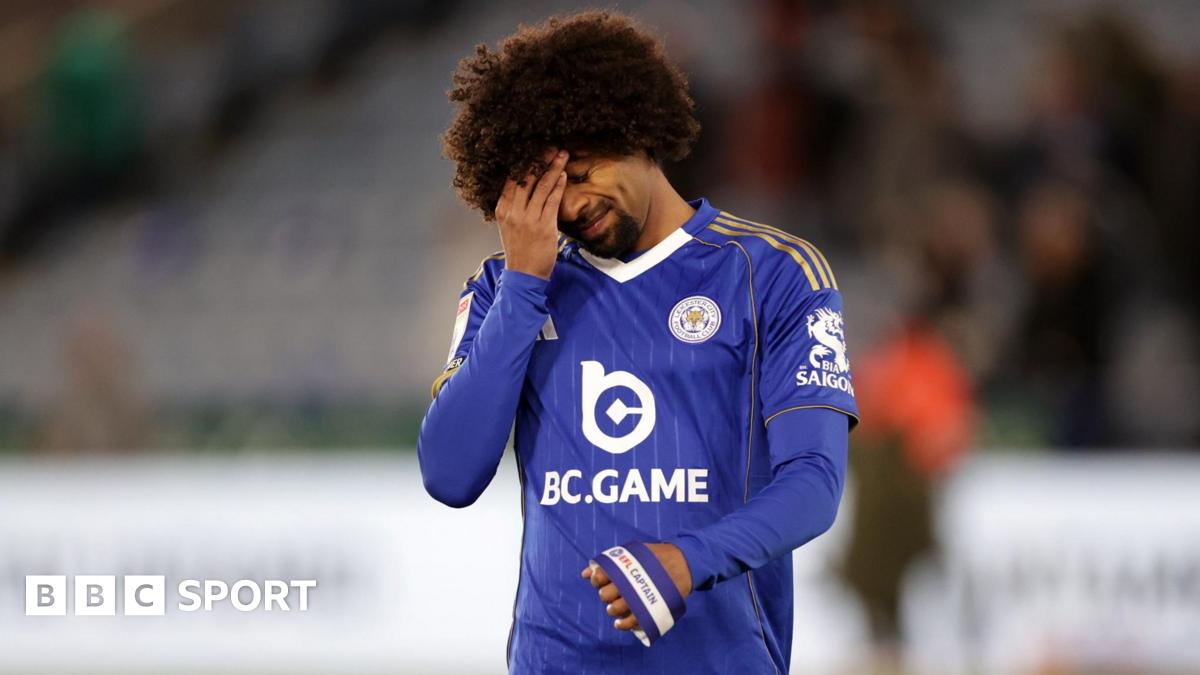
On the eve of an England one-day international, Harry Brook explained his actions from the eve of England's previous one-day international.
The ripples of Brook's night out in Wellington, when he was "clocked" by a nightclub bouncer, washed up nearly 7,000 miles away in Colombo.
In between the white-ball tours of New Zealand and Sri Lanka came the horrific Ashes series - an all-timer of a shambles. Dropped catches, awful shots, scattergun bowling and an endless list of regrets.
Brook's misdemeanour occurred before England touched ground in Australia, but it typified the slapdash approach to regaining the urn.
It only came to light at the end of the fifth Test through a report in the Telegraph. Without that, would Brook have been answering questions in a conference room of a hotel overlooking the Indian Ocean?
On the one hand, it is perfectly fair that Brook has been left to front up. He is the white-ball captain and Test vice-captain - past England skippers have had to address far more serious matters than the consequences of a night out.
On the other, the silence from the hierarchy of English cricket is deafening.
England and Wales Cricket Board (ECB) chief executive Richard Gould got out his statement about a "review" into the Ashes an hour before the Brook story emerged. Head coach Brendon McCullum spoke earlier the same day and said his players have "a couple of beers now and again".
Director of cricket Rob Key last addressed the media before the Boxing Day Test in Melbourne, revealing that Brook and Jacob Bethell had been warned about a separate incident on the same evening in Wellington, when they were filmed drinking by a member of the public.
The attempt to keep the whole episode quiet reflects badly on all involved, even if the ECB will explain it away through confidentiality, employment processes and the like.
For all of the ground Brook covered on Wednesday, questions remain.
Why was he alone trying to gain entry to a club the night before a one-day international? Why did he wait until midway through the game the following day to turn himself in to England management?
Why, with full knowledge of the Brook incident, did England allow the players the freedom of the off-field activities in Australia, including the boozy trip to Noosa?
What has changed to necessitate a midnight curfew being imposed in Sri Lanka? England knew of the Brook incident more than two months ago. Is there now a curfew simply because the public have been informed?
Taken in isolation, the Brook incident probably has little relevance to the futures of Key and McCullum. Gould and chairman Richard Thompson were already aware as the Ashes debacle was unfolding, when the feeling was Key and McCullum would be given the opportunity to stay on if they could make changes to the England set-up.
Now, with the Ashes review ongoing and Key looking likely to remain, those changes have begun to take effect.
The curfew is one, the short-term hire of Carl Hopkinson as a fielding coach for the T20s in Sri Lanka and subsequent World Cup is another. Hopkinson left the England set-up at the end of 2024, just as McCullum added the white-ball teams to his Test remit.
The return of Troy Cooley to the England set-up as national pace-bowling lead has been planned for some time, but the Australian will not work exclusively with the first team. A dedicated pace coach for the senior side could be another tweak to a backroom staff previously slimmed down by McCullum.
Assistant coaches Jeetan Patel and Marcus Trescothick - McCullum lieutenants - could come under scrutiny. Perhaps selection will once again have a greater focus on performances in county cricket.
How accepting McCullum is of these changes will decide his future. The New Zealander is contracted to the end of the 2027 World Cup and, in the aftermath of the final Ashes Test in Sydney he said he wanted to remain, with a caveat.
"I'm open to evolution and some nipping and tucking, but without being ultimately able to steer the ship maybe there is someone better," he said.
Will McCullum still feel like the man in control? When he first took charge of the Test team in 2022, he was stunned that the England nutritionist did not allow the players a bacon sandwich.
Keen to empower the players, McCullum saved the bacon butty. Now, he and his men are being told what time they have to be back at their hotel.
Positive results over the coming weeks would lift the mood. England need wins in the three one-dayers against Sri Lanka to boost their ranking in order to seal automatic qualification for that 2027 World Cup.
They are also two-time winners of the T20 World Cup, the next edition of which begins next month. The shortest format is arguably England's best at the moment. Still, they reached the semi-finals of the last T20 World Cup and it was not enough to save the job of head coach Matthew Mott.
If McCullum is being backed into a corner by changes imposed from above, it can be asked if the ECB top brass are consulting the players.
Test captain Ben Stokes is probably the most powerful man in English cricket and has thrown his support behind McCullum, even if their messages diverged during the Ashes series.
Brook is almost as important, given his presence across formats. No one has played more games for England since Brook made his Test debut in 2022 and it is highly likely he will be the only man to play every match this winter.
The 26-year-old has turned down franchise riches to commit to the national team and remains the most likely candidate to be the next Test captain, despite the Wellington misdemeanour.
On Wednesday, Brook called McCullum the best coach he has played for.
Perhaps therein lies the problem. McCullum is popular with his players partly because of the freedom - on and off the field - he promotes. Now, those freedoms have been identified as a cause of England's poor results and are being taken away.
A year before McCullum was given the England job, he was in charge of Indian Premier League side Kolkata Knight Riders. Frustrated by what he saw as his batters' lack of intent, he revealed one of his philosophies.
"A saying that I've used throughout my career is that 'if you can't change a man, change the man'," said McCullum.
During his time with England, men McCullum has been unable to change have been changed for other men.
James Anderson could not be changed into a younger man and Jack Leach could not be changed into a tall right-armer. Ben Foakes could not become a tail-marshalling number seven and Ollie Robinson could not keep himself on the park.
Now, McCullum has to answer his own question.
Can Baz change, or must Baz be changed?