 1 month ago
76
1 month ago
76
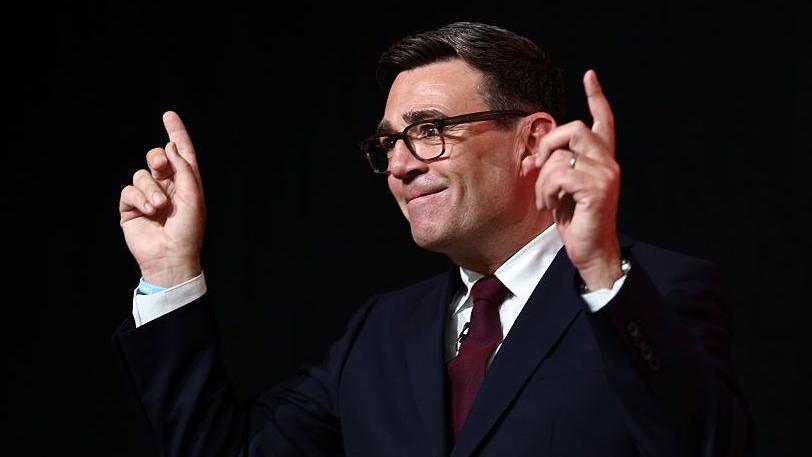 Image source, Getty Images
ByHenry Zeffman
Chief Political Correspondent
As Andy Burnham waited to enter the hall for the moment he has dreamed about for at least 16 years, he told us he was feeling "good… ready".
How could he not feel good? In the course of a whirlwind four weeks, every wing of the parliamentary Labour Party has anointed him as the only person able to reverse their electoral predicament.
Ready? That's where even some of his strongest supporters are little less sure.
And ready for what? For leadership of the Labour Party and the country, of course.
But this was a speech where Burnham set his ambitions far higher than the conventional measure of political success: elections.
Understandably, given this was a Labour Party event, he spoke about his desire to change the culture of the Labour Party.
More than that though, he vowed to banish factionalism from the party for good.
There are plenty of people from different Labour factions who bear the scars of failed attempts to do that, as well as others who see it as an undesirable goal: not so much unity of purpose, they argue, but unity over purpose.
And Burnham's bold ambitions extend to the prime ministership too.
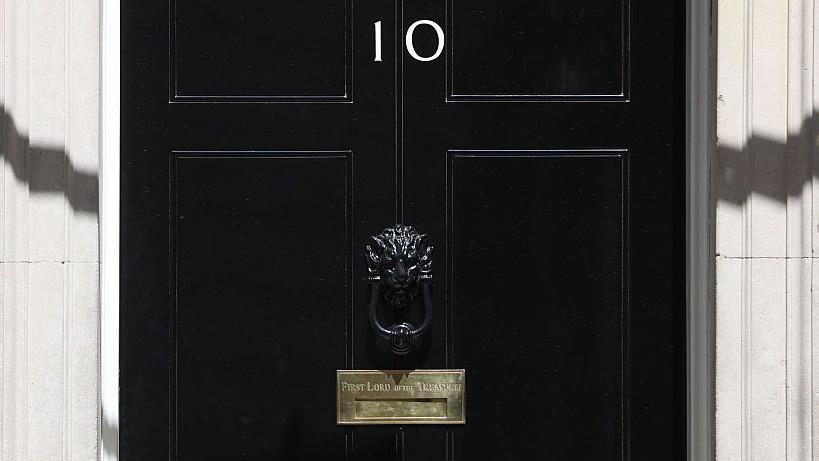 Image source, Getty Images
The Downing Street letter box says 'First Lord of the Treasury'
He argued that Britain took a wrong turn in the 1980s.
"Four decades of neoliberalism" had followed, he said, damaging traditional working-class communities in cities and towns as well as rural and coastal areas.
This is what he promised to reverse.
Doing so, he said, would amount to no less than "the most significant change moment in our politics for 40 years".
It will not have been lost on any Labour MPs listening that in making this argument Burnham is not only criticising Thatcherism, but also the accommodation with elements of Thatcher's agenda which he clearly believes were made by the New Labour governments he served in.
In any case, it bears repeating that a pledge to represent the biggest change of direction in British politics for four decades is quite some test to set your own premiership three days before it has begun.
How will he deliver that economic change?
We learnt a bit about that a few weeks ago in the only major speech Burnham delivered during the leadership election, in which he said he would decentralise power, starting with relocating part of No 10 Downing Street to Manchester.
We are a few days away from finding out more about how No 10 North will work, and in particular how it will operate in conjunction with the Treasury.
It was striking to say the least that Burnham went out of his way in his speech to declare that he had still not decided who would occupy the top jobs in his team, presumably including the job of chancellor.
For some Labour MPs this will be a niggling sign of indecision.
Not because of the personalities involved (by common consensus thought to be Ed Miliband and Shabana Mahmood) but because to their supporters and detractors alike they each represent rather different economic courses that the Burnham government could take.
The admission that Burnham has not chosen a chancellor, then, may well also be a statement of intent that he believes he can drive his government's economic policy from 10 Downing Street (the letterbox says First Lord of the Treasury, after all), including No 10 North.
Burnham was plain that he believes the weeks of briefing about who might be a contender to be his chancellor is a symbol of the political culture he hopes to change.
Indeed, that was another lofty ambition: to build consensus across party lines and in the process detoxify Britain's political discourse.
Manage that, he said, and "the turbulence of the last decade may not quite feel as inevitable as it does today".
That was the clearest indication that Burnham sees himself as something much more significant than merely latest in a long list of post-Brexit prime ministers.
Presumably at the equivalent points Rishi Sunak, Liz Truss, Boris Johnson and Theresa May thought that of themselves too - not to mention Sir Keir Starmer.
When he speaks outside No 10 on Monday, we will learn more about whether Burnham really does have a plan ready to deliver on his bold ambitions.