 3 months ago
113
3 months ago
113
Chris MasonPolitical editor
 BBC
BBC
Listen to Chris Mason read this article
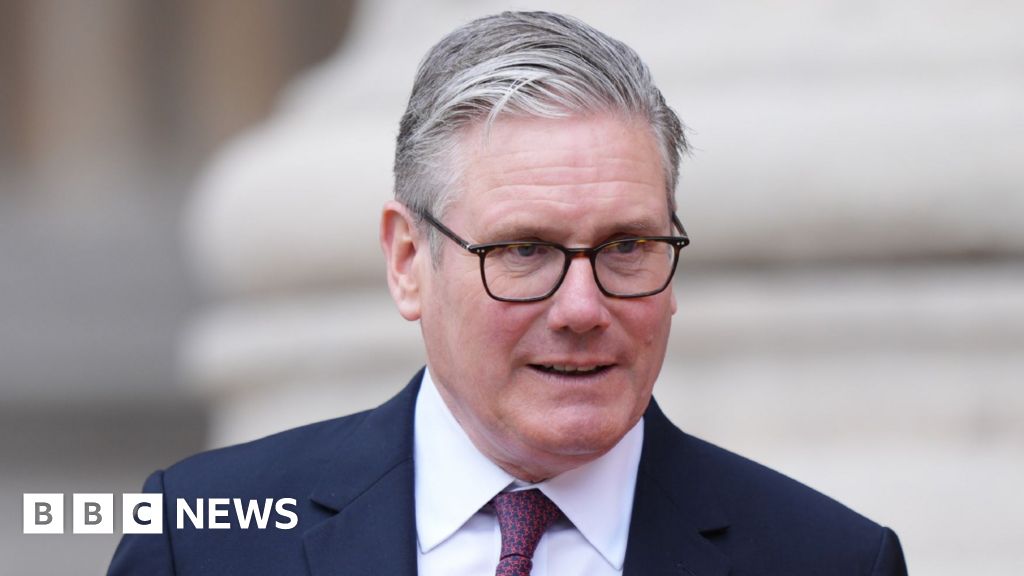
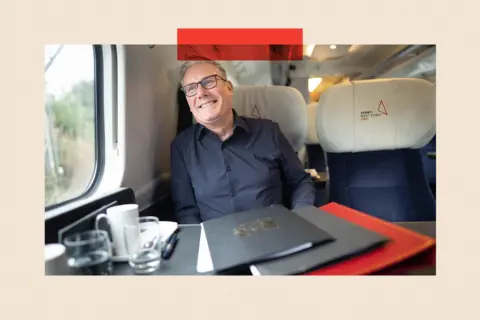
"It seems to be pretty rife!" So said Sir Keir Starmer before Christmas, when asked about speculation around his future as prime minister.
He was appearing in front of senior MPs on parliament's Liaison Committee at the time and it is true that he uttered those words with a smile.
Nonetheless it is extraordinary - not just that we are in this place, but that he is acknowledging it.
Sir Keir is one of only two people alive to have led the Labour Party to a general election victory – and a 174-seat majority at that. Yet just 18 months later the recurring conversation at Westminster is whether he will still be prime minister this time next year.
 PA Wire
'I wouldn't... [try] to pretend campaigning to replace him isn't going on,' one very senior Labour figure has said
A fleeting observer of global politics might reasonably assume the UK should be a haven of stability: a newish government with a colossal majority and years until the next general election.
Yet it is not just the prime minister, Labour MPs and their domestic political opponents who are talking about the prime minister's vulnerability - it is being noted in foreign capitals too.
"There's another roll of the dice coming," a seasoned observer on the diplomatic circuit said to me recently.
"The same numbers might still come up. But they might not."
Labour's crunch point in 2026
One very senior Labour figure admitted to me earlier this month, "I wouldn't insult your intelligence by trying to pretend campaigning to replace him isn't going on".
This is often what I'd describe as campaigning with a small "c" – discreet conversations and planning, the vast majority a long way from the public gaze and deniable.
The fulcrum of the political year ahead isn't likely to be until Thursday 7 May.
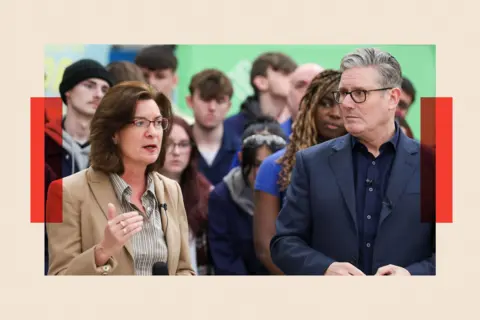
On that date there will be elections to the Welsh Parliament, the Senedd, the Scottish Parliament and to many local authorities in England, all with potentially huge consequences – both for how (and by whom) huge parts of the UK are run and for the career prospects (or the lack of them) of various political leaders, not least the prime minister.
 PA Wire
What happens when voters go to the polls in Wales could have huge consequences
It is the prospect of an almighty shellacking that prompts so many of the conversations about Sir Keir's future.
Labour is currently in power in the Senedd and also runs many of the urban councils in England where elections are being held.
Some Labour folk fret that leaving things until after the elections will be too late. That will be the point, they fear, that they lose so many of their councillors or devolved parliament members – and so the foot soldiers that so many local political campaigns depend upon.
But most assume the most likely crunch point comes after polling day.
Those supportive of the prime minister are pleading with their colleagues to "hold our nerve", as one put it to me.
"We've got to," they add. "What's the alternative?"
The prospect of change vs no change
There is a near universal acceptance, from Sir Keir's cheerleaders to his detractors in the Labour Party, that the government has to get vastly better at telling its own story and defining what it is about.
It is the cliché critique, made so often, by so many and for so long. But there is a reason for that: plenty think there has been nowhere near enough improvement.
"We campaigned offering 'change' but we have to be better at explaining what we're doing, why we're doing it and when, realistically, we might do it by," says one supporter.
"I despair at the storytelling. The Budget was a shambles. Politicians need to be like teachers: walk people through things. Don't line up the excuses. Make an argument. Pick a fight," adds a Labour critic.
 PA Media
What's going on at the top in the UK has been noted in foreign capitals too
A blitz of public facing activity from Downing Street is expected early in the new year, including plenty via their own social media channels and via more interviews with influencers as well as the more standard dealings with traditional political reporters from telly, radio, newspapers and news websites.
The key challenge for No 10 is what message they land upon and the extent to which they then stick to it. Expect the thrust of it to be that 2026 will be the year that people will start to feel the "change" Labour promised at the election.
And there will be plenty of talk about the cost of living.
The prime minister's supporters are highlighting that stability is a virtue, it is he who secured the mandate at the general election (which no successor would have) and any replacement, after a likely mighty messy leadership process, would inherit all of the underlying problems that have made his life so difficult in the first place.
In other words, be careful what you wish for.
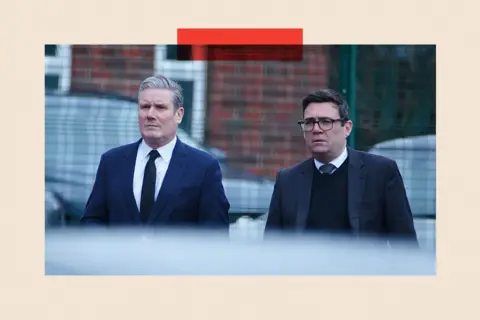
It is Health Secretary Wes Streeting who is currently spoken of most widely as a possible successor to Sir Keir. But he is far from the only one. So is the Mayor of Greater Manchester, Andy Burnham. Then there is the Home Secretary Shabana Mahmood and others.
 PA Wire
Greater Manchester Mayor Andy Burnham is spoken of as a possible successor
But even among those Labour MPs who are not fans of the current PM, there is wariness.
"A fortnight on from Wes Streeting becoming prime minister, folk would still be saying he's good on the telly but actually wondering how much he's actually going to be able to change" is how one Labour MP – no fan of the prime minister – put it to me.
A similar critique is offered by others of other potential prime ministerial wannabes, which highlights another issue – even if the party does conclude Sir Keir Starmer must go, can it agree who might be better?
Labour doesn't tend to eject leaders with the ruthlessness the Conservatives are known for and the prime minister is nothing if not determined. In other words, amid all of the noise about the prospect of change, don't underprice the prospect of no change.
Wales, Scotland and a confluence of headaches
But Sir Keir Starmer is up against a lot.
Firstly, Wales. The elections to the Senedd will lead to a bigger parliament, with new, big constituencies and a proportional voting system.
And, for Labour, there is a confluence of headaches – not least the issue of double incumbency – the party is in government in both Cardiff and Westminster, making it far harder to apportion blame elsewhere for failings.
The mood in Welsh Labour is beyond bleak as they contemplate the prospect of losing power in devolved government for the first time since 1999, when what is now called the Senedd was set up.
 PA Wire
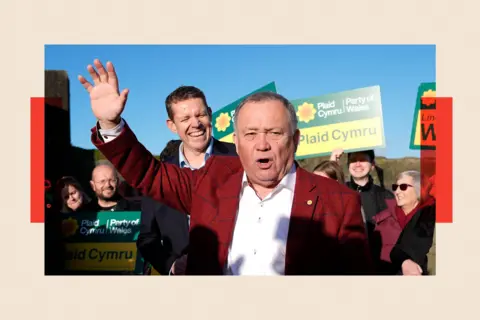
After victory in the Caerphilly Senedd by-election in October, Plaid Cymru are upbeat
In 2015, the seemingly impregnable Central Belt – and beyond – in Scotland fell to the Scottish National Party from Labour. In 2019, Labour's seemingly impregnable so-called "red wall" of Midlands and northern English seats fell to the Conservatives.
Both have since swung back to Labour, but now it confronts a shrivelling neither of those moments touched – the potential of losing Wales.
The psychological impact could be huge. The Welsh nationalists Plaid Cymru are upbeat to the point of almost not quite believing the reception they are getting.
But Reform UK look highly competitive too. So, what would happen in a scenario where Reform ended up the largest party but not large enough to govern alone and with no other party willing to go into coalition?
Would Plaid be willing to lead their own coalition, or a more informal arrangement with others, one critics might brand "a coalition of the losers"? Or could they refuse, and in doing so force another election?
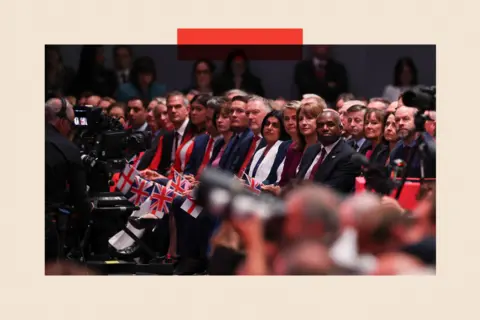
Secondly, there is London, where Labour runs 21 of the 32 councils up for election.
"May looks really rough," says one plugged-in senior Labour figure in the capital. "There's Reform in the outer boroughs. The Greens in places like Hackney. Gaza-leaning independents in places like Redbridge. And we have so, so many MPs and party members in London.
"Come the weekend after the elections they'll be fretting in so many different directions all at the same time."
Five Labour councillors in Brent in north London defected to the Green Party a couple of weeks ago. Some Conservatives make positive noises about Wandsworth and Westminster.
 Reuters
In London, Labour runs 21 of the 32 councils up for election
As for Scotland, Labour will argue that Scottish voters should "consider the SNP's 18 years in government in Scotland, not Labour's 18 months in government at Westminster", as one senior figure in the Scottish party put it to me, and stress that voters are picking a first minister not a prime minister. Labour folk also think they are well placed financially compared to the SNP.
But some opinion poll evidence suggests the UK Labour government is more unpopular in Scotland than the SNP Scottish Government. And it is worth keeping an eye on Reform in Scotland too.
The fortunes of other parties
Outside London, in the rest of England, the Liberal Democrats also hope to make progress in the many areas, primarily in the south, where they won swathes of parliamentary seats in 2024.
If they don't, there may be internal grumbles that leader Sir Ed Davey isn't doing enough to make the most of their 72 MPs.
Then there is the Green Party of England and Wales, with its new leader who was elected in September.
Zack Polanski, who is more thoughtful in private than his often bombastic public persona might suggest, has overseen a surge in support for the Greens in opinion polls, but now confronts greater scrutiny and a party machine trying to rapidly scale up to deal with its growth.
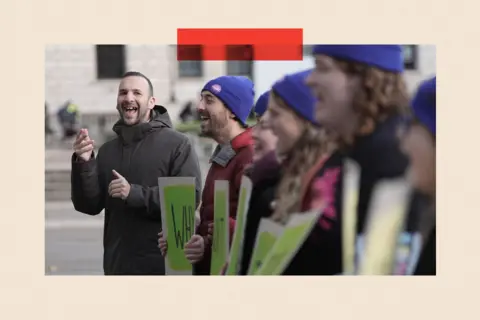 PA Wire
Since Zack Polanski became Green Party leader in September, the party has recorded a sharp rise in support in opinion polls
As for the Conservatives, they are also enduring a slump in popularity at exactly the same time as Labour. Normally when one is up, the other is down, and vice versa.
That trough in support for the Tories imperils leader Kemi Badenoch, although her share price among Conservative MPs rose considerably in the final months of the year after a well received party conference speech and improved performances at Prime Minister's Question Time.
Her party's dismal poll ratings leave her vulnerable, just as Labour's leave the prime minister vulnerable.
But it is Sir Keir Starmer's future in office – or the potential lack of it – that will dominate so much political conversation in 2026.
Leading a government over the last 10 years in the UK has offered vanishingly little job security: Sir Keir is the sixth prime minister in a decade.
Brexit, the pandemic, flatlining living standards, conflict in Europe, the breadth of electorally viable political parties, the swirl of social media have all contributed, some at Westminster reflect, to the stamp of a much earlier sell by date on our leaders than ever before.
It will be quite a year ahead.
Top image credit: PA Wire

BBC InDepth is the home on the website and app for the best analysis, with fresh perspectives that challenge assumptions and deep reporting on the biggest issues of the day. You can now sign up for notifications that will alert you whenever an InDepth story is published - click here to find out how.