 3 months ago
134
3 months ago
134
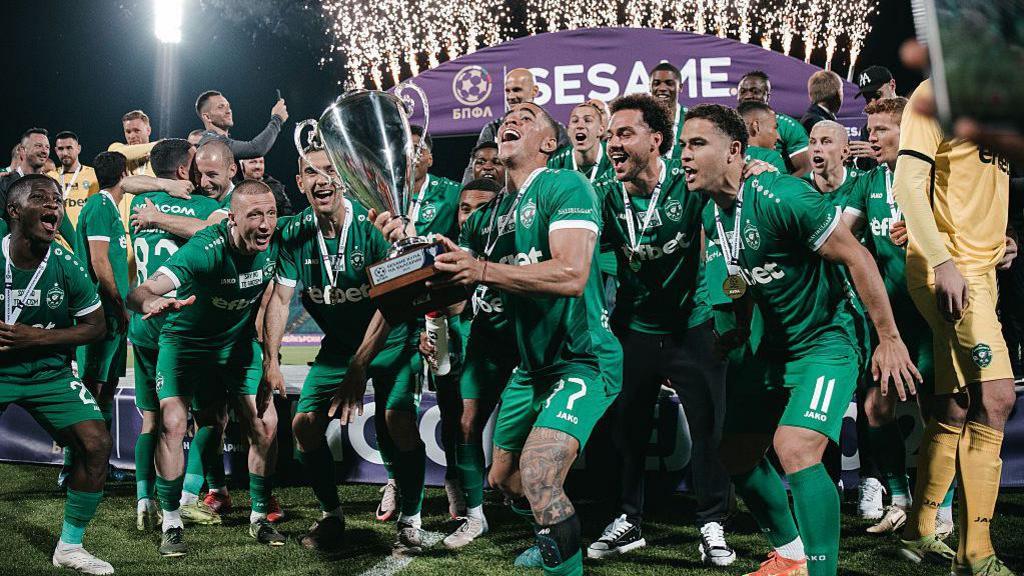 Image source, Getty Images
Ludogorets have won 14 Bulgarian titles in a row but, according to Transfermarkt, only had the seventh-highest average attendance in their league last season
ByAlex Bysouth
BBC Sport Senior Journalist
As Ludogorets celebrated becoming Bulgarian champions once again last summer, history reared into view - only Tafea, from the South Pacific archipelago of Vanuatu, could top their 14 successive titles. Just one more to tie the world record.
Yet the most dominant club in Europe have not reached the Champions League for a decade - seemingly too powerful for their domestic league but not strong enough to trouble the continent's elite, and highlighting the disparity in a delicate ecosystem.
At the top of the food chain, a Champions League that began for title winners in 1992 this season boasts six English sides, five Spanish and four each from Italy and Germany - four nations accounting for more than half the 36 league-phase teams.
While the competition has increased in size and value - Uefa's TV rights grew from just shy of £500m in 2003-04 to £2.8bn in 2023-24, with the new cycle from 2027 expected to generate more than £4bn - the pool of winners has narrowed.
Only Bayern Munich and Paris St-Germain have broken the English and Spanish clubs' hold on the trophy in the past 15 years. An Italian team last won it in 2010.
It would be a huge shock to see former champions Marseille, Ajax or Porto, for example, win the competition in the near future. Even more so Red Star Belgrade, PSV or Steaua Bucharest (now FCSB) from the latter days of the European Cup.
A revamp of the competition has allowed more clubs to participate, play more games and register more upsets - most notably debutants Bodo/Glimt, who beat Manchester City and Atletico Madrid this term.
Yet Ajax, in 2019, are the only club outside Europe's top five leagues to reach the semi-finals in the past two decades. Over the past four seasons, only Benfica (twice) have muscled in to make the quarter-finals.
"If you said when the Champions League was born in 1992 'this is what it's going to be like', I'm pretty sure they'll have said 'wow, we really messed up'," says Alex Muzio, president of the Union of European Clubs (UEC).
Muzio points to France as a warning for competitions becoming too "predictable", with PSG aiming for a 12th title in 14 years.
"People don't want to watch competitions where you know who's going to win," he says, suggesting there are now only four top leagues in Europe.
Ligue 1 does face a challenging TV rights landscape, streaming matches on its own channel this season in a direct-to-consumer deal that pits it closer to the Netherlands’ Eredivisie than Serie A, whose own domestic broadcast revenue has fallen slightly.
Other top leagues have also plateaued.
France, despite boasting a deep talent pool, will only have one representative in the Champions League last 16 after PSG drew Monaco in the play-offs.
Muzio, majority owner of Belgian title winners Union Saint-Gilloise, says fans crave competitions with more parity - such as the Premier League, cricket's IPL and American football's NFL - while growing financial disparities will mean more "haves and have-nots".
"The football community needs to come together and understand that it works as a community in a way that other businesses do not," he adds. "We need each other."
Uefa says it recognises competitive balance across European football is "essential for the health and sustainability of the game" but is also a "complex challenge" that cannot be addressed by Europe's governing body alone.
It says structural disparities between leagues and clubs are influenced by a wide range of factors that extend beyond European competition revenues - including domestic markets, commercial potential, history and stature of clubs and leagues and national distribution methods.
Indeed, across Europe, a tier of dominant champions has emerged - besides Ludogorets, Red Star have clinched eight successive titles in Serbia, while Ferencvaros in Hungary and Slovan Bratislava in Slovakia have seven each.
Yet none of those clubs reached the Champions League proper this season - Ferencvaros face Ludogorets and Red Star play Lille in the Europa League play-off round, and Slovan did not progress in the Conference League.
Ferencvaros chief executive Pal Orosz previously told BBC Sport "the gap is so big that we will probably never catch up" to Europe's elite.
Yet they often have to achieve complete domination of their domestic leagues to even stand a chance of playing in the same competition as Europe's top clubs.
'The goal is to become someone like Bayern'
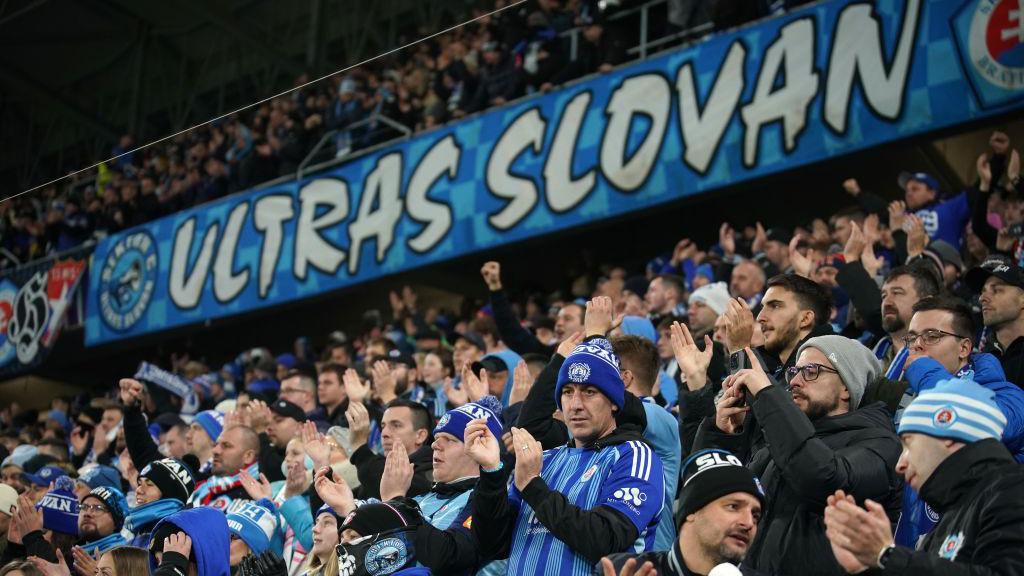 Image source, Getty Images
Slovan beat Barcelona to win the Cup Winners' Cup in 1969 - the same year Slovak champions Spartak Trnava lost to Johan Cruyff's Ajax in the European Cup semis
Slovan's foray into the Champions League last season was a proud moment - their first appearance since independence in 1993 when they qualified as Czechoslovak First League champions.
Since businessman Ivan Kmotrik bought Slovan in 2008, they have once again become Slovakia's dominant force, with sporting director Robert Vittek saying the goal is to become "like Bayern Munich in Germany, winning titles year by year".
"The key to be financially sustainable is to play one of the main phases of the European cups," explains Vittek. "From Slovakia, you have to win a title to have a real chance."
Playing in the Champions League earned Slovan about £18m in TV revenue on top of increased crowds, commercial deals and visibility - hosting Manchester City and AC Milan and travelling to Bayern and Atletico.
"Maybe just with time, we will appreciate what kind of success it was to bring such clubs to Bratislava," says Vittek.
"We didn't get a point, however we were representing Slovakia well in the European scene and we can be proud about that."
To even reach the league phase, Slovan had to progress through three rounds of qualifying, the first Slovak side to do so since Zilina in 2010.
"We can be realistic and sensible with these kinds of topics," says Vittek, when asked if there should be a more attainable route.
"There is a 'champions path' for clubs like us, where there's always a way for clubs from some 'smaller' leagues to reach the main phase. However, it's difficult."
'No easy solution' - what can be done?
Ludogorets, who have reached the Champions League group stages twice, last featuring in 2016 when they earned a credible draw with PSG, have won every Bulgarian title since promotion following Kiril Domuschiev's purchase in 2010.
But that run could be coming to an end given they are currently second, seven points behind leaders Levski Sofia - and journalist Teodor Borisov says "Bulgarian football fans are desperate" to see a different champion.
He attributed the 14-time champions' drop off to injuries, poor form and head coach Julio Velazquez's impact at Levski.
Clubs in other leagues have shown it is possible to wind in dominant rivals through shrewd recruitment.
Hearts, who like Muzio's USG and Brighton have benefited from Tony Bloom's influence, hope to end 40 years of Old Firm dominance, Rijeka toppled Dinamo Zagreb in Croatia last season and Sturm Graz snapped Red Bull Salzburg's decade-long streak of Austrian titles to win the past two.
Sturm sporting director Andreas Schicker said it was a "balance between having success, qualifying for European competitions and making profit on talented players" such as Rasmus Hojlund.
Meanwhile, Uefa says solidarity payments to clubs not in European competition went up 80% for this cycle - almost £270m - at a "much higher rate than payments reserved to participating clubs", with the increased redistribution welcomed by the European Leagues body.
Clubs competing in the Champions League and Super Cup, external get 74.38% (more than £2bn), with 17.02% for Europa League clubs and 8.6% for those in the Conference League.
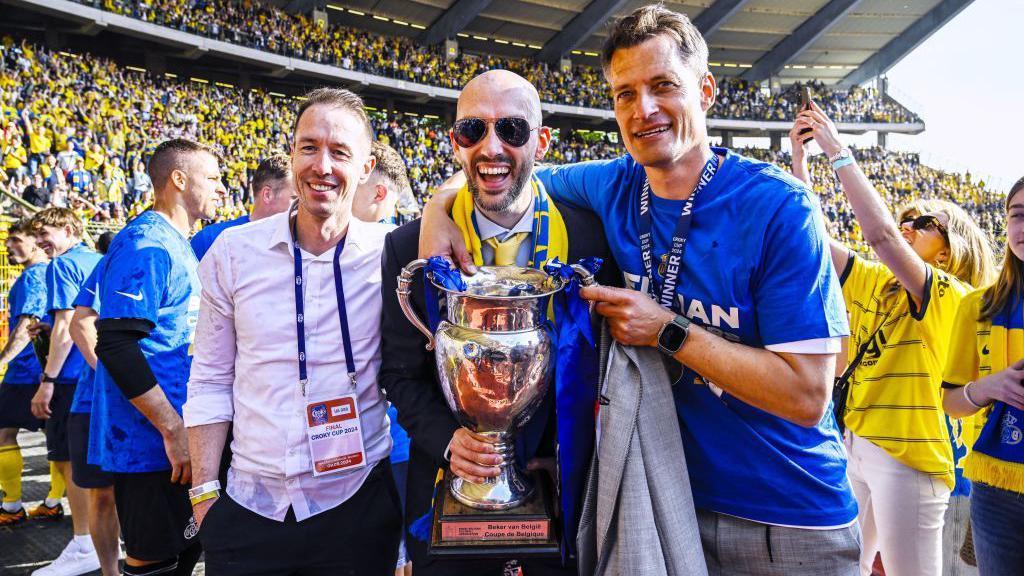 Image source, Getty Images
USG celebrated their first Belgian title in 90 years last season to qualify for the Champions League for the first time
Real Madrid last week became the final club to end a dispute over a breakaway European Super League, with Uefa and European Football Clubs - an independent body representing more than 800 clubs - saying an "agreement of principles" had been reached "for the good of European club football".
Elsewhere, Latvia - which does not have a domestic TV deal - has proposed a combined 'Baltic League' with Lithuania and Estonia to try to drive revenues and make clubs more competitive in Europe.
The UEC - which represents more than 140 clubs - has ideas of its own, as well as calling for transparency and dialogue.
One is a new domestic media rights protection policy that would reinvest a portion of European competition media revenues into nations where it exceeds domestic rights.
Another is a player development reward policy that reimburses clubs who are not in the Champions League when a player they trained features in the competition - they believe in recent seasons almost 1,500 clubs would have benefited.
The focus is on increasing competition at a domestic level in the hope that will eventually help "smaller leagues" be more competitive in Europe.
This year's Champions League debutants - Bodo, Kairat, Pafos and USG - appear to have come from leagues with a greater spread of recent winners.
"There is no clear and easy solution because if you help Qarabag or Benfica or USG or a team from a non-big four league to grow its revenue a lot, then all the teams behind it in that league get stretched away," says Muzio.
"It's very important that us, as the UEC of stakeholders, don't try and pretend like there's a magic wand you can just wave.
"There will need to be a lot of work over a long period of time to try and balance things out to make things fair again."