
Max OlsonMar 9, 2026, 08:05 AM ET
- Covers the Big 12
- Joined ESPN in 2012
- Graduate of the University of Nebraska
Clemson coach Dabo Swinney sat down at a news conference on Jan. 23 armed with receipts, timelines and accusations.
Coaches have griped for years about the out-of-control nature of tampering across college football. But this was a rarity: A head coach going public with precisely how his program was wronged. And not just any coach, but one with two national title rings.
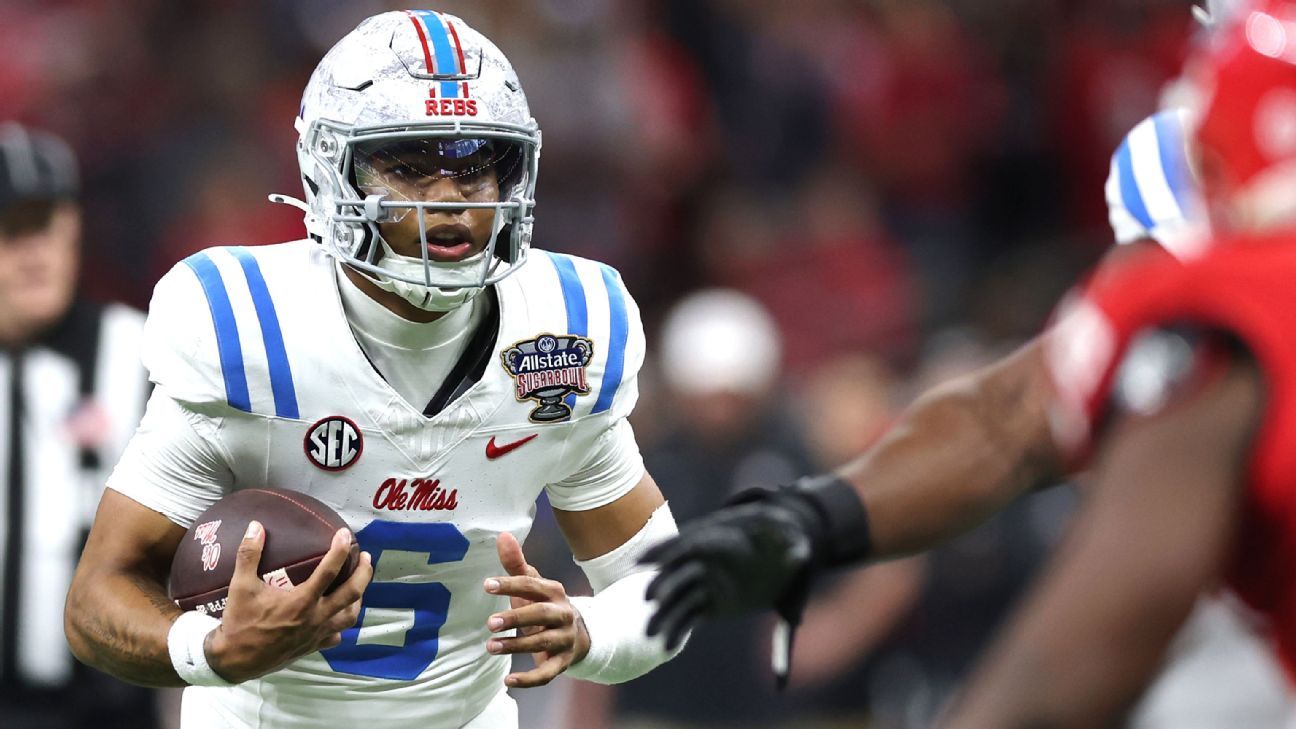
He laid out the story of Luke Ferrelli, a transfer linebacker from Cal who had just enrolled at his school, moved into an apartment and went through classes and workouts for a week. And then, suddenly, he bailed for more money at Ole Miss.
What changed? Swinney alleged new Ole Miss coach Pete Golding texted Ferrelli while he was in his 8 a.m. class to say, "I know you're signed. What's the buyout?" Swinney claims Golding even sent a photo of a $1 million contract offer. Within two days, Ferrelli was back in the portal.
"To me, this situation is like having an affair on your honeymoon," Swinney said.
Coaches have traditionally been reluctant to publicly go this far when their players get tampered with and swiped by other programs. By now, most recognize the inherent hypocrisy: It's throwing stones from glass houses.
"We're doing it ourselves, too," an ACC general manager said. "If we're doing it, we're not going to turn other people in for it."
But it's different for Swinney. Clemson stayed on the sidelines for the first six years of transfer portal recruiting until last year, giving Swinney some moral high ground on this issue. He can safely call out what's wrong. More importantly, he's calling on the NCAA to do something about it.
"We're never going to get this under control until we start having some consequences," Swinney said. "We're just not. It's that simple."
ESPN surveyed more than a dozen general managers and agents about the current state of tampering in college football amid the Clemson-Ole Miss feud. They were granted anonymity in exchange for their candor.
The aim was not to throw more stones but to demystify the process: How does tampering actually work in 2026? What are the unwritten rules, and when are you breaking those rules?
We'll break it down into three levels: Tampering 101 (communicating with players before they enter the portal), 201 (making deals with players before they enter the portal) and 301 (what Clemson accused Ole Miss of doing).
Any contact between a player and school before they've entered the transfer portal is impermissible, but agents arriving on the scene in this evolving era of NIL totally changed the game. Now it's easier than ever to pursue a player at another school via their representation, with those conversations starting well before the season ends.
The agent-GM relationship combined with the advent of revenue sharing has dramatically changed tampering over these last two offseasons, both in terms of tactics and the shifting perception of what is considered fair game.
The NCAA is now threatening a crackdown on the rampant pre-portal dealings between agents and schools. But in a time when seemingly nobody is living in fear of enforcement, the real rules and ethics of tampering are being made up on the fly and up for debate. Granted, that's not how Clemson's coach sees it.
"Right is right even if nobody does it," Swinney said. "And wrong is wrong even if everybody does it."
Tampering 101: How it works today
As Swinney laid out his case against Ole Miss to reporters, he said he sees three different tiers of tampering nowadays. The most basic form -- or "tampering 101" as Swinney put it -- is communicating with players who aren't in the transfer portal.
This communication can come in several forms, from texts and direct messages to postgame handshakes. Virginia Tech defensive lineman Kemari Copeland claims he even saw a recruiter from a tampering school in attendance at a game last season.
For years, if college coaches and staffers wanted to pursue a player at another school, they would find a way to get to them. They would call their high school coach or reach out to a trainer or family member to express interest and try to persuade them to transfer. Coaches knew they risked NCAA sanctions for impermissible contact, so they had to be cautious about making these overtures.
But now that players have agents, impermissible contact has dramatically escalated.
"The tampering got much more brash and blatant," one agent said.
The current transfer rules now make it seem impossible to navigate the chaotic portal process without the help of an agent and their rolodex of contacts. This year, the portal window began on Jan. 2 and was open for only two weeks. To meet enrollment deadlines, players on the move had to get official visits booked and deals negotiated as fast as possible.
For all parties, tampering has become imperative. Teams need to find out who will be available. Players need assurances they'll have somewhere to go. Agents play the role of matchmaker throughout December, if not sooner.
Agents say they started getting calls from general managers as early as September last season, and many agencies will distribute their client lists to front offices to initiate discussions. Purdue coach Barry Odom said his staff received a list of impending transfers from an agency who mistakenly included Purdue players. By now, these general managers know they can't be naive. While they're doing early shopping, their players are being shopped around as well.
"You have to know everybody is a target at any given time," a Big Ten GM said.
One Big 12 general manager said he has "truces" with a few GMs in his region. If an agent is shopping one of their players to him, he's going to let his peers know with the expectation they'll return the favor.
"No one's going to look out for anybody, but we've kind of got to look out for each other in terms of just dealing in truth," he said. "Some of them, you'll be like, 'Yeah, I figured.' And some of them, you won't."
An ACC GM told ESPN he received a call in late October and learned his top receiver already had million-dollar offers on the table from SEC and Big Ten programs. It didn't stun or even bother him. If you have good players, it's inevitable. There's no sense, he said, in phoning the GMs at those schools and calling them out. All you can do is put in the work to try to retain them.
"I don't think anyone's ever going to call a press conference and be like, 'I lost a player because he went to his agent and said he wants more money in the portal, shopped his name around and got three offers,'" the GM said. "That's called recruiting nowadays."
From the agents' perspective, it's not really tampering or tortious interference when you're talking about players on expiring one-year deals. The way they see it, their clients are well within their right to explore their options.
"I don't even see why schools get mad about it," one agent said. "If you don't want your kid to be tampered with, sign them to an agreement that's fair and the kid won't be looking to go elsewhere."
If a head coach gets fired during the season or is obviously on the hot seat, it's open season on recruiting their roster. Rival coaches were pursuing Florida, LSU and Penn State players well before we reached December. And when a Group of 5 player such as North Texas quarterback Drew Mestemaker breaks out, Power 4 programs start lining up.
There's not much mystery anymore. A player doesn't have to put his name in the portal to find out how valuable he is elsewhere. When agents negotiate with schools, they already know what the market is for their client -- especially if they're repping several players at the same position.
"You almost have to tamper at times with these schools, because they don't want to pay their own players," the same agent argued. "They just don't."
The continued expansion of front offices in college football is evolving how teams approach portal recruiting. They're casting a wide net as they build out their portal board over the course of the season.
One example an agent offered from this last portal cycle: An SEC school was looking for a starting offensive tackle. Their recruiting staff did their homework, putting together their wish list of experienced players. They contacted agents repping priority targets and made it clear they were willing to pay $1 million or more for the right guy.
Is that tampering? Or is that just business as usual?
"They probably said that to 18 different tackles," a GM at a Group of 5 school said. "At the big schools, you're trying to figure out the price and what you can and can't get."
From there, the school narrows down its options and decides whether to pay full price for SEC experience or save a little on a Group of 5 starter with upside. And whether the linemen wanted to go to that school or not, it's validation that they're in line for a major payday if they hit the open market.
"We're all trying to do it," the G5 GM added. "Because unless you're Texas Tech or Miami, nobody has the money to just wait and say, 'Well, who's the best defensive tackle in America this year? Let's go get him.' We're all trying to find the guys on rookie contracts, so to speak."
In the early years of the portal era, recruiting staffs tampered with players they identified as difference-makers and missing pieces for next season. As 25-man portal recruiting classes have become more of the norm than the outlier, it's now a nonstop process.
"Now you will tamper for a month with a guy who's going to be the 80th guy on your roster," one agent said. "That's where it's just become chaotic."
Tampering 201: The pre-portal deal
When the portal is open, transfer recruiting battles are fast and furious and can swing in unexpected directions on a moment's notice. One big takeaway GMs and agents shared from moving to a two-week portal window: Nobody can afford to waste any time.
GMs who had negotiations with prized portal targets fall apart were scrambling to land backup options. Agents were scrambling to line up additional visits for players whose top schools dropped out. On both sides, it's 14 highly pressured days of nonstop phone calls and minimal sleep.
So you can see the appeal for all parties in getting commitments lined up in December. This is called pre-portaling.
If a GM can get an agent to agree on a deal before the portal opens and guarantee their school will get the first and only official visit, they're willing to pay a premium. Agents won't send players on visits unless both sides are on the same page about the deal terms. If they can negotiate exclusively with a school their client likes and avoid the headaches of a prolonged recruitment, it's worthwhile on their end too.
The portal window moving to January turned December into essentially a tampering period, similar in some ways to the NFL's legal tampering period. Players who knew they were leaving announced they planned to enter the portal on Jan. 2. GMs and agents agreed that if a player makes that announcement, they're fair game. Why? Because they want to be contacted and recruited.
According to agents, the easy way to facilitate December tampering was via three-way phone calls. The agent would call the GM or coach, then add the player to the call. That way, it's the agent showing up in phone logs and not the player. Some even held these pre-portal agent meetings over FaceTime and Zoom.
"It's a crazy world, but if you're not doing that, you're so far behind in the game," an SEC GM said.
One agent laughed as he recalled a December news conference of a head coach complaining about all the ways college football is broken.
"They'd done three-way calls with their coaches for four different clients as early as November," the agent said. "He's up there waxing poetic about how bad tampering is, and I've been helping you tamper for a month."
Pre-portal talks don't get serious, though, until teams are deep into the renegotiating process with their returning players in December and have a better read on who's staying and leaving. Swinney and other coaches have likened the renegotiation process to extortion in some cases and know they're contending with agents who could be bluffing about offers from other schools. But that's how it works when there's no data or transparency about how much college football players are earning.
"How much did we deal with false leverage in this cycle? I mean, it's incalculable," a Big 12 GM said. "I would say a ton. But, I mean, I can't prove it."
If a GM and agent can arrive at a number both sides like for a pre-portal agreement with a transfer, then it all comes down to trust. Once the portal does open and it's time to get the deal done, will everyone stick to their word?
One agent who sent a defensive lineman to a contender for more than $900,000 said his pact with the team's GM was practically a "blood oath" once they got to the right number. He wasn't going to burn them by coming back and asking for more or sending the player on additional visits, and they weren't going to drop the player if some other highly touted defensive end emerged.
One SEC general manager expressed frustration that a pre-portal agreement for a backup defensive lineman fell through when the agent leveraged it to secure a more lucrative deal elsewhere.
"If you line a kid up, you have to deliver," the GM said. "That's how this works."
Plenty of other schools got burned by this with pre-portal agreements that were topped by better offers or opportunities elsewhere. Some even lost out on players who agreed to deals before deciding to withdraw from the portal and stay at their current school.
"In the NFL, if you ever had somebody agree to terms and then go somewhere else two days later, that would be a f---ing problem," a Big Ten GM said. "But it happens a lot in this space."
It goes both ways. One agent who repped a pass rusher had a deal lined up with an SEC school for $800,000. When the player went on the visit and sat down with the head coach, suddenly the offer was $400,000.
Many agents walked away from this fast-paced portal cycle with similar experiences of agreed-upon deals that didn't work out because front offices reduced their offer or had a change of plans and backed out.
"I would say 90% of the time, I'm going to try to keep the player to doing what he said," another agent said. "But I have been burned by the schools. I'd like to say we would never do that, but I'd be lying to you."
Tampering 301: By any means necessary
The Clemson-Ole Miss spat raises a curious question about the tampering game: What do GMs and agents consider crossing the line?
Most surveyed by ESPN believe Golding having direct communication with Ferrelli after the linebacker enrolled at Clemson would be a brazen move by a head coach. If the player is signed and in school, it's time to move on.
"Once the kid gets on campus, that s--- has got to stop," an SEC GM said. "To me, that was the cardinal sin in that situation."
"He's literally in class," an agent added. "There's no way to defend it."
Swinney also claimed that Trinidad Chambliss and Jaxson Dart -- Ole Miss' starting quarterbacks over the past two seasons -- were involved in texting Ferrelli to recruit him to Ole Miss. GMs view that as a bit of a gray area, depending on if you can prove the coaching staff orchestrated those efforts. As one ACC GM put it, "It's not not a violation."
General managers would prefer to operate in a world where returning players and incoming transfers are off-limits once they've officially signed their revenue sharing contracts. But in the final days of the portal window, they watched several schools get desperate. In Ole Miss' case, the Ferrelli recruitment accelerated after the Rebels lost starting linebacker TJ Dottery to LSU.
Swinney's retelling of the saga did raise a few eyebrows among GMs and agents. Several acknowledged Ole Miss' pursuit of Ferrelli could've ended with the player's agent, Ryan Williams of Athletes First, shutting it down from the start. Some questioned why Clemson didn't have Ferrelli locked down with a signed revenue sharing contract, which would've given the school a legal avenue to seek a buyout or damages after his flip.
"It's Clemson's damn fault for not having the contract done," one agent argued. "If you know all this is going on, what's taking you so long to execute the contract?"
The Ferrelli situation was not one of a kind in this portal cycle. Multiple GMs told ESPN they had players who had already re-signed get contacted by Power 4 schools inquiring about the cost of their buyout. The agents generally viewed breaking contracts as too problematic to pursue and guaranteed to burn relationships with schools. Some said they would even drop the player as a client if put in that position.
One ACC GM felt the Ferrelli move was nowhere near as troubling as Miami swiping star quarterback Darian Mensah from Duke at the portal deadline. The Hurricanes' last-minute push to flip Mensah away from the ACC champs resulted in Duke suing the quarterback and settling for an undisclosed sum to release him from his two-year contract.
"It's like they robbed a bank in broad daylight, walked out with no mask and no alarms went off," the ACC GM said with a chuckle.
One month after Swinney's news conference, NCAA vice president of enforcement Jon Duncan sent a memo to member schools warning that his group has been charged with pursuing "significant penalties" for tampering violations -- including any contact between agents and coaches about players who are not in the portal. He vowed work is underway to modernize and streamline the investigative process for more expedited resolutions.
"Simply put, communicating with an agent for a student-athlete who is not in the transfer portal is a tampering violation," Duncan wrote.
The NCAA says its enforcement team processed around 90 impermissible contact cases last year, including major infractions by Oklahoma State's women's tennis program and UCLA's cross country and track programs.
There have been few high-profile cases of Power 4 programs receiving NCAA penalties for tampering, though Iowa did get punished for contacting Michigan quarterback Cade McNamara before he entered the portal in 2022. The penalties included coach Kirk Ferentz and an assistant serving one-game suspensions -- two years after the violation occurred.
GMs surveyed by ESPN said they haven't turned in other programs for tampering in recent years because they view it as a waste of time. It's not easy to obtain evidence and prove it like Swinney did. More importantly, staffers don't want the NCAA imaging their phones and finding proof of their own tampering efforts.
That's one of the many challenges Duncan and his enforcement staff deal with: Coaches call the NCAA toothless but aren't interested in cooperating and turning over actionable information.
"Nobody's clean -- except maybe Dabo," the Group of 5 GM said.
Swinney turned over what Clemson has to the NCAA but contended this case ought to take three days, not three months or three years. There's another age-old problem for the NCAA: Schools expect instant justice and draconian penalties when they're the accuser and expect fair processes and penalties negotiated down to the point of being painless when accused.
After years of perceived investigative inaction, GMs and agents say they'll believe a reckoning is coming when they see it.
"I hate to say it," one agent argued, "but the rules are a suggestion at this point."
"Let's say they do penalize Ole Miss or one of these teams," an SEC GM added. "At the end of the day, it's still going to end up in a courtroom."
Yet another challenge for Duncan and his staff in confronting tampering in major college football: Does membership want to treat this like speeding tickets with a higher volume of Level III violations? Or do they want more significant consequences even if it means fewer cases?
The Big 12 GM believes it's time to start talking about dramatic penalties and argued that programs busted for significant tampering shouldn't be eligible for the College Football Playoff or the postseason.
"There's got to be some type of functional repercussion to it in order for people to stop doing it," he argued.
The NCAA's FBS Oversight Committee offered a window into its thought process last month when it shared proposed penalties for trying to prevent "blind transfers," preparing for the likelihood that teams will try to convince players to transfer later this spring by circumventing the portal.
The threat to teams that try it? A six-game suspension for the head coach, a fine of 20% of the school's football budget and a reduction of five roster spots for next year.
Tulane pulled this off last July when it brought in former BYU quarterback Jake Retzlaff as a walk-on enrollee months after the transfer deadline. Teams will inevitably have needs after dealing with injuries and depth issues in spring practice. One agent said schools have already talked with him about orchestrating these moves.
"They're saying have him withdraw from school, he'll walk on over here, then we'll pay him and put him on a scholarship a few days later," the agent said.
If those penalties are approved by the Division I cabinet next month, they'll likely face legal challenges. But it would send a clear message the NCAA is willing to embrace more significant measures as a deterrence.
Tampering has become so easy to do that trying to stop it might be futile. Perhaps it's wiser to confront some of the contributing factors such as fixing the calendar, regulating agents or dealing with the schools who are spending far beyond the revenue sharing cap.
Or, perhaps, it's finally moving in the direction of employee status for players and collective bargaining. By the end of his 90-minute news conference, Clemson's head coach admitted he had started to come around to that conclusion, too. Of course, Swinney just said what many are thinking. The current setup has left everyone grasping for answers to a complex problem.
"It's like trying to stop a runaway train, man," an ACC GM said.