 3 months ago
123
3 months ago
123
20 minutes ago
Osmond Chiaand Peter Hoskins

 Getty Images
Oil prices jumped by nearly 7% on Thursday after US President Donald Trump reiterated threats to hit Iran "extremely hard" in the coming weeks and failed to give concrete details on how the war will end.
Brent crude rose to $107.60 a barrel and stock markets in Europe and Asia fell following Trump's address from the White House.
He said that the US would complete its strategic objectives for the war "very shortly" and spend the next two to three weeks bombing Iran "back to the Stone Ages".
Earlier on Wednesday, oil prices briefly dipped below $100 ahead of the speech on hopes Trump would say how the US would exit the conflict but his address repeated the same points he made previously.
The Iran war has severely disrupted global oil and gas supplies.
Oil shipments through the critical Strait of Hormuz waterway have mostly been halted after Iran threatened to attack tankers that try to cross in retaliation to US-Israeli strikes, which began on 28 February.
In his speech, Trump said the US did not need the Middle East's energy and urged other nations to step in to free up shipments from the Gulf that have been disrupted as a result of the war.
He said: "To those countries that can't get fuel, many of which refuse to get involved in the decapitation of Iran… build up some delayed courage, go to the Strait and just take it."
Oil prices, which had been fluctuating incrementally before, shot upwards moments after the televised speech.
West Texas Intermediate oil rose 6.4% to about $106.50.
The oil price rise was a "clear market reality check following the earlier optimism for an imminent ceasefire" said Alberto Bellorin from InterCapital Energy.
Trump's speech lacked a "concrete timeline" for the reopening of the Strait of Hormuz, while a return to normal now looks "months away rather than weeks," he added.
In urging other nations to step in, Trump has removed hopes that disruptions to global energy supplies will be resolved swiftly, Bellorin said.
In his speech, he said oil and gas flows would return quickly when the war ended.
"When this conflict is over, the strait will open up naturally. It will just open up naturally," he said.
But Anne-Sophie Corbeau, former head of gas analysis at oil giant BP, suggested it could take some time for flows to return to normal.
The Gulf's energy infrastructure has been damaged following strikes by Iran, Israel and the US and Corbeau said repairing it could take between three and five years.
Corbeau, who is now at Center on Global Energy Policy at Colombia, told the BBC's Today programme that disruption to traffic through the Strait of Hormuz was likely to persist and that additional costs in the form of fees to use the strait could be "quite substantial".
She said currently she understood ships were subject to a charge in the region of $2m for using the strait, which, if made permanent amounted to "the worst-case solution" for users of the waterway.
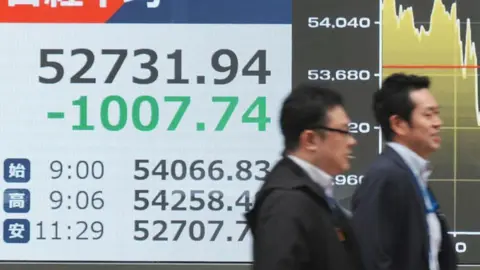
Stock market indexes in Europe opened lower. The UK's FTSE 100 dropped 0.1%. France's Cac fell 1.1% and Germany's Dax was 1.6% lower.
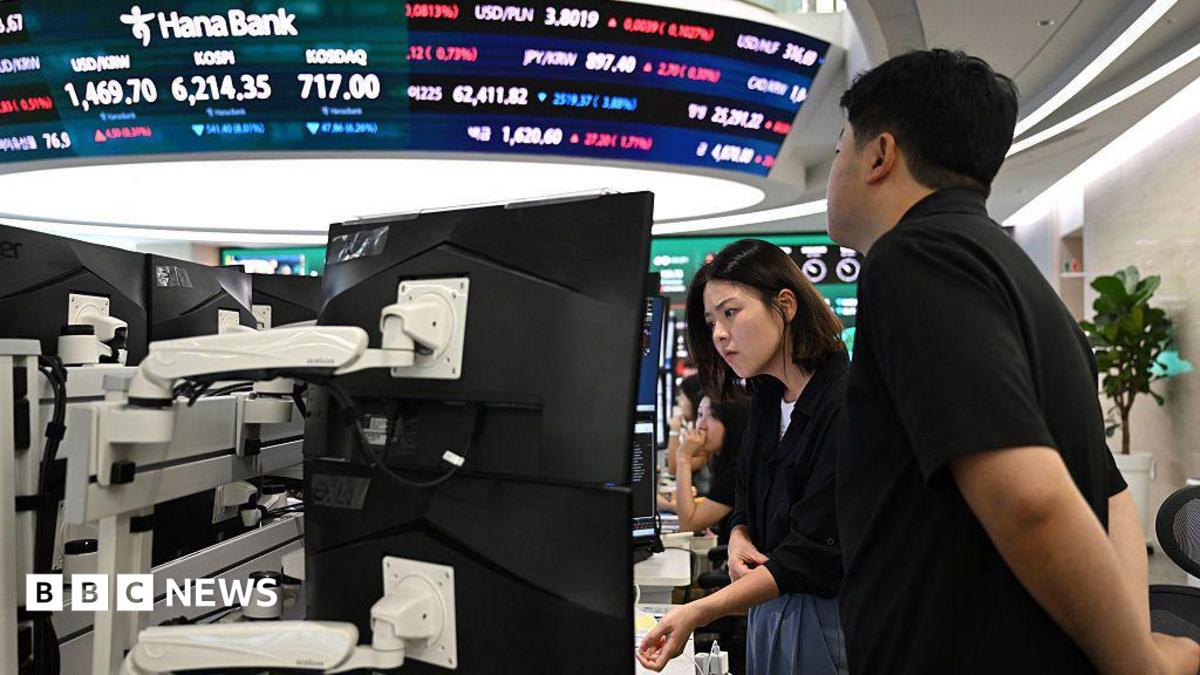
Major stock indexes in Asia fell after the address, reversing earlier gains.
The Nikkei 225 in Japan was down by 2.4%, South Korea's Kospi fell by 4.5% and the Hang Seng in Hong Kong was 1.3% lower.
The region's stock markets have been volatile since the Iran war started at the end of February.
Asia is particularly vulnerable to the impact of the conflict as it is heavily reliant on the Middle East for its energy supplies.