 3 months ago
116
3 months ago
116
2 hours ago
Jemma CrewBusiness reporter

 Getty Images
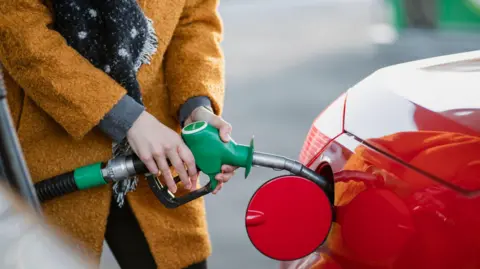
There is no evidence of widespread price-gouging by UK fuel retailers in the weeks after the US-Israel war with Iran began, the competition watchdog says.
The Competition and Markets Authority (CMA) said profit margins overall on average were "broadly unchanged" between February and March.
Prime Minister Sir Keir Starmer at the time said the government was primed to act if fuel companies tried to "rip off customers", but forecourt retailers denied price- gouging was taking place and criticised the use of "inflammatory language".
Across February and March the CMA found retail fuel margins - the difference between what retailers pay for fuel and the price they sell it for - were close or equal to the 10.7 pence per litre (ppl) average margin for last year.
It said its findings indicated "there has not been a widespread issue of retailers earning higher margins" since the war began.
But it found that fuel margins increased between February and March for two supermarkets and three non-supermarket retailers.
Sarah Cardell, CMA chief executive, said: "We are investigating why and will report further in May."
It said it was also looking into why there was a period of higher margins - 12.7 ppl - in December and January prior to the conflict.
The regulator noted its findings were situated in a context of "historically high" fuel margins for retailers.
This reflects an "ongoing concern" about a lack of competition in the fuel retail market, it said.
It put the rapid rise in costs at the pump for UK drivers since the conflict began down to wider cost pressures, in particular higher oil prices.
About 20% of the world's oil and liquefied natural gas (LNG) usually passes through the Strait of Hormuz, which has been effectively closed for two months, sending global energy prices soaring.
The price of petrol peaked at 158.3p a litre and diesel reached 191.5p a litre in mid April, according to RAC data.
Pump prices have since fallen back slightly but petrol remains 24.2p per litre and diesel 46.0p per litre more expensive than before the war.
Cardell said the CMA would stay "vigilant" to ensure any fall in wholesale costs is passed onto drivers.
The CMA also said there were significant local variations in price, with potential savings of up to £9 per tank of petrol and diesel if drivers shop around.
In March, the CMA said it would be considering how quickly fuel prices rise and fall as wholesale costs change, and whether there was evidence of so-called "rocket and feather" pricing.
The regulator also said in March it was examining heating oil prices after it received a "number of concerning reports from consumers who rely on heating oil about their experiences with retailers".