 3 months ago
123
3 months ago
123
1 hour ago
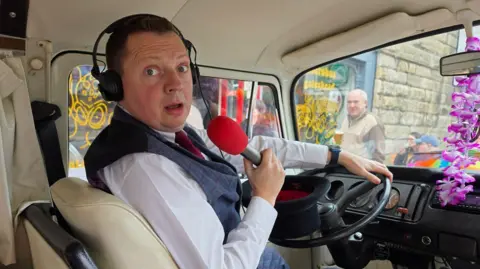
Matt ChorleyPresenter, BBC Radio 5 Live

 BBC
BBC
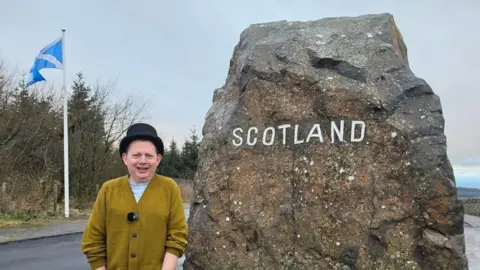
Hitting the road for a trip around the UK's election hot spots
Next month's elections in Scotland, Wales and for local councils in many parts of England will be the biggest test of public opinion since the 2024 general election.
Here is what I learned from talking to voters on a whistlestop tour across the UK, from London to Cardiff, then Birmingham, Stockport, Gateshead and Edinburgh.
It has become fashionable to declare two-party politics dead, to herald a new world where seven parties battle it out: Labour, Conservative, Lib Dem, Reform UK, Green, Plaid Cymru and SNP.
It's easy to think that all seven are competitive everywhere, but it is more complicated than that.
For instance in Westminster City Council, where I began my journey, Kemi Badenoch's Conservatives are hoping to take control back from Labour, in an old-style battle which looks a lot like politics used to.
Over in East London it is the Greens, reinvigorated under Zack Polanksi, who are challenging Labour.
Same city, two very different stories.
When I got off the train in Cardiff, though, it was Plaid Cymru and Reform UK who were neck and neck in some polls, vying to be the biggest party in the Welsh Senned.
A new voting system - with 96 members elected across 16 six-member super-constituencies – makes it hard to model the outcome based on traditional opinion polling.
In Birmingham, where Labour's grip on control of Europe's biggest council is slipping, their rivals depend on where you are in the city.
In Stockport the Lib Dems, who sometimes drop out of the national conversation, hope to take control.
In Gateshead our team struggled so much to find anyone willing to say they would vote Conservative that we had to reach out to Simon, a farmer from Northumberland.
In Edinburgh the prospect of another SNP victory - 19 years after Alex Salmond first became first minister - seems at odds with the "change" message I heard elsewhere.
All of which means the final picture will be messy, and take a while to become clear, with results declared at different times in the days after 7 May.
Everyone - well, almost everyone - will be able to find somewhere to hold a celebratory photo op.
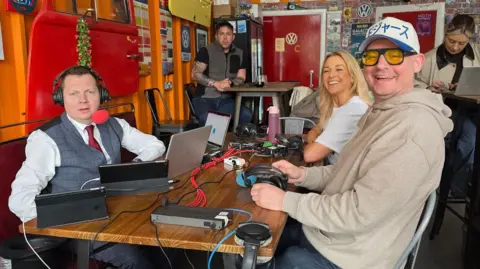
Listeners Joanne and Ben drop by for a chat in Gateshead
No matter what the pollsters have on their nice clear bar chats, real voters are messy.
In Edinburgh, I spoke to Tommy, who has voted SNP for 30 years but now plans to split his two votes between the SNP and Reform UK, two parties who arguably could not be further apart on the political spectrum.
"It might be the shake-up we need," he told me.
In Wales, some pro-unionists are preparing to vote for Plaid Cymru, a party committed to Welsh independence, albeit playing it down right now to broaden their appeal.
In Birmingham, bin strikes and the council's wider financial difficulties, are foremost in the minds of some voters.
In Wales I found voters desperate to talk about the cost of living, farming, tourism, jobs and transport - key areas devolved to Cardiff.
In Scotland we had quite a long debate about immigration - some saying it was too high, others saying Scotland needed more people to fill jobs - even though it is a policy controlled in Westminster and not in Holyrood.
Who will get to take power?
What happens after polling day will be fascinating.
Reform UK seem on course to do well in a number of contests, but could still find themselves locked out of power.
For instance, in Wales some polls suggest Reform could emerge as the biggest party but short of a majority.
It raises the prospect of Plaid Cymru teaming up with one or more party on the left - Labour, Greens, Lib Dems - to form a coalition with a majority.
Similar things could happen in some of the biggest councils in England.
Most other parties refused to do deals with Reform after similar elections last year.
How Nigel Farage and his party respond to "winning" an election but not taking power could come to dominate the conversation this summer.
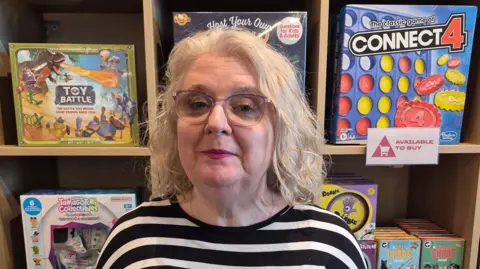
Kerry is thinking of switching her vote from Labour to the Greens
Labour voters appear to be scattering all over the place, left and right.
While some, like Rick in Birmingham, are sticking with Labour as "the party that endeavours to enable people to live their lives to the full", I spoke to many others who began by saying "I always used to vote Labour" before explaining where they were going on the political spectrum.
Kerry, a social worker in Birmingham, used to vote Labour and is now backing the Greens, because, she said, Labour had been in charge for too long and have "almost started to take the Brummie vote for granted
Paul, a store manager in Cardiff, has switched from Labour to Reform.
"After 27 years of Labour running or ruining our country, we need a dramatic change," he told me.
Those old ties, forged down generations, are being broken, and it is forcing people to stop and think about what their own politics really are.
They are engaging and debating. There is a level of interest in these elections, especially to councils, that I have never come across in almost a quarter of a century of covering these things.
It makes the outcome unpredictable. If anyone tells you they know what is going to happen, ignore them.
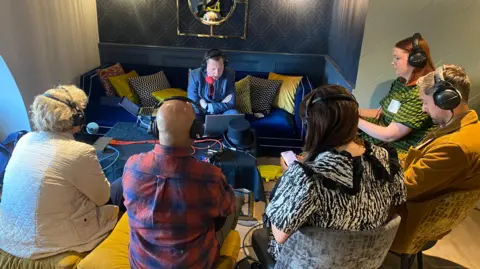
Matt chats with the voters in Edinburgh
Reports of the prime minister's demise are greatly exaggerated. Sometimes.
Political commentators who predicted Sir Keir's downfall over the Lord Mandelson scandal or the loss of his chief of staff Morgan McSweeney now seem to be over-correcting to say that the Iran war and a more robust position taken with President Trump might be enough to save him, whatever the outcome on 7 May.
A set of bad results is, they say, priced in.
A small counter-argument: it is one thing expecting bad news, it's another actually getting it.
Families prepare themselves for the worst when an elderly relative is gravely ill, but that doesn't make the loss any easier when it comes.
For a political family like the Labour Party, expecting the loss of ancestral homes in Wales, London, the North East of England and elsewhere is one thing; the reality could be devastating.
And Sir Keir, as the head of that family, will have to deal with the deeply-emotional aftermath.
Voters are really motivated
One consequence of all this uncertainty, is that I would expect to see turnout rise.
People feel like their vote counts, in a way that they didn't when the same old parties always won.
At the last set of Welsh Senedd elections in 2021, when Labour won again as they have ever since power was devolved in 1999, 46.6% of people voted.
In a hotly-contested by-election in Caerphilly last year, turnout broke 50%, with Plaid first, Reform second and Labour third.
Across the country we will see some people actively voting for their party of choice, while others vote to stop the party they loathe most.
Whatever their motivation, they are really motivated.
That can only be a good thing.
Listen to Matt Chorley each weekday from 2pm on BBC Radio 5 Live.