 1 month ago
73
1 month ago
73
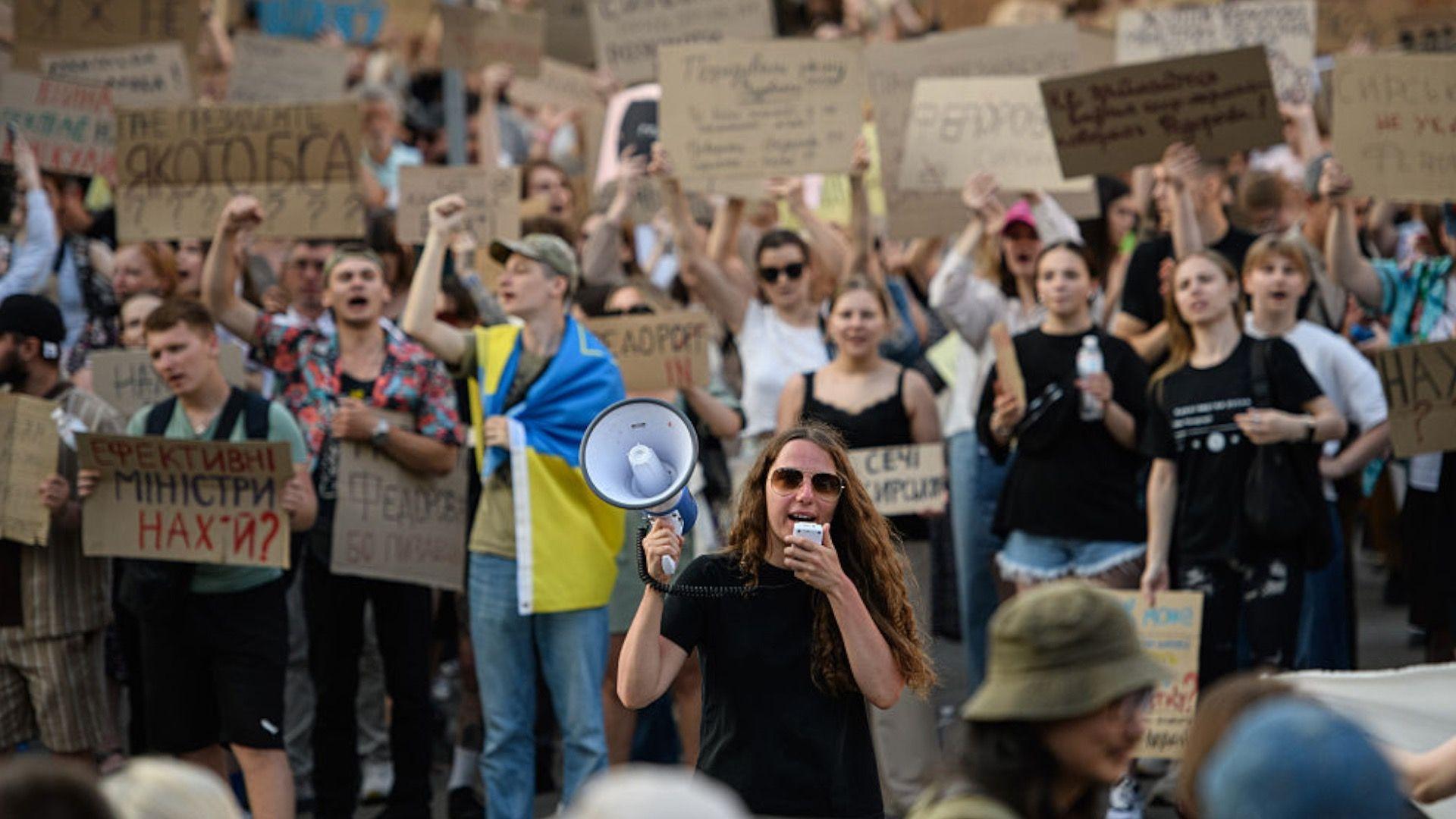 Image source, Olga Ivashchenko/Bloomberg via Getty Images
Crowds took to the streets of Kyiv on Thursday following the removal of defence minister Mykhailo Fedorov
ByPaul Adams
Diplomatic correspondentReporting fromKyiv
"My operation is scheduled for tomorrow," says the disfigured soldier, still recovering from his terrible injuries.
"I hope when I wake up after the anaesthetic, Fedorov will be back at the Ministry of Defence," the unnamed soldier says in a video posted on Telegram. "Otherwise, everything I was fighting for will have been in vain."
Among Ukraine's battle-weary soldiers and wounded veterans, there's a collective sense of outrage at this week's political developments.
President Zelensky's decision not to re-appoint his successful young defence minister, Mykhailo Fedorov, in his latest cabinet reshuffle, has caused bafflement and fury in equal measure.
"It is a blatant slap in the face to all service members," said a soldier we're calling Maryna, to protect her identity.
"It is truly difficult to put this into words without venting in frustration."
Despite the noisy protests breaking out across Ukraine, Maryna doubts popular anger is going to change anything.
"A dictatorship is already unfolding here," she says, "with its own petty tyrants who think they have caught God by the beard."
With army chiefs reportedly warning the ranks not to engage in political debate, soldiers are reluctant to speak openly or do so only on condition of strict anonymity. We have given made up names to all those who replied.
Another soldier, Natasha, said the protesters with their makeshift cardboard placards, were a long way from the daily brutality of the front line.
"Yesterday our positions here got hit by MLRS (multiple launch rocket systems), so nobody cared about Fedorov or the cardboard signs."
Watch: 'We believe in Fedorov and his reforms,' one protester said earlier this week following the minister's removal
But in the messages we've received, there's clear admiration for what Fedorov has been able to achieve, both as Minister for Digital Transformation and during his brief tenure as Defence Minister.
More than anyone, he's identified as the man who has single-mindedly driven innovation in the military, helping to elevate the role of drones and other modern technologies to a point where Ukraine has, in recent months, been able to turn the tide of the war against its much larger enemy.
When I met him in Kyiv last summer, Federov described how data was being used to perfect a scheme dubbed "Army of Drones: Bonus", whereby frontline units could earn points for each Russian soldier killed or piece of equipment destroyed.
The scheme was popular, credited with speeding up procurement and driving innovation.
Fedorov came across as someone deeply committed to promoting Ukraine's war effort in the most creative ways possible, and, as he put it, "how to use limited resources more effectively."
But as members of a military still led by an officer class which emerged out of the old top-down Soviet era system, the soldiers know only too well the sorts of obstacles Fedorov has faced.
"If you can't come to an agreement with the old fossils," Natasha said, "they'll eat you alive."
Chief among the "fossils", in the eyes of some of the soldiers who responded to our requests, is Gen. Oleksandr Syrskyi, the austere 60-year-old commander-in-chief of Ukraine's armed forces.
Regarded as a national hero four years ago, following his successful defence of Kyiv in the weeks following Russia's full-scale invasion, Gen. Syrskyi's name has since become linked with an outdated way of fighting which places little value on human lives.
"Syrskyi commands no authority or respect," Andriy told us. "To us, he remains the General 200," a derogatory nickname referring to a Soviet military code for casualties.
Others simply call him "The Butcher."
To be fair, not everyone in the military shares such a dim view of their leader.
"Currently there is no replacement for Syrskyi in the army," Andrii, a former front-line soldier now working in the General Staff told us.
"Yes, he is Soviet-minded and graduated from a military school in Russia, but we do not have another military commander of such calibre. He conducted all the successful operations of this war."
One thing is clear: Mykhailo Fedorov and Gen. Syrskyi had clearly fallen out by the time President Zelensky made his move this week.
Explaining his decision not to reappoint Fedorov, Zelensky said the two men were unable even to be in the same room together, while the ousted minister blamed the general for blocking all his reforms.
"It was snowballing," Andrii told us. "Everyone knew about it. Zelensky had to make a decision."
With their 25 year gap in age (Fedorov is 35), the two men at the centre of this explosive row represent very different versions of Ukraine.
"Fedorov is an iPhone 16, Syrskyi is a telephone from the 1980s," military analyst and former intelligence officer Ivan Stupak told me.
"You know, the same purpose but with different approaches."
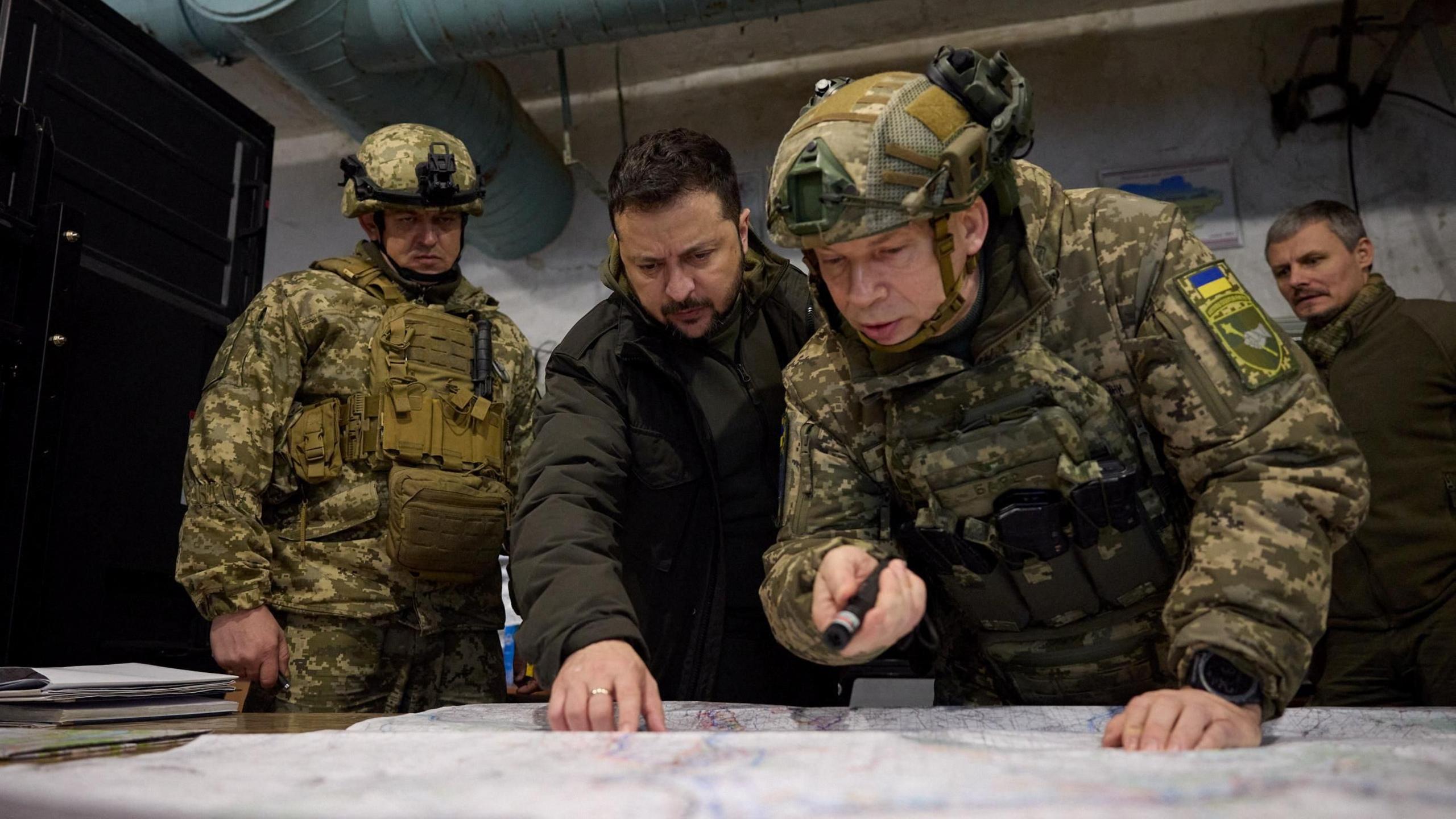 Image source, Ukrainian Presidential Press Service/Handout via Reuters
Syrskyi (right) led the defence of Ukraine's capital during the beginning of Russia's full-scale invasion in 2022
Stupak credits Fedorov with achieving something no-one would have imagined possible ten years ago: dragging the sclerotic, rigidly inflexible military into the digital world.
In his short time at the Ministry of Defence (he was only appointed in January), Fedorov pulled off a number of coups, including persuading Elon Musk to block Russian access to his Starlink satellite-based internet service.
The move is thought to have caused havoc among Russian front-line positions, helping Ukrainian forces to halt and even repel Russian advances.
There have been rapid advances in the use of AI and cheap interceptors to help protect Ukrainian cities from the scourge of Russian drones.
Fedorov also conducted a forensic analysis of procedures and practices in the ministry, aimed at reducing bureaucracy and improving efficiency.
Arguably, it was a never-ending task.
"The Ministry of Defence is a swamp," Stupak said. "It's made of very solid material and it's very difficult to establish new technologies because lots of people have been there for decades and they are don't share his vision of digitalisation."
The concern among many observers is that Fedorov's departure will bring his ambitious reform and innovation programme to a screeching halt, despite Zelensky's assurances that nothing will change.
With autumn and winter on the horizon and Russia likely to launch yet another assault on Ukraine's battered energy grid, some fear that the country will be more vulnerable.
"I'm very upset that all this progress, which was built by Fedorov, will be just destroyed and reversed in one of the most critical periods of the war," Daria Kaleniuk, executive director of Ukraine's Anti-Corruption Action Centre, said.
Kaleniuk says the crisis also reflects badly on Ukraine's leader.
"It sends a very bad signal," she said. "President Zelensky doesn't care what the people of Ukraine think, and he is also not accepting inside his team people with legitimacy, subjectivity, who are able to initiate solutions and results. That is very destructive for Ukraine."
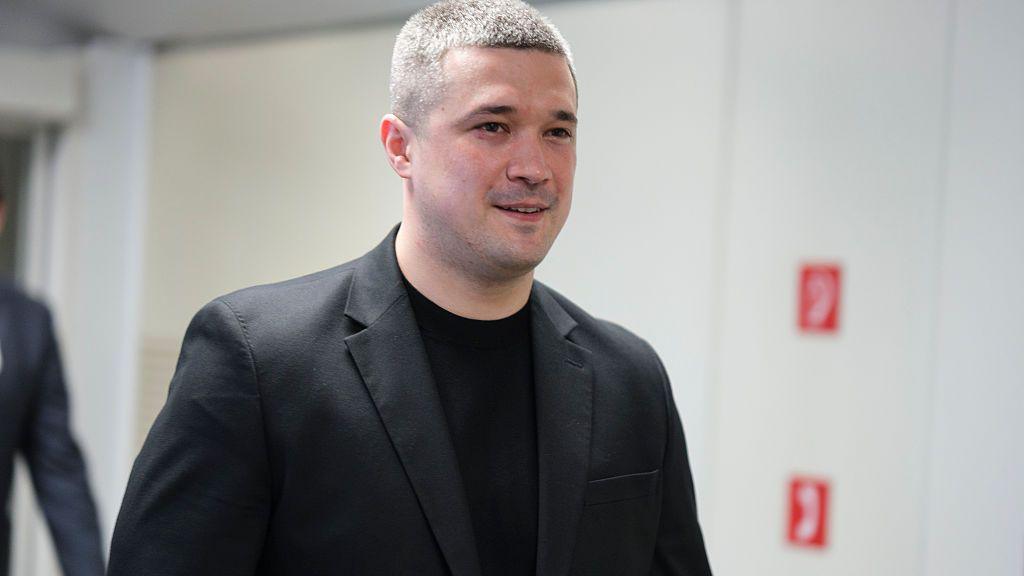 Image source, Getty Images
Before joining the government, Mykhailo Fedorov set up a volunteer "IT Army of Ukraine"
The president's record of sacking or sidelining effective or popular officials has led some to accuse him of increasingly dictatorial behaviour.
"He can't stand the people who don't admire him," Stupak said.
The irony, Stupak said, is that Zelensky is starting to behave like the sort of politicians he used to lampoon when he was still a comedian.
"He's collected all the factors which were the subject for his jokes. Maybe it's because he's been in his position for seven years."
To activists like Kaleniuk, the sight of thousands of young people out on the street also brings on a strong sense of deja vu.
It's been almost exactly a year since people gathered in huge numbers to demand that Zelensky veto a bill stripping two of Ukraine's anti-corruption bodies of their powers.
The protests – the first anti-government demonstrations since Russia's full scale invasion - succeeded. Zelensky announced a new draft law restoring the independence of the two organisations.
Today's protesters are hoping for a similar result, even though the president has already appointed an interim minister, the current acting head of the Security Service of Ukraine, Yevhenii Khmara.
But while the current protests are so far smaller in scale, Kaleniuk said the stakes are much higher.
"These events are even more dangerous, because they directly impact our war effort," she said.
A number of the president's critics point to the fact that despite Fedorov's widely praised loyalty and success, Zelensky has seen fit to dispose of him.
"You can become a key architect of the strategy of technological victory over the enemy," Maria Berlinska, founder of an NGO which trains volunteers in aerial reconnaissance, wrote in a post on Facebook, "No matter how cool you are, it will not help you. At some point, you will simply be removed from the field."