 3 months ago
99
3 months ago
99

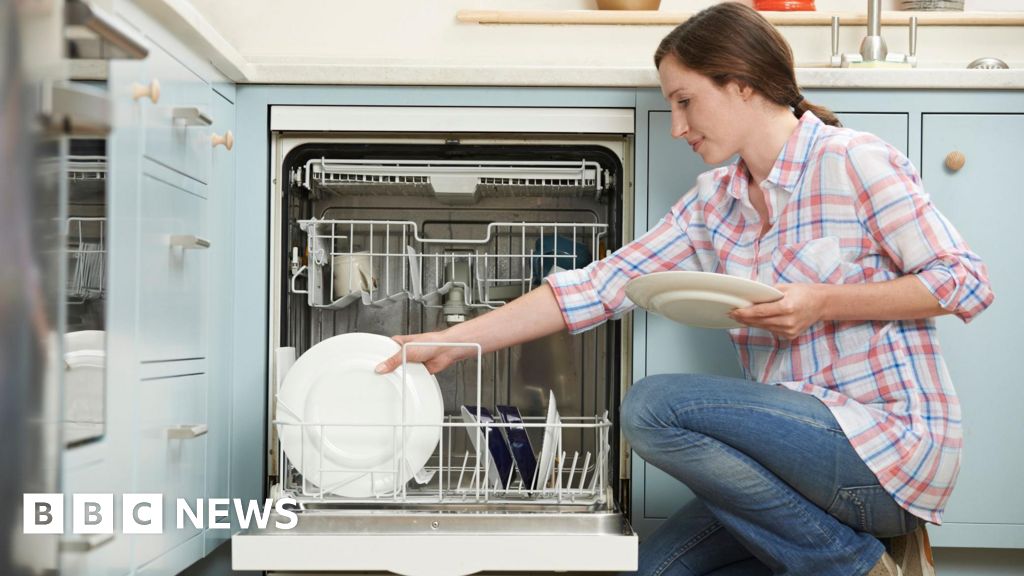
 Getty Images
Carmen loves her 10 year-old son, but if she could turn back the clock she says she would never have become a mum.
"Motherhood has taken my health, my time, my money, my strength, and my body," she says. "The price is too high, and the cost is forever."
The teacher, in her 40s, is part of a hidden community of women who regret becoming mothers.
This regret is rarely voiced out loud. The women who contacted me would only talk about how they feel on the condition of anonymity, for fear of harsh judgement and because their families don't know.
Carmen tentatively put her regret into words on a general parenting forum a few years ago and says while some people were empathetic, others reacted as if she was "a monster".
The extreme-pressure and sacrifice that motherhood can involve is put under the spotlight in the film If I Had Legs I'd Kick You, which is up for an Oscar tomorrow night.
Actress Rose Byrne gives a visceral portrayal of a burnt out mother who feels alone in her struggle to meet the needs of her daughter and hold up the scaffolding of family life.
 Logan White/A24
Rose Byrne plays Linda, a mum unravelling under stress while trying to care for her chronically ill daughter
Carmen can identify with the themes of the film. "Motherhood is an endless job that you do even when you don't want to, because a little person depends on you," she says. "It feels like a trap you can't escape."
She is unflinchingly frank about how "devastating" she finds being a mother. But there is a palpable brightness in her voice when I ask about her son, Teo, whose name we have changed.
"Teo has nothing to do with my regret, he's a fantastic, adorable boy and I love him fiercely," Carmen says. "I'd give my life for him without a doubt. He's kind, easy-going, and a brilliant student."
Psychotherapist Anna Mathur says "often when women feel safe enough to talk about maternal regret what comes up isn't a lack of love, but a sense of isolation, exhaustion, or lost identity."
For Carmen, a self-described perfectionist, it's the responsibility to raise "a good citizen, a good and happy person" she finds heavy to shoulder.
Carmen promised herself Teo would never feel like she did growing-up. She comes from a poor and dysfunctional background, "where violence was the primary language" and she never felt loved.
At first, being a mother was "a joy", she says. Teo was a good sleeper and she enjoyed the days spent caring for her baby son while on maternity leave.
But things changed when her son began to display serious developmental delays and "every simple moment turned into observation and concern," says Carmen.
"I felt so guilty," she says, "and I worried that his life would become a fight."
Ultimately Teo was not diagnosed with the conditions Carmen feared and is now doing well, but she says the stress and constant worry caused her to develop an autoimmune disease.
 Getty Images
To connect maternal regret with unloving and neglectful parenting is a careless assumption, according to Israeli sociologist Orna Donath, author of Regretting Motherhood: A Study.
Donath interviewed 23 mothers, each of whom emphasised the difference between their feelings of regretting motherhood and how they felt towards their children. Several felt cheated by motherhood because the reality did not live up to the idealised version society had sold them.
"I regret having had children and becoming a mother, but I love the children that I've got... I wouldn't want them not to be here, I just don't want to be a mother," says one participant in the study, a mother of two teenagers.
What little data there is suggests that's not an uncommon feeling. A 2023 study conducted in Poland estimated 5–14% of parents regret their decision to have children and would opt for childlessness if they had their time again.
Parents may not speak openly about regret, but they are finding community online.
Carmen realised she was not alone when she joined the Facebook group I Regret Having Children, which has 96,000 members from around the world.
"Motherhood is full of sweet moments, but they do not make up for the freedom I could have had instead," one mother on the group, living in Australia with a five-year old, told the BBC.
"I wear my mask around my daughter well," she says, "but by the time she is in bed and my husband and I have that short window of quality time together, my mask is off and I prefer to be alone."
Having a child means finances are tight, and all her goals and ambitions – travelling, setting up a business and building an investment portfolio - have been pushed aside.
"I have lost all motivation for anything," she says, "besides trying to raise a decent human being in this messed up world."
 Getty Images
Another, in the UK, says she finds it "belittling" when people assume an unhappy mum must be suffering from postnatal depression.
"People are more comfortable labelling it as that – my children are adults now and I still grieve the life I never got to have.
"I am now worrying about looking after future grandkids - the caregiving never ends."
The I Regret Having Children Facebook group was created in 2007 and its content comes directly from parents - largely women - who have privately messaged their stories, to then be posted anonymously.
The group's moderator, Gianina, 44, a laboratory scientist from the US says "the aim has never been to shame parents or promote a particular lifestyle".
"It's more about documenting a cultural phenomenon that doesn't often have space in mainstream conversations," she says. "The community is large and active because many people are quietly grappling with feelings they were told they weren't supposed to have."
Gianina was on the fence about having children and reading stories on the forum influenced her decision not to have them, she says.
Younger adults are approaching the question of having children very differently from older generations, according to Margaret O'Connor, a counsellor and psychotherapist from Ireland, who specialises in helping people decide whether to become parents.
"There is much more realisation that it's a choice," O'Connor says. "It's not an automatic thing you have to do.
"I have people coming to me in their 20s and 30s who know they want to have children, but are still kind of worried about the challenges, and would like some support to navigate it."
It is difficult to name the red flags which might signal a woman will regret her decision to pursue motherhood, caveats O'Connor, because everyone's experience is unique.
"You need to be as sure as you can be about this big decision and be doing it for your own reasons... rather than external pressure from your partner, or your parents," she says.
She also cautions against buying too readily into the "village" idea that everyone will pitch in.
"The message we get generally is, 'We'll all be here to mind the baby' - but people often aren't - it's your baby and you'll be responsible for them," she says.
O'Connor says it's completely normal for parents to experience regret, given how enormous and demanding the role is.
She suggests seeing a therapist to try to get to the root of that regret, and talk "in a safe space where you won't be judged".
Maternal regret isn't always reversible "in a neat or total sense," says Mathur.
"For some women, those feelings [of regret] soften or change significantly with support, rest, time, and a shift in circumstances."
"But for others, elements of that feeling may remain regardless, and it's important we allow space for that honesty without the shame."
 Getty Images
Orna Donath's study also finds that for some, regretting motherhood is a feeling that never goes away.
"All the women I talked to try to do their best alongside their regret," she says.
"A few years ago, I got a letter from a woman who regrets becoming a mother, and she wrote that what helps her is not having hope that it will someday disappear… she prefers to accept it rather than fight it and be crushed every time she understands that it's not going away."
In Carmen's case, she thinks the feeling is permanent, "because the sacrifice is forever".
But she has been seeing a therapist for a few years and says that has helped her accept herself and how she feels about motherhood.
"I no longer live feeling bitter," she says.
She now makes time to go to the gym and see friends and is trying to give herself permission not to strive for perfection.
"I'm finally able to say, 'No, sorry, I'm tired and I'm going to have an early night. Have whatever you want for supper; Daddy is here.'"
She has learned when she does this, the world doesn't implode.
"Teo sees that I'm a human being, that I'm not perfect, and he's okay with that."
I ask Carmen about the time spent with her son when she is happiest and she tells me that each night before Teo goes to sleep, they climb into the same bed and unpack the day together.
Teo wriggles down into the warmth of the duvet and snuggles into his mother.
"It's when I truly connect with Teo and see the person I love most in the world," she says.
"I don't feel like a monster anymore."
If you have been affected by any of the issues raised in this story, information and support can be found at the BBC's Action Line.