ESPN.com
Jan 24, 2026, 09:00 AM ET
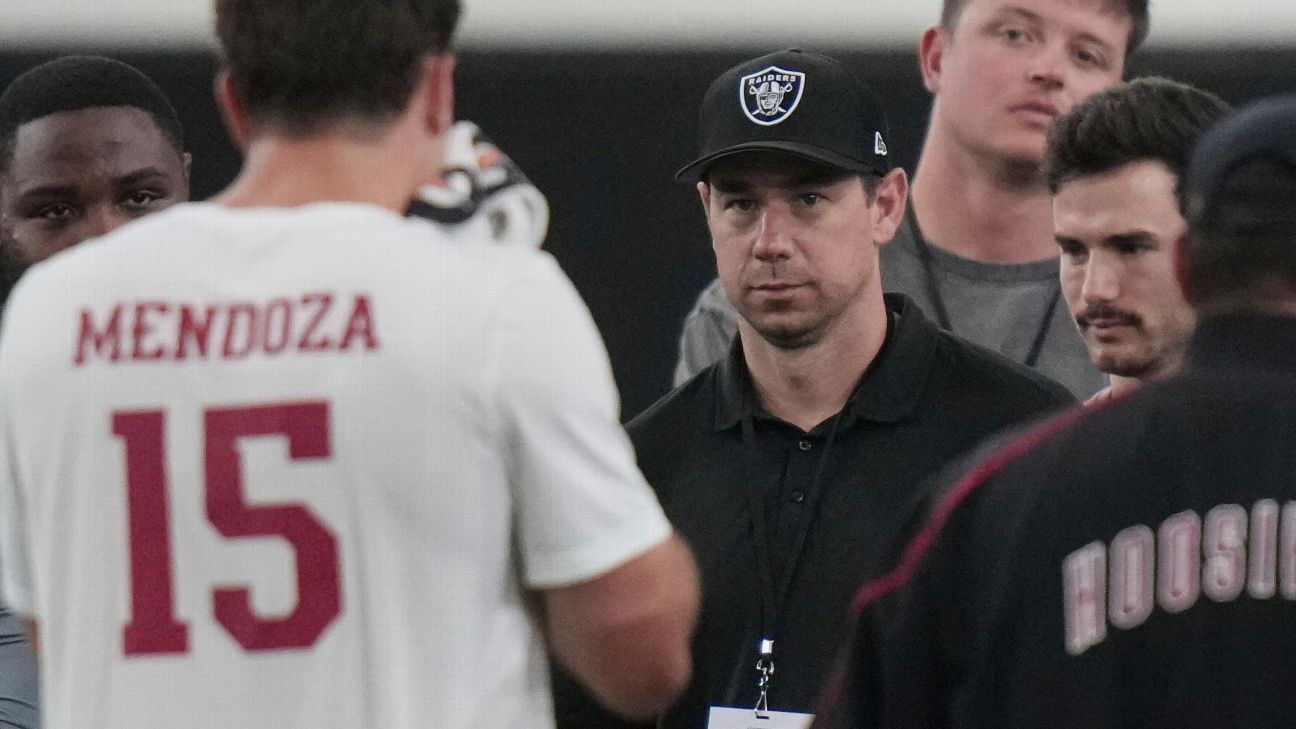
On Monday night, Indiana defeated Miami in the College Football Playoff National Championship game, completing one of the most remarkable turnarounds in sports history.
As recently as midway through this past autumn, the Hoosiers were still college football's all-time losingest program in Division I. They had never enjoyed a double-digit win season in program history, and had gotten close to the benchmark only about a half-dozen occasions. Indiana football was, by just about any measure, one of the least successful teams in the sport for most of its existence ... until Curt Cignetti arrived.
Hired at the conclusion of the 2023 season, it took Cignetti virtually no time to reshape the Hoosiers. Indiana raced to an 11-2 mark in the head coach's first campaign and then, in case there were doubts about that being a fluke, followed it up with an undefeated national championship run in Year 2 -- the first team to finish a season 16-0 since Yale in 1894.
The Hoosiers' triumph quickly inspired a lofty yet reasonable question: Was this the greatest story in sports history?
A definitive answer seems impossible. But we were intrigued about which other squads compare alongside 2025 Indiana in the pantheon of unlikely champions.
So, we asked our experts to offer the most Hoosier-like title team in other major team sports -- with answers ranging from groups that overcame unfathomable preseason odds, to those that ended century-long droughts and more.
Here are some of our experts' picks for Indiana's company in the all-time sports championship story Hall of Fame (with the caveat that some sports don't have a clear argument for a comparable run):

The case for: 2016 Leicester City
How improbable was Leicester City's run to the Premier League title 10 years ago? Well, one English bookmaker had Leicester at 5000-1 odds to win it -- the same odds it gave Elvis Presley being found alive and Barack Obama playing cricket for England.
College football fans will be familiar with the "haves vs. have-nots" dynamic of soccer, where parity is a four-letter word. It's fair to say that few Premier League teams had less talent than Leicester in 2015-16, two seasons removed from the second tier of English soccer and coming off a 14th-place finish. As former Leicester left back Christian Fuchs told ESPN: "Why should freaking Leicester win the Premier League? It doesn't make sense."
It helped having superstars hiding in plain sight: striker Jamie Vardy, future World Cup-winning French midfielder N'Golo Kanté and winger Riyad Mahrez. The players also stayed remarkably healthy. But perhaps most importantly, all of the Big Six clubs had down seasons. Everything had to go exactly right, and that's what made it improbable.
A team of castoffs-turned-stars that upended the status quo en route to a championship no one saw coming? There's nothing more Hoosier than that. -- Nicholas Som

The case for: the 2023 Vegas Golden Knights
Expansion teams aren't expected to succeed. At least, not right away. But the Vegas Golden Knights showed it can be done when they reached the Stanley Cup Final in 2018 in their first season. Some franchises have spent decades trying to reach a Cup Final, but an expansion team in a "nontraditional market" did it in its first season.
The difference between Indiana football and the Golden Knights in this instance is how long they've existed. Indiana, at times, was the No. 3 football program in its state, but it has enjoyed this two-year turnaround that has changed its outlook. The Golden Knights, who had been around only five years before winning a Stanley Cup in 2023, have maintained their win-at-all-costs mentality that has allowed them to be a perennial championship threat. -- Ryan S. Clark


The case for: 1966 Texas Western ... or 2021 Baylor
Two examples stand out in men's college basketball, one on a shorter timeline and one from a long-term perspective.
Before Don Haskins took over at UTEP -- then called Texas Western -- in 1961, the men's basketball program had never been to an NCAA tournament. It had never even won more than 15 games in a season. The Miners went 18-6 in Haskins' first season, then reached the NCAA tournament for the first time in his second (1962-63) and again in his third (1963-64). Then, in his fifth season (1965-66), Texas Western won the national championship, upsetting No. 1-ranked Kentucky in the title game.
As the first team to win the national title with five Black players in the starting lineup, the 1966 Texas Western team inspired the book and Disney movie, "Glory Road."
In a longer turnaround, Scott Drew led arguably the most challenging rebuilding effort in recent college sports history at Baylor. Before Drew took the helm in 2003, Baylor had been the third-losingest power conference program over the previous 53 years, making just one NCAA tournament over that span.
The program was also mired in a massive scandal. After Patrick Dennehy was murdered by teammate Carlton Dotson during an argument in June 2003, then-head coach Dave Bliss tried to frame Dennehy amid an NCAA investigation into payments to players, claiming Dennehy was dealing drugs to pay for his tuition. It was later revealed that major violations were committed by Bliss, who received a 10-year show-cause penalty, and the program was hit with significant sanctions.
After being banned from playing nonconference games in 2005-06, Drew had Baylor in the NCAA tournament just two seasons later. It was the school's first appearance in 20 years -- the Bears have been to 12 of 16 tournaments since -- capping the remarkable turnaround with a national championship in 2021. -- Jeff Borzello

The case for: the 2016 Chicago Cubs
At the time, it was considered the Holy Grail of professional sports: a Chicago Cubs World Series title. Decades had passed without a championship, while generations of Cubs fans had come and gone between titles. It resulted in a 108-year drought -- the time between the team's 1906 World Series title and its 2016 victory, the longest-running title drought in American professional sports history. Not unlike Indiana football's timeline, the Cubs were a last-place team just two seasons before its championship. But by the beginning of 2016, the Cubs were one of the favorites to win the World Series.
Still, past Cubs teams had failed miserably under high expectations, and this title would not come easily. Down 3-1 in the series, the Cubs eventually pulled it out in seven games, but not before blowing a late lead in that final contest. A rain delay after nine innings added to the drama, which ended in the Cubs' favor one inning later. The most elusive championship in professional sports history became reality. -- Jesse Rogers


The case for: the 1999 St. Louis Rams ... or a New York Jets squad to be named later?
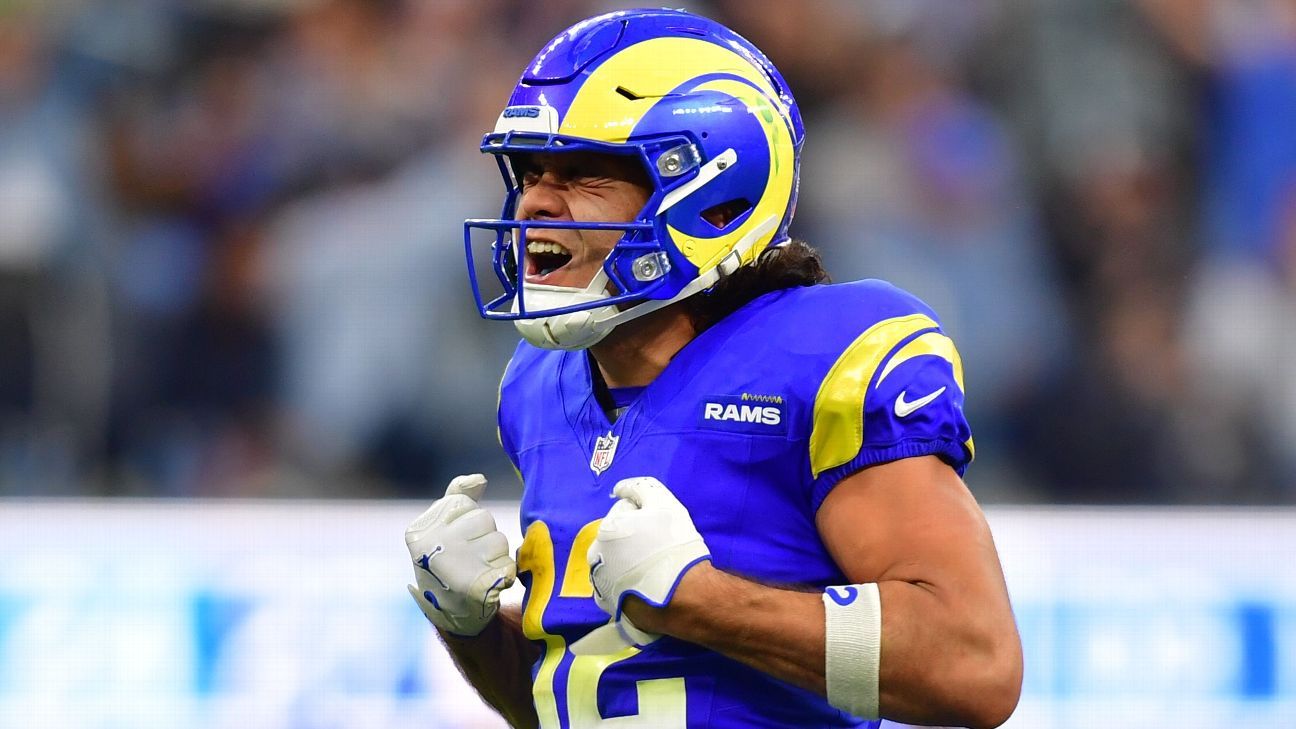
I don't think any NFL team could experience a turnaround like the Hoosiers because teams in the NFL haven't existed as long and with as much of a losing history as Indiana football had before 2024. One of the longest-tenured and least successful NFL teams was the Rams before 1999, and they're likely our best comparison. The Rams won titles in 1945 (as the Cleveland Rams) and in 1951 (in Los Angeles, against the Cleveland Browns) before the Super Bowl. But they never won a Super Bowl until '99, when Kurt Warner -- much like Curt Cignetti -- revolutionized the team and became a national figure. The Rams had posted a losing record in the nine seasons before Warner's Super Bowl run, for a collective record of 45-99 (.313). Even on the scale of bad football teams, that's pretty bad.
Oddly enough, I think the league might be in the midst of creating the most Indiana-esque turnaround in NFL history. The Jets are mired in a 15-year playoff drought with no signs of relief. If and when a coach (Aaron Glenn? Or someone else?) turns around the Jets in one fell swoop, there could be an argument that they're the Indiana of the NFL. That's conditional, of course, on that turnaround happening in one season. -- Ben Solak

The case for: the 2003 Detroit Shock
What do Indiana head football coach Curt Cignetti and former "Bad Boy" Detroit Pistons center Bill Laimbeer have in common? The answer lies in a 2003 WNBA team: the Detroit Shock. (And, no, Cignetti doesn't have a secret basketball coaching career.) But just like Cignetti and the Hoosiers, Laimbeer turned the Shock from a losing team to a championship franchise.
In 2002, the Shock started the season 0-10, which led to the firing of coach Greg Williams. Laimbeer took over, and the Shock finished the season 9-23. Before his second year at the helm, Laimbeer proudly predicted in the offseason that his 2003 team would "win the championship next season." Turns out, he was right. The Shock finished the 2003 regular season with a league-best 25-9 record and then went 6-2 in the playoffs before taking down the Los Angeles Sparks for the title. Dare we say, Laimbeer shocked the basketball world as a head coach? -- Charlotte Gibson