 2 months ago
123
2 months ago
123
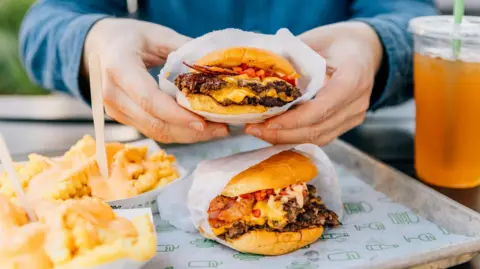
More than a quarter of young adults aged 16 to 29 in Wales eat a takeaway at least twice a week, according to a new study.
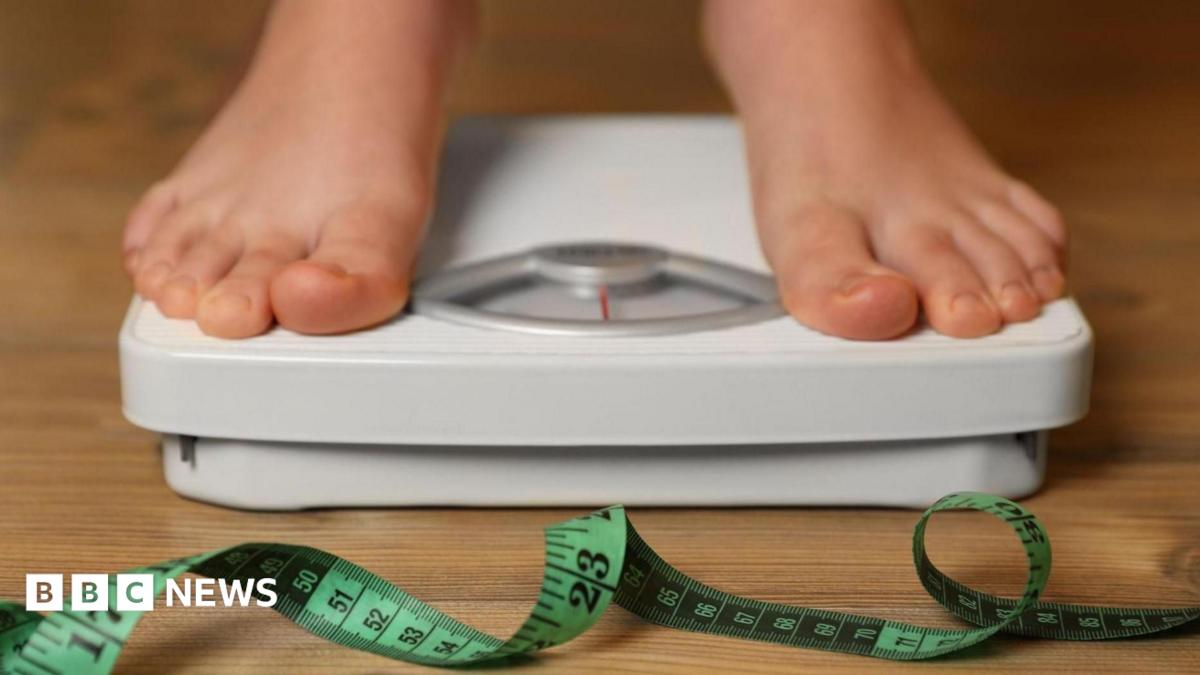
The Public Health Wales (PHW) findings revealed they were the unhealthiest age group during the research, with diets high in foods linked to an increased risk of being overweight or obese.
Dr Catherine Sharp, from PHW, said it must become easier for young people to make healthier choices, pointing out how "easy" and "convenient" it is to order food using a phone.
Young adults said there was often pressure from delivery companies who use deals and discounts to entice them, meanwhile a food historian has said our changing workplace culture had also had an impact.
The Time to Talk study took into account people buying takeaways and ready meals, as well as going on trips to cafés and restaurants.
PHW said it highlighted how unhealthy food environments may be driving people to a poorer diet and an increased risk of obesity.
A total of 18% of 30 to 49-year-olds said they had two or more takeaways a week, compared to 8% of 50 to 69-year-olds and 2% of those aged 70 years and over.

 Getty Images
A Public Health Wales survey revealed that 16 to 29-year-olds were the most unhealthy age group
Joe, from Northampton, said he ordered about "two or three" takeaways a week despite admitting it was "lazy but convenient".
"I don't think that amount is normal," he added, but thought it was "normal" for people about his age.
His partner Jess, from Southampton, said she usually followed suit when they ordered, but added it was "usually his idea".
She said the statistics were "quite bad" and "we need cooking classes".
She added that younger people were put under a lot of pressure from delivery companies.
"If you think about all the discount apps... they are making it cheaper and easier for you."
Carl, from Cardiff, eats two takeaways per week but agreed this was too many.
He said he would "probably" get more if he could afford it, as it was just "more convenient" than cooking.
"As I've got older, I should be cooking more for myself, but when you're working it's just easier to get a takeaway."
Nancy, from Bala, was shocked by the research, adding she could not understand how young people could afford that many as she only had takeaways once or twice a month.
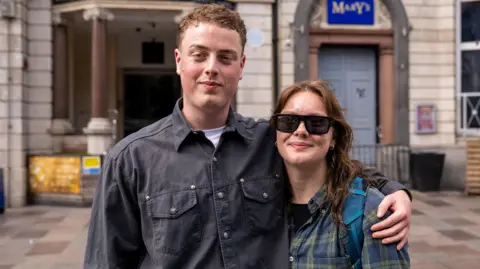
Joe and Jess say despite takeaways being expensive, it is too easy and convenient not to get one on some days
But Tom, from Cardiff, said he didn't have any takeaways and cooks for himself.
"Maybe once or twice a month. It's convenient, and I think people don't enjoy cooking so that's why.
"I like going to the gym and nutrition, so knowing what I put in my body is quite important to me."
Izzy and Ben from Cornwall felt that two or more a week were bad.
"For health reasons... high fat, high salt... it's not good for you," said Izzy.
But Ben said he wasn't surprised by it.
"I see having a takeaway as a nice treat, but always feel worse after."
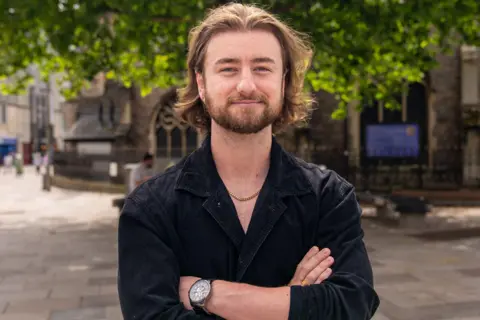
Tom says he tries to avoid takeaways as it impacts his exercise and nutrition
Sharp said the findings among young adults aged 16-29 were the most concerning as they had higher levels of takeaway use, tended to "buy lunch on the go" and served themselves larger portions.
"Foods that are prepared outside of the home are typically higher in calories, in sugar, salt and fat."
Sharp said the key to reducing these figures was to "understand what is driving those behaviours".
"It's access as well. It's so easy just to order on the phone. I wouldn't know where to start."
The researcher added that it was important to educate people in this age group about the impact of portion sizes.
"They're young and they won't know for years to come what the consequences of those choices might be.
"So it's helping people to understand what a healthy portion looks like as well."
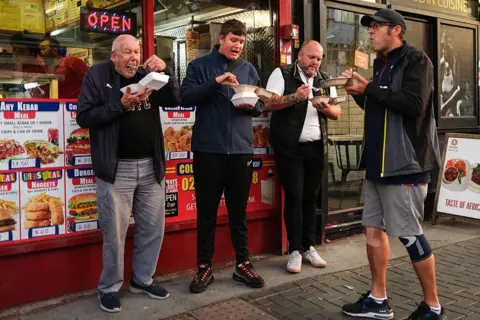 Getty Images
Food historian Dr Eleanor Barnett says takeaways have historically been a social event that brings young people together
Dr Eleanor Barnett, a food historian at Cardiff University, said the survey results were about "convenience" for people and that takeaways had historically been a "social way of eating".
"When fast food restaurants appeared in the UK, they were sites of youth socialisation.
"What's happening now is that we're ordering them on our own a lot more at home."
She said it was easy to order "whatever you want at whatever time", and that about 50% of orders were now placed by people ordering on their own.
She said the cost of living crisis was also having an impact, as concerns grow about the cost of everyday essentials such as milk, bread and eggs.
Barnett suggested people were seeing less difference in price between a takeaway and ingredients than they did before.
"It is more expensive, but people think that it's already costing me so much to buy the individual ingredients.
"Their attitude is it just doesn't matter anymore."
Additional reporting by Greg Davies and Amelia Shone-Adams