
Kevin PeltonFeb 11, 2026, 08:30 AM ET
- Co-author, Pro Basketball Prospectus series
- Formerly a consultant with the Indiana Pacers
- Developed WARP rating and SCHOENE system
VANCOUVER, B.C. -- When the NBA expanded to Canada, adding the Toronto Raptors and Vancouver Grizzlies for the 1995-96 season, basketball was an afterthought in a country obsessed with hockey.
Some three decades later, Canadian players are making their mark on the NBA and the international scene. Led by MVP Shai Gilgeous-Alexander, the Canada Basketball men's national team boasts a full roster of NBA players. And well after the Grizzlies moved to Memphis in 2001, the Raptors embraced the role of "Canada's team" leading up to their 2019 NBA championship.
Now, as they prepare for their inaugural WNBA season, the expansion Toronto Tempo are hoping to have a similar impact. Although a new collective bargaining agreement must first be reached, the Tempo want to represent all of Canada from the start, playing games across the country during the 2026 season. And that could supercharge the development of women's basketball in Canada.
"The impact that the Tempo is going to have on women's basketball is going to be exponential," Toronto team president Teresa Resch told ESPN. "I think you can look at what happened with the Raptors 30 years ago. The 'Vince Carter effect.' You hear those kids talk about -- they're not kids anymore, they're very talented young men playing basketball and representing our country really well on the international stage -- the representation is huge. The fact that you can see it, you can be it."
Embracing the role of 'Canada's team'
Tempo owner Larry Tanenbaum wasted little time sharing his vision for the WNBA's 14th franchise when the league announced expansion to Toronto 21 months ago. "This team is Canada's team," he declared at the May 2024 news conference.
Tanenbaum is the former longtime chairman of Maple Leaf Sports and Entertainment, which owns the Raptors. That shared tie between the Raptors and Tempo helped shape their vision to play the same role in unifying Canada behind a team based in Toronto.
Resch, who has been the team president for the Tempo, since their launch has the experience to back it up. She helped the Raptors expand their Canadian footprint through the "NBA Canada Series," which are preseason games held in different cities in Canada.
The Raptors first left Ontario for preseason in 2010, holding training camp in Vancouver ahead of a preseason clash against British Columbia native Steve Nash. They ramped up their efforts after Resch joined the front office in 2013, heading to B.C. for training camp every year from 2014 to 2018 while playing preseason games in each of the five largest Canadian provinces during that span.
That groundwork paid off when the Raptors broke through in 2019 after years of playoff heartbreak, winning the first Canadian championship in one of the big four American men's pro sports leagues since MLB's Toronto Blue Jays in 1993. (Toronto FC won MLS Cup in 2017.) Watch parties for the deciding Game 6 of the NBA Finals were held in more than 50 Canadian cities.
Having experienced that impact, Tanenbaum and Resch set out to do the same with the Tempo. This time, they have the benefit of being Canada's only WNBA team from the start.
"What's unique about us in this moment is when the Raptors launched, there was the Grizzlies," Resch said. "The [Montreal] Expos were a big part of Francophone Canadian [baseball] fandom for a long time. We're in such a unique position that from the very, very beginning we can be Canada's team."
Like the Raptors, the Tempo plan to play across the country. The difference is the Tempo will be playing a pair of regular-season games in both Vancouver and Montreal. Resch and GM Monica Wright Rogers announced that plan during a timeout at the first WNBA regular-season game in Canada, when the Atlanta Dream and Seattle Storm played at Vancouver's Rogers Arena last August.
"Playing meaningful games across the country is really important to the Tempo," Resch said. "The league understands it too. They're very supportive."
The support for that 2025 game reflected the excitement for women's basketball in Vancouver. Nearly 16,000 fans turned out, and Seattle guard Skylar Diggins described the crowd as "electric." For that night, Canadian fans treated the nearby Storm as the home team, but when the Tempo travel to Vancouver to host fellow 2026 expansion team the Portland Fire this August, they'll have a team of their own.
'The Carter effect'
The NBA's expansion to Canada coincided with the league's popularity booming as a whole, along with demographic changes that made the country more diverse through immigration. Yet there's a simple shorthand for the forces that made Canada a men's basketball powerhouse more than a century after Ontario native Dr. James Naismith invented the sport: "the Carter effect," which became the title of a documentary on the trend.
Vince Carter was an NBA Hall of Famer who electrified fans on both sides of the border as he developed into an All-Star and slam dunk champion after being drafted by the Raptors in 1998. A generation of Canadian players grew up watching Carter and hoping to follow in his footsteps.
Eight-year WNBA veteran Kia Nurse, the leader of the Canada women's national team, was one of them. Born in nearby Hamilton during the Raptors' inaugural season into an athletic family that has made its mark on football (her father Richard played in the Canadian CFL) and hockey (brother Darnell plays in the NHL, while cousin Sarah is part of the Canadian women's hockey team), Nurse followed her mother and older sister into basketball, starting to play at the time Carter's star reached its zenith.
"You think about all these kids and these young people that are in the NBA now, they're all Vince Carter kids," Nurse told ESPN. "I grew up in the Vince Carter era. He made basketball cool in Canada. To be able to see the impact that him and Steve Nash have had on our young players that are now playing great roles. You look at Shai Gilgeous-Alexander, right? The absolute top echelon in terms of the NBA. Those are all filtered from the Raptors and being able to see that in our hometown."
The numbers are staggering. When the NBA expanded to Toronto and Vancouver, there had been just 11 players in league history who had grown up primarily in Canada. (We'll use that definition throughout the piece so as to include players like Nash, who was born in South Africa before his family moved to Canada the following year. It does exclude a handful of Canadian-born players raised in the United States, most notably Hall of Famer Bob Houbregs.)
During the 2024 Olympics, the Canada men's roster featured 11 players with NBA experience, and plenty of NBA players failed to make that group or opted out. Some 23 Canadians appeared in NBA games during 2024-25, tying the record set two seasons earlier.
"Being able to field an entire Olympic team from [the NBA] on the men's side, thinking about that, it's just such a nod to what's happened in our country in terms of the excitement around basketball," said Nurse, who also serves as an NBA analyst for TSN Sports during the WNBA offseason.
The Tempo generation
Even after adjusting for the smaller player pool in the WNBA, Canadian women's talent hasn't kept pace with the men's boom. Nurse was one of four Canadians on rosters last season, representing 2.2% of all WNBA players as compared to 4.5% of NBA players from Canada in 2024-25.
That's already in the process of changing, and the Tempo's arrival could accelerate the women's basketball pipeline in Canada.
"Growing up, for me, there wasn't a ton of talk and conversation around women's basketball being a career path for a lot of women," Nurse said. "You didn't see it as much. It wasn't really on TV. We didn't have March Madness playing in the background, we didn't have the WNBA playing national televisionwise. I know I grew up watching the Raptors and my sister play, right?"
The success of the Raptors and Canada's men's players in the NBA, plus the women reaching the Olympics every cycle from 2012, has increased the profile for women's basketball among the next generation of players coming up now.
"There's a stat that for girls' participation in sports in Canada, basketball is number one," Resch said. "Soccer is number two, then volleyball is number three. Like, hockey's not even there. So the next generation, they're playing these sports and loving these sports. That's who we're talking to."
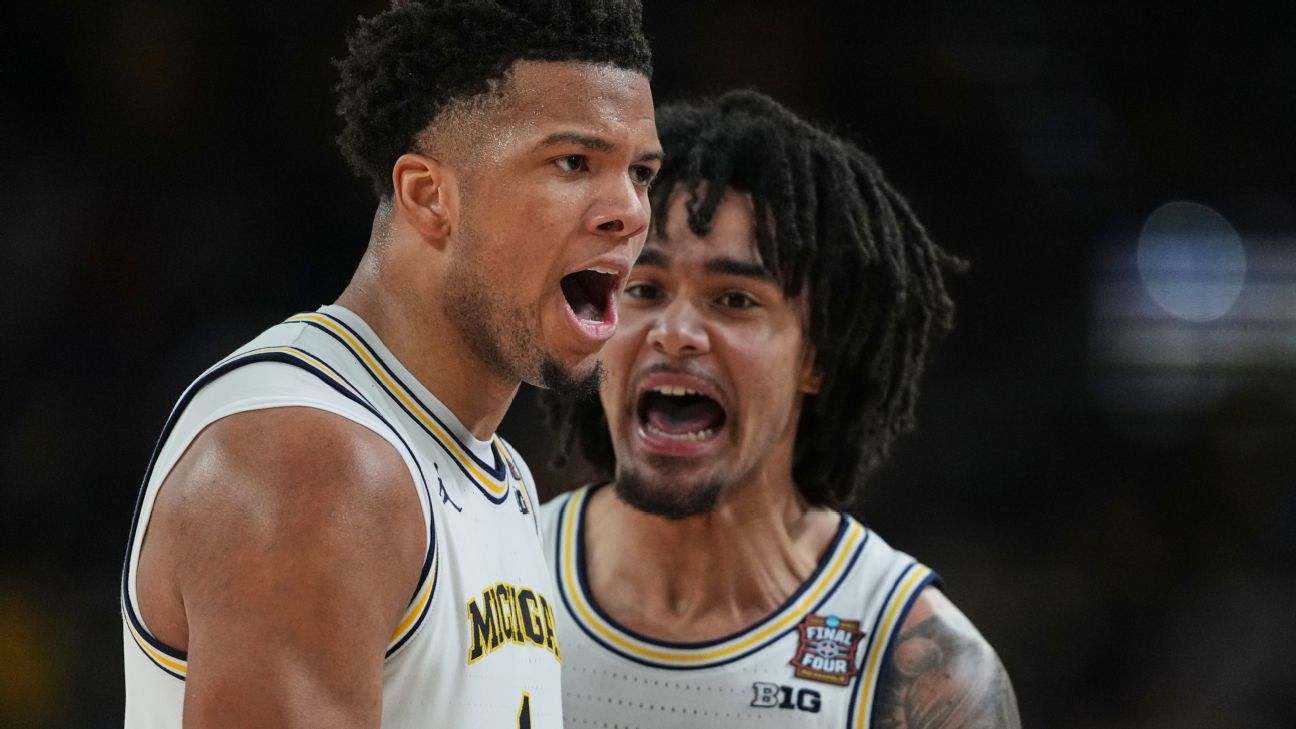
That's beginning to play out at the college level. Duke's Toby Fournier and Michigan's Syla Swords, both sophomores, have already made a key impact in the NCAA tournament and are seemingly on a WNBA path. Washington sophomore Avery Howell, who doesn't meet our definition (she was born and raised in Boise to a Canadian mother) but is a dual citizen, has done the same, teaming with Swords as Canada reached the semifinals of last summer's FIBA U19 World Cup.
"Now you're seeing these Canadian players come and they're not only being on these NCAA teams, but they're playing starring roles," said Nurse, who won a pair of NCAA titles at UConn. "They're getting opportunities to be big household names there. Our newest generation is really good and really fun to watch."
Fournier and Swords put themselves on the radar of NCAA coaches by playing for Nurse's AAU program, Kia Nurse Elite, which she founded in 2019 with her father to play in the premier Nike EYBL circuit. So too did Aaliyah Edwards of the Connecticut Sun, the most recent Canadian taken in the first round of the WNBA draft.
Some 13 Kia Nurse Elite alumni have signed to play Division I basketball in 2026-27, including Swords' younger sister Savvy (a four-star recruit headed to Kentucky), the largest class to date.
"The best part of my career has been being able to create the Kia Nurse Elite program, to do this mentoring, to play with these young ladies on the national team as well," Nurse said. "Just because there were so many people that came before me that were helpful with me and my journey and helping me get to this place that I think it's my job to continue to push that forward."
Nurse is optimistic that within the next decade, with continued expansion creating more roster spots, Canada can field a women's national team made up almost exclusively of WNBA players like we see now on the men's side. And she sees the Tempo playing a role in making that vision reality.
"Being able to have that from a WNBA perspective, you hope that 15, 20 years down the road that translates as well," Nurse said. "That there's all these players that watched the Tempo growing up that are now filtering into the WNBA and making a big impact."