ESPN
Dec 7, 2025, 03:37 PM ET
Who's ready for a rematch?!
The College Football Playoff selection committee's final top 25 of the season produced a 12-team bracket that includes two regular-season rematches in the first round: No. 9 Alabama at No. 8 Oklahoma and No. 11 Tulane at No. 6 Ole Miss. Oklahoma beat Alabama, 23-21, on Nov. 15, and Ole Miss cruised to a 45-10 win against Tulane on Sept. 20.
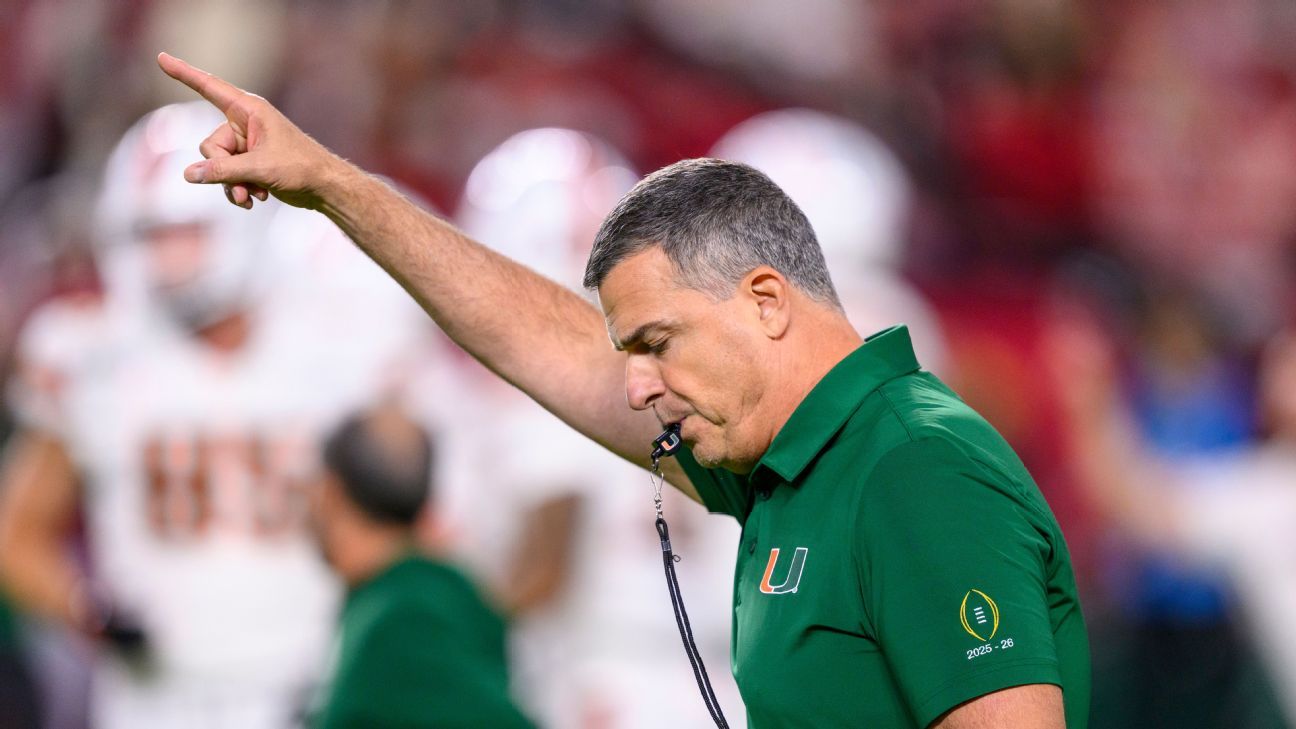
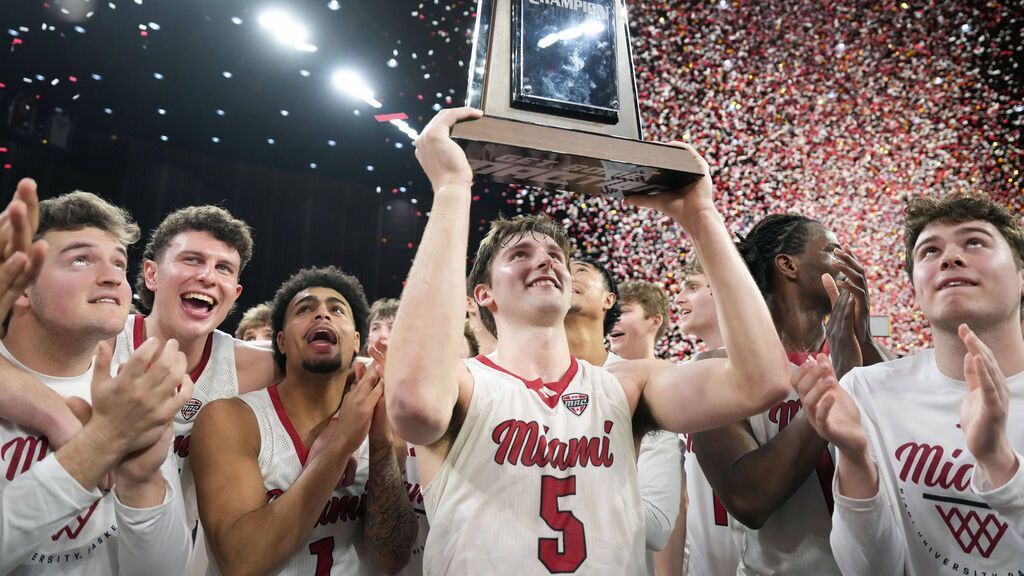
And while No. 12 seed James Madison edged out five-loss ACC champion Duke and will face No. 5 Oregon, the ACC's best team will still have a chance to compete for the national title when No. 10 Miami travels to No. 7 Texas A&M.
Here's a closer look at those first-round matchups. -- Heather Dinich
Jump to:
Alabama at Oklahoma
Miami at Texas A&M
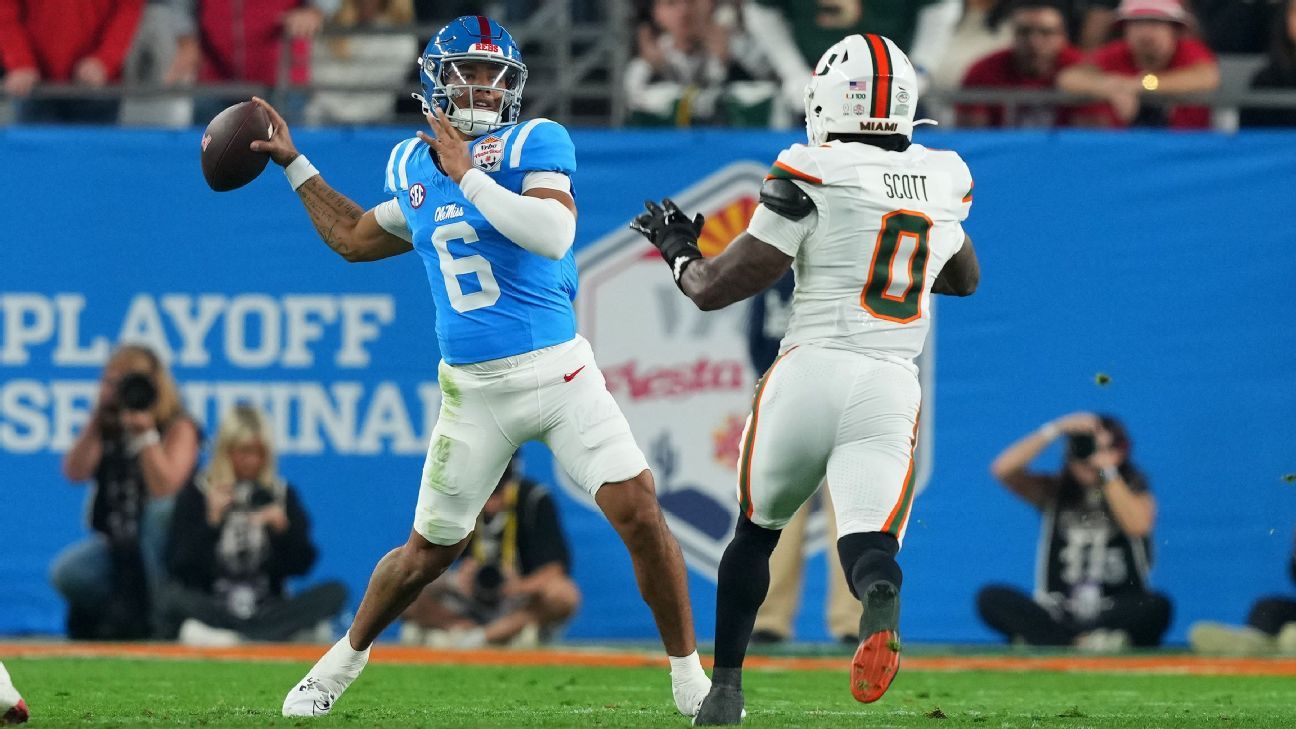
Tulane at Ole Miss
James Madison at Oregon

No. 9 Alabama at No. 8 Oklahoma
When: Dec. 19, 8 p.m. ET. TV: ABC/ESPN

Alabama Crimson Tide (10-3)
Road to the playoff: Despite losing 28-7 in the SEC championship game, Alabama got here based on the strength of its overall body of work -- in particular a four-game stretch from the end of September through mid-October in which the Tide reeled off four straight Top 25 wins, starting with a victory at Georgia (which remains its best win of the season). That turnaround was somewhat unexpected considering the way Alabama opened the year, with a 31-17 loss to Florida State. Nothing about that performance indicated the Crimson Tide had the makings of being one of the best teams in college football. But quarterback Ty Simpson rebounded to have a good season, and the Alabama defense found its way, particularly against the run. This team certainly has flaws and is not playing its best football. But it also has the talent and ability to play with anyone.
Player to watch: Running back Jam Miller. The easy answer here is Simpson, who has been the steadying force for the Alabama offense all year. But the reason Simpson has been the steadying force is because Alabama has one of the worst rushing offenses in the country, exposed even further with Miller banged up. Miller missed the SEC championship game after getting hurt in the regular-season finale against Auburn and was sorely missed as Alabama had minus-3 yards rushing. Miller also missed the season opener against Florida State, another poor performance for Alabama on the ground. Coincidence? A healthy Miller could be the key to a deep playoff run for the Crimson Tide.
Biggest question: The Alabama offense is not playing in rhythm or in sync in its last three Power 4 games. Two of them are losses. In addition to lacking a consistent ground game, Alabama has not played well on third down, an area where it has ranked among the top third in the country this season. In its last three Power 4 games, Alabama is just 12-of-44 on third-down opportunities, including 3-of-14 in the SEC championship game. Compare that to their first meeting this season -- an Alabama victory -- when the Tide went 13-of-19 on third down. Simpson maintained after the loss to Georgia that "we know we're the best offense in the country," but the Tide are surely not playing like it.
They can win if...: As noted above, Alabama can win if it figures out how to get its offense back on track. Some of that may start with getting healthier. In addition to Miller missing the SEC title game, Alabama played without backup running back Kevin Riley, plus tight end Josh Cuevas. Ryan Williams has disappeared the final month of the season, a troublesome trend considering this has not been a year that was great for him to begin with, starting in that opener against the Seminoles. Simpson has shown the ability to take command of games and the ability to make clutch throws in pressure-filled situations. He often has had to put this team on his back. But he can't do it alone. -- Andrea Adelson

Oklahoma Sooners (10-2)
Road to the playoff: The two most significant moves Oklahoma made after its 6-7 finish in 2024: Brent Venables assumed full control of the Sooners' defense and quarterback John Mateer transferred in from Washington State.
With the fourth-year head coach calling plays, Oklahoma closed the regular season in the top 10 nationally in points per game (13.9), yards per game (273.6) and run defense (81.4 YPG), looking every suffocating bit of a vintage Venables defense. And while Mateer and offensive coordinator Ben Arbuckle haven't quite lit the world on fire this fall -- the Sooners rank 91st in total offense nationally -- they've provided Oklahoma with timely playmaking to support the defense.
That combination has powered all of the program's most important wins this fall, none bigger than the back-to-back ranked SEC road wins at Tennessee and Alabama that effectively punched the Sooners' first trip to the CFP since 2019.
Player to watch: Defensive lineman R Mason Thomas, one of the few bonafide stars on one of the nation's deepest defenses, missed each of Oklahoma's final three games of the regular season after suffering a quad injury on a 71-yard fumble return touchdown at Tennessee on Nov. 1.
When Thomas is healthy, few edge rushers across the country are more explosive than the 6-foot-2, 249-pound senior from Fort Lauderdale, Florida. The Sooners managed without their sack leader of the past two seasons for most of November, even toppling Alabama on the road Nov. 15. But Thomas' health and availability later this month remains one of the biggest questions hanging over Oklahoma and the Sooners' ultimate postseason ceiling.
Biggest question: Easy: the consistency of the Sooners' offense, or a lack thereof.
An Oklahoma offense that ranks 104th in first downs, 107th in rushing and relies heavily on the playmaking of leading receiver Isaiah Sategna is prone to long spells of drought. In their past six games, the Sooners have punted as many times -- 38 -- as they did across the program's entire 14-game schedule in 2019, the last time the program reached the CFP. When Oklahoma's defense isn't setting the table with turnovers, its offense tends to struggle. That didn't cost Oklahoma in narrow late-season wins over Missouri and LSU, but it will certainly make life difficult on the Sooners against any of the high-level opponents they'll face in the 12-team field.
They can win if...: Oklahoma's 23-21 win at Alabama last month marked easily the biggest win of the Venables era in Norman. It also provided the Sooners' ideal blueprint to winning games in 2025.
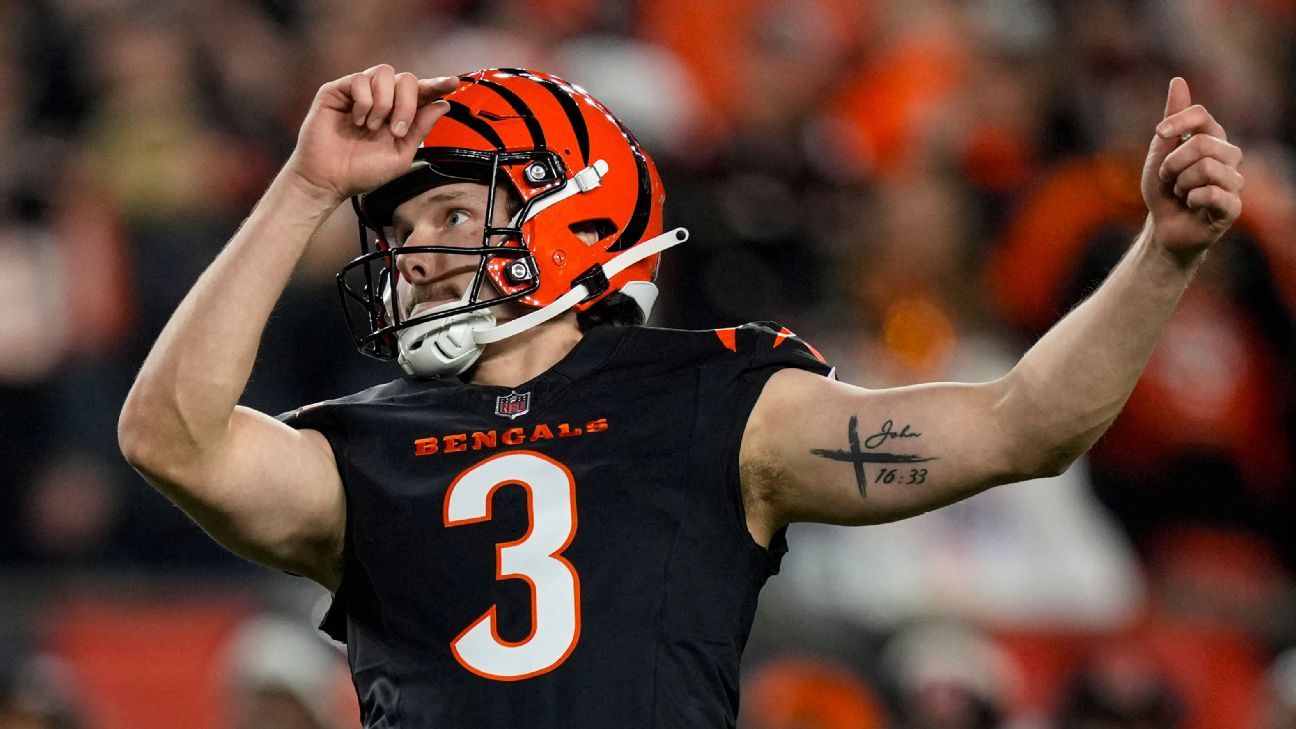
Relying on Mateer's playmaking, three defensive turnovers and the leg of potential All-America kicker Tate Sandell, Oklahoma snapped Crimson Tide's 17-game home winning streak despite getting outgained 406-212. An ugly M.O.? Yes. A winning formula? Also yes. "Who's it not pretty for? What does that mean?" Venables said afterward. "I happen to like it."
Smothering defense plus elite special teams with a dash of big play ability from Mateer and the offense; it's a simple and smothering blueprint. If the Sooners can execute to similar perfection later this month, they'll be as tough an out as anybody in the CFP field. -- Eli Lederman
No. 10 Miami at No. 7 Texas A&M
When: Dec. 20, noon ET. TV: ABC/ESPN

Miami Hurricanes (10-2)
Road to the playoff: After the first month of the season, Miami didn't just seem like a clear-cut playoff team but, arguably, the best team in the country. The Canes beat Notre Dame in Week 1, toppled Florida and a ranked USF, and thumped rival Florida State to open 5-0 with three wins over then-ranked teams. But, of course, perceptions are an evolving thing in college football, and so much of that early shine began to fade when Louisville jumped out to a 14-0 lead on Oct. 17 and closed out an upset win after Carson Beck tossed his fourth interception of the game in the final minute. Another loss to SMU followed two weeks later, while those seemingly impressive wins over USF, Florida and Florida State all lost their luster as those teams racked up losses.
The committee's first set of rankings also came just three days after Miami's 26-20 overtime loss to SMU, a game the Canes seemed to have well in hand until late in the fourth quarter. That set up an initial No. 18 spot in the committee's top 25, a full eight spots behind a Notre Dame team Miami beat head-to-head. At that point, the Canes seemed doomed, but a final stretch run of blowout victories has shifted perspective back in their favor -- even if the ACC's tie-breaker policy didn't exactly make a playoff run easy.
Player to watch: Miami's midseason woes largely centered around an offensive identity crisis. The ground game seemed out of whack, Beck's miscues mounted, injuries piled up and the receiving corps had just one real threat. That threat, however, is freshman receiver Malachi Toney, and he has blossomed into one of the country's most electric players. Toney racked up 84 receptions for 970 yards and a touchdown, carried 17 times for 89 yards and a score, and added two more passing touchdowns for good measure. Part of Miami's late-season offensive resurgence was a bevy of trick plays designed around Toney's skill set that seemed to be a direct message to the committee that things had changed for the Canes. The offense is healthier now, Mark Fletcher is back at tailback and several other receivers have taken a step forward -- albeit in smaller increments -- but Toney is the engine that makes it all go.
Biggest question: What version of Beck will we see in the postseason? At times, the Miami QB was sublime this year. His numbers in the Canes' 10 wins: 83.1 Total QBR, 76% completions, 23 TD passes and 4 interceptions. But, in each of Miami's losses, a Beck interception was the final dagger. In those two games, he threw just two TDs and six picks. The turnovers in key situations were Beck's biggest issue in 2024 at Georgia before an injury in the SEC championship game kept him out of the playoff. This year, he has a chance at redemption -- not just for a missed playoff chance a year ago but for the miscues that put Miami on the doorstep of missing out.
They can win if...: The offense has some balance. When the game has been on Beck's shoulders, he has been prone to mistakes -- both his own or the result of bad routes, dropped balls or missteps by his receivers. When the ground game has worked and Beck is able to be the director of a more finely tuned machine, Miami has been terrific. For much of the midseason struggles, the Miami offense often seemed like it was working against itself, with players even sounding frustrated with the game plan. In some ways, the No. 18 ranking in the committee's first poll was the spark Miami needed to take the next step, push the pedal to the floor, and see what this unit can do when every player is moving in the same direction. The past four games, the Canes are averaging 38 points per game, nearly 7 yards per play and scoring touchdowns on more than 40% of their drives. -- David Hale

Texas A&M Aggies (11-1)
Road to the playoff: The Aggies were picked eighth in the preseason SEC media poll, and their playoff hopes began in earnest Sept. 13 when Marcel Reed scrambled on fourth down to evade the Notre Dame pass rush, and threw an 11-yard touchdown pass to Nate Boerkircher with 13 seconds left to beat the Irish in South Bend, 41-40. They ran off 11 straight wins, the most since an A&M team since 1992, before a crushing 27-17 rivalry-game loss to No. 16 Texas in Austin to close out the regular season, with the Longhorns eliminating them from a spot in the SEC championship game for the second straight season.
Player to watch: Quarterback Marcel Reed has been a dynamic playmaker, throwing for 2,932 with 25 TDs and 10 INTs, while rushing for 466 more. He has 50 explosive plays of 20 yards or more -- 44 passing and six rushing -- and averages 8.0 yards per play, eighth best nationally. But Reed, steady as he's been all season, can also be boom-or-bust at times, yet he still has a short memory, as evidenced in the two halves of the South Carolina game (first half: 6-of-19, 2 INTs, lost fumble; second half: 16-of-20, 298 yards, 3 TDs). In their lone loss at Texas, Reed was 20-of-32 for 180 yards with two interceptions. He'll be eager to reset the slate.
Biggest question: The Aggies have bogged down in the red zone this season. They rank 44th in the FBS in TD percentage (65.5%) and 77th nationally in red zone scoring overall, managing points on 83.6% of trips. Their four turnovers inside the 20 tied for 115th in the nation. A&M's red zone defense is easily the nation's best, allowing conversions on just 22.3% of attempts, though it ranks 63rd in red zone efficiency on defense, allowing touchdowns on 59.4% of drives.
They can win if...: Mike Elko's pass defense is one of the best in the country, allowing 182.8 points per game, and the Aggies average a sack on 11.4% of opponents' pass attempts, best in the country. The Aggies averaged 199 yards per game rushing in SEC play, something that allows Reed to control the game with his feet and big-play strikes. Miami, however, averages just 2.9 yards a carry, 10th best nationally, and 86.8 yards per game, seventh best. If A&M can impose its will and control the line of scrimmage then get Miami into a disadvantage against the best third-down defense in the country, that's a recipe for success for A&M to slug away down the stretch, winning slow and steady. -- Dave Wilson
No. 11 Tulane at No. 6 Ole Miss
When: Dec. 20, 3:30 p.m. ET. TV: TNT/HBO Max

Tulane Green Wave (11-2)
Road to the playoff: Tulane entered the season positioned as well as almost anyone for a run at a playoff bid. The Green Wave had the schedule -- three power conference games (Northwestern, Duke, at Ole Miss) in nonconference play. They had the track record (32-10 from 2022-24). And despite quarterback Darian Mensah's departure for Duke, they had a proven quarterback in BYU transfer Jake Retzlaff. Sure enough, wins over Duke and Northwestern plumped up the résumé, and despite blowout losses to Ole Miss (for which they now get a revenge opportunity) and UTSA (a baffling and dreadful performance), their defense showed up down the stretch, and they both qualified for and won the American Championship to finish 11-2.
Player to watch: It all starts with quarterback Jake Retzlaff. The Green Wave's defense struggled at times to build traction, the run game ran hot and cold, and his go-to receiver changed a few different times -- four players lead the way with between 31 and 38 catches and between 322 and 598 yards. But Retzlaff was the anchor for a team that took a while to figure out its identity. He threw for at least 230 yards eight times and topped 330 yards in key wins over Memphis and East Carolina. Meanwhile, not including sacks he rushed for at least 50 yards seven times and topped 100 yards against both Northwestern and Duke. He did whatever the moment required, and now he gets a chance to redeem his worst performance of the season: He completed a dreadful 5 of 17 passes for 56 yards against Ole Miss.
Biggest question: Inconsistency plagued coach Jon Sumrall's team this season. He openly expressed his frustration with his team's maturity in October, and that was even before the no-show against UTSA. The Green Wave undoubtedly improved down the stretch -- otherwise they wouldn't be here -- but the defense still got hit for 907 combined yards against Memphis and FAU in November, and the offense turned the ball over three times and blew scoring chances in an uninspiring win over Charlotte two weeks ago. Their 34-21 win over North Texas in the American championship game was one of their most complete performances of the season, with the defense taking the fight to the Mean Green and forcing five turnovers while freshman Jamauri McClure topped 120 rushing yards for the second time in three weeks. But even then, Retzlaff struggled through the air.
They can win if...: Each unit clicks at the same time. From quarterback play to skill corps fireworks to quality line play and ball-hawking, Tulane has been good at just about everything at some point in 2025 and therefore boasts a level of promise and upside that few Group of 5 programs could hope to match. But it all has to finally come together if they are to pull an upset (or upsets). During their last trip to Oxford, we got a good look at the Green Wave's floor. Now we need a sustained look at their ceiling. -- Bill Connelly

Ole Miss Rebels (11-1)
Road to the playoff: The Ole Miss season started well enough, with wins over Georgia State and Kentucky. But what happened in Week 3 shifted the dynamic. Austin Simmons started the season at quarterback, but injured his ankle in the 30-23 win over Kentucky. Trinidad Chambliss got the start the following week against Arkansas and emerged as one of the top quarterbacks in the country after transferring from Division II Ferris State. The only blemish on the Rebels' playoff résumé was a 43-35 loss to Georgia in which the Rebels blew a nine-point halftime lead. Ole Miss won its final five games, including a 34-26 victory at Oklahoma -- its only win over a team currently ranked in the top 25.
Player to watch: Quarterback Trinidad Chambliss. He's been the player to watch over the course of the season, not only for the improbability of his rise, but the way he has played. Following his ascension to starter, Chambliss became the first SEC player with 300 passing yards and 50 rushing yards in three straight games over the past 30 years. Chambliss threw for a season-high 359 yards and four touchdowns in the regular-season finale against Mississippi State, and in 10 starts this season, he has thrown for more than 300 yards seven times. Chambliss currently ranks 10th on the Ole Miss single-season list in total offense (3,486) and 11th in passing yards (3,016). His ability as a dual-threat quarterback -- he has 470 yards rushing and six touchdowns -- has put the Rebels in this position.
Biggest question: Ole Miss has the biggest question mark among all the playoff teams: How does this team play without coach Lane Kiffin, who left for the LSU job last week? The CFP could have kept Ole Miss out of the playoff based on its protocols, which allows the selection committee to consider the loss of a coach or key player. But because the committee has not seen Ole Miss play without Kiffin, Ole Miss was considered and placed into the 12-team field based on its current body of work. Kiffin's exit was messy, and he took a number of staff members with him, including offensive coordinator Charlie Weis Jr. Though Ole Miss did not want Kiffin to coach the team after leaving for the Tigers, Weis will be with the Rebels through their playoff run. Will that be enough for Ole Miss to keep winning?
They can win if...: While a lot of the spotlight has been on Chambliss this season, the emergence of running back Kewan Lacy in the backfield has provided Ole Miss far more balance on offense this season. That balance is huge for Ole Miss in its question to make a playoff run. Lacy rushed for 1,279 yards and 20 touchdowns on the season. His worst game? Against Georgia, the only loss of the season. Beyond finding that balance on offense, the Ole Miss defense has its share of flaws this year, and needs to find a way to play more consistently. Ole Miss has not generated the same type of pass rush as it had last season, and its rush defense has been a weakness, too, allowing 150.5 yards per game, 4.3 yards per carry and 16 touchdowns on the season. -- Adelson
No. 12 James Madison at No. 5 Oregon
When: Dec. 20, 7:30 p.m. ET. TV: TNT/HBO Max

James Madison Dukes (12-1)
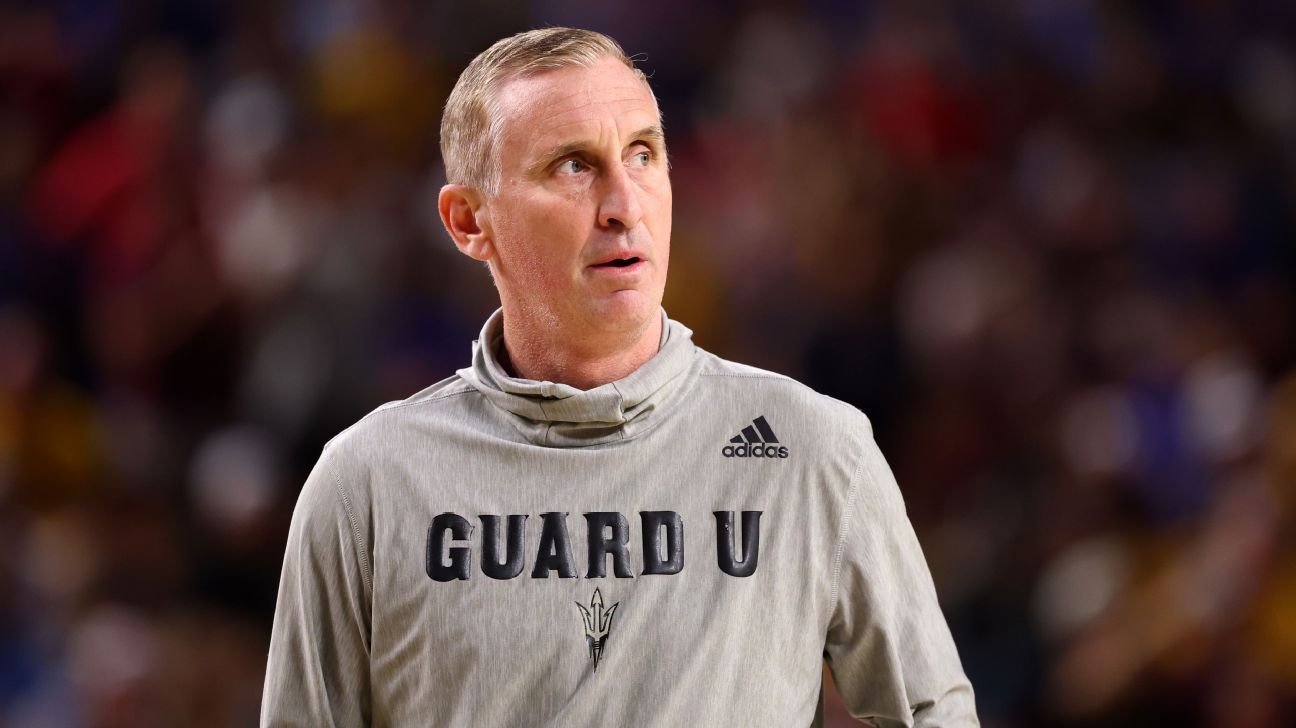
Road to the playoff: Four years ago, James Madison was losing to North Dakota State in its last ever FCS playoff game. Three years ago, the Dukes were going 8-3 (and briefly showing up in the AP poll) in a promising first FBS campaign. Two years ago, they were losing head coach Curt Cignetti to Indiana after an 11-win campaign. And somehow, the rise has continued in his absence. Coach Bob Chesney is 21-5 in two seasons in charge, and in 2025 he led the Dukes to their first Sun Belt title and, thanks in part to wacky ACC tiebreakers, a playoff bid. Their schedule didn't give them many opportunities to impress, but they lost only at Louisville in a nip-and-tuck game. (The yardage was almost exactly even, and the game was tied in the fourth quarter until a fumble flipped the result toward the Cardinals.) From that point forward, they won 11 straight games, seven by at least 17 points.
Player to watch: Defensive end Sahir West. The Dukes' defense might be as good as any Oregon has faced outside of Indiana's or Iowa's. They rank fourth nationally in yards allowed per play (4.1) -- 3.4 yards per carry, not including sacks (third) and 4.7 yards per dropback (sixth). They've also allowed only 1.6 offensive touchdowns per game (ninth). And while they racked up these numbers against some shaky opponents, they also held Louisville to 264 total yards (the Cardinals' second-lowest output of the season) and 5.0 yards per play (third-lowest). They generate tackles-for-loss from any number of directions, but West, a freshman defensive end, has emerged as a major star. He recorded 5.5 TFLs and three sacks in the Sun Belt championship game.
Biggest question: Is the offense consistent enough? At its best, JMU's offense is unstoppable. The Dukes scored 45 or more points five times and gained more than 510 yards four times. Alonza Barnett III has had some huge passing games (and is a major dual-threat), and Wayne Knight has rushed for 1,263 yards. But they've needed random big plays to bail them out at times. They beat Washington State 24-20 on the power of a 68-yard touchdown pass and a 58-yard Knight run, and they were stalled in snowy weather against Troy on Friday night before Knight ripped off a 73-yard touchdown run and set up another score with a 40-yard burst. You probably can't beat Oregon with random bursts; the Dukes will need to operate with consistency.
They can win if...: Defense leads the way. Indiana and Iowa both held Oregon under 21 points. If JMU can do something similar -- let's set the bar at, say, 24 points -- then the Dukes' offense might be able to generate enough to make things wild in the fourth quarter and, perhaps, win. For all of their offensive explosiveness, though, they probably can't keep up in a major track meet. Can West, cornerback Justin Eaglin and JMU's other defensive stars hold their own against Oregon's speedsters and prove themselves as a top-notch unit? -- Connelly

Oregon Ducks (11-1)
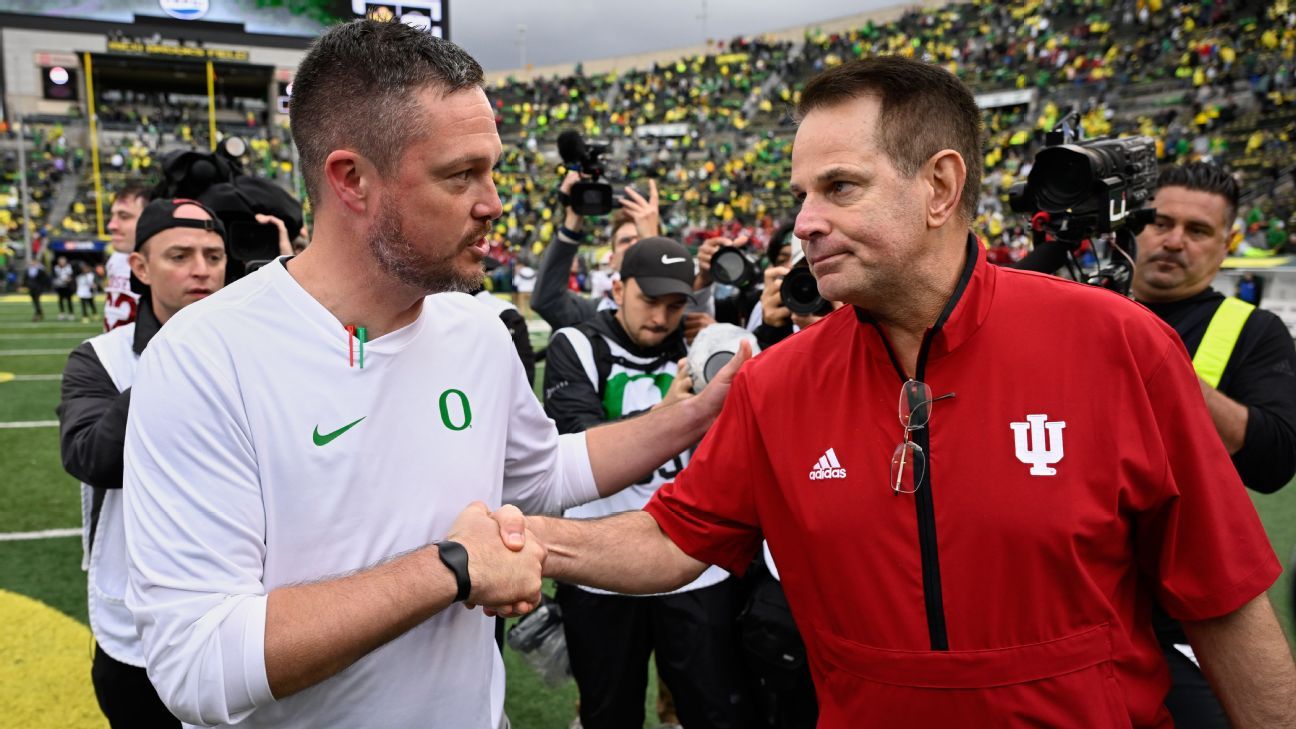
Road to the playoff: The Ducks could make the case that they have the best loss in college football -- if you're into that sort of thing. But what Dan Lanning and Co. would point to as a testament to their identity this season is not that home defeat at the hands of no. 1 Indiana nor their record (11-1) but rather the way in which they were able to get here. In short: by winning 11 games in myriad different ways.
Dominant blowouts? Check. Handling inferior teams in tough road environments? Check. Low-scoring defensive battles? Check. Oregon has been undoubtedly one of the five best teams in the sport this season; they bring with them a team that is very balanced - the 13th-best offense and fifth-best defense per SP+ - and has shown to be impressively deep as they have suffered various injuries to key players. Even though last season's undefeated run ended in blowout fashion at the hands of Ohio State, the fact that the Ducks have easily made it back into a field despite a younger and less experienced roster is indicative of what they have built. During a college football season that has appeared wide open, they have as good a chance as any team to win it all.
Player to watch: Quarterback Dante Moore is an obvious pick, as the Ducks' playoff fate likely rests in his hands, but on the defensive side of the ball, the player to watch is freshman defensive back Aaron Flowers. The true freshman from Texas has looked the part all season, flying around and wreaking havoc on opposing offenses by forcing two fumbles, breaking up passes and grabbing one interception as well as 53 tackles. Mainstays like linebacker Bryce Boettcher, Teitum Tuioti and Matayo Uiagalelei will be crucial to the Ducks' defensive efforts, but in terms of a potential gamebreaker and X factor, Flowers fits the bill.
Biggest question: What will their wide receiver room look like given recent injuries? Wide receiver is a position of strength for Oregon and has been in recent years. But after losing Evan Stewart before the season and now being without two of their top wideouts in Dakorien Moore and Gary Bryant Jr., Moore has had to look elsewhere for targets. Players like Malik Benson and Jeremiah McClellan have stepped up in recent weeks as well as tight end Kenyon Sadiq, who has been nearly unguardable and leads all pass catchers with eight touchdowns.
While there has been nothing concrete to suggest that the Ducks won't get Moore and Bryant Jr. back at some point during the playoffs, it will be up to the aforementioned group to continue to step up if Moore, Bryant Jr. and Stewart can't be available.
They can win if...: They rely on their running game. Yes, I know I just mentioned how important their wide receivers and tight ends are as well as the obvious being how Moore plays will determine their potential, but Oregon's foundation this season has been their running game. They average 5.8 yards per carry as a team (top-5 in the country) and the only game in which they didn't rush for at least 100 yards was the loss to Indiana.
Even though Noah Whittington leads the team with 774 rushing yards on a team-high 112 carries, it's been the freshman duo of Dierre Hill Jr. and Jordan Davidson who have changed the complexion of that unit -- so much so that highly-touted transfer Makhi Hughes is redshirting. Hill Jr. leads the team in yards per carry (8.2) while Davidson leads the team in touchdowns (13). All three of them bring something different to the run game and altogether give Oregon a real strength in the backfield that should serve them well against tougher opponents in the playoffs. -- Paolo Uggetti