 3 months ago
111
3 months ago
111
2 hours ago
Kevin PeacheyCost of living correspondent

 Getty Images
Online shoppers chasing a bargain are at risk of buying fakes, with disturbing cases including perfume contaminated with horse urine.
The illegal trade in counterfeits is funding organised crime. Meanwhile, some products have been endorsed by influencers to attract younger buyers.
Consumer groups say that, as well as fakes, some dangerous items – ranging from balloons to chargers – are being sold through online marketplaces or social media.
The government is planning new legislation aimed at ensuring online shops have the same responsibilities as High Street shops.
Major online platforms say they are "working hard to protect customers" by removing unsafe and counterfeit goods from sale.
Bills are rising and consumers are facing further cost-of-living pressures owing to the domino effect of the Iran war.
The financial squeeze is naturally leading people to search online for cheap deals. While genuine and safe bargains are available, experts have warned about counterfeits endangering children and the health of others.
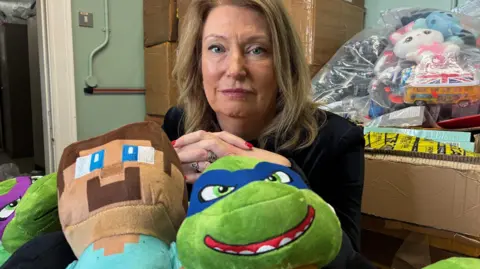
Helen Barnham says fake toys can have hidden dangers
Behind the locked doors of former holding cells in Swansea, the BBC was shown hauls of fake goods piled from floor to ceiling which have been seized by trading standards officers.
Fake Labubus have detachable eyes that could be a choking hazard; a Super Mario toy has dangerous chemicals in a suction cup designed to be licked and stuck to a window; and K-Pop Demon Hunters dolls are fake, faulty, and potentially unsafe.
Fake Crocs are stuffed into bags and counterfeit Pandora jewellery looks genuine until you open the box.
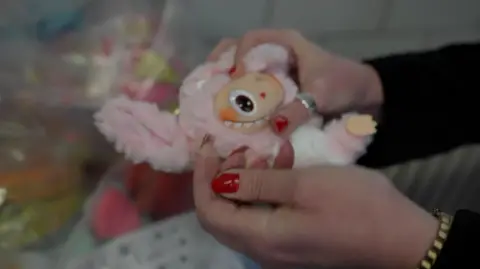
Counterfeit Labubus can be dangerous
"Cosmetics and perfume, when we had some tested, have had horse urine in them so you don't want to be putting that on your skin," said Helen Barnham, head of enforcement campaigns at the Intellectual Property Office (IPO).
Research by the IPO, which is responsible for overseeing intellectual property, such as trade marks and patents, suggested
- A quarter of shoppers have knowingly bought counterfeit goods
- Clothing, footwear, accessories and sports products are the most popular purchases
- Consumers aged 18 to 44 are most likely to buy counterfeits
The trade in counterfeits is illegal, and the IPO said the growth in online shopping had given criminals an easier sales route.
"Most of the public are quite attracted to them but particularly younger people because they are always looking for something that is low-cost," said Barnham.
"The availability of them through social media and online marketplaces makes it easier to find the products they are looking for."
In addition, for years, consumer groups have warned that poor quality, dangerous products are being sold through online marketplaces to consumers searching for a deal.
While not strictly fake copies of genuine products, the risks are similar. Some have not been subject to the same safety checks required of items sold in retail stores.
Testing by The Ladder Association found every extendable telescopic ladder it bought online failed safety checks.
"When they fail, they fail catastrophically. They basically snap," said Peter Bennett, the association's executive director.
Kerri Atherton, from the British Toy and Hobby Association, said she was concerned that substandard toys from overseas, which would fail strict UK toy safety regulations, were making their way into the UK market.
And numerous investigations by the consumer association Which? have found dangerous products listed on online marketplaces. They range from energy saving plugs that can cause a fire or electric shocks to baby sleeping bags that can be a suffocation risk.
Inga Becker-Hansen, product safety policy adviser at the British Retail Consortium, said: "Major online platforms are working hard to protect customers by removing unsafe and counterfeit goods from sale.
"However, the responsibility for consumer safety sits with the whole supply chain - from manufacturers and importers through to online marketplaces. We hope ongoing consultations on product safety will strengthen accountability for all parties, and help to ensure unsafe or fake goods do not reach UK consumers."
New laws to protect consumers
Last year, the Product Regulation and Metrology Act 2025 was passed, providing a framework for a crackdown on dangerous products being sold online and entering the UK.
"These reforms are about making our product safety system fit for the modern world – shutting loopholes, clamping down on unsafe sales and giving responsible businesses the certainty they need to grow," said consumer protection minister Kate Dearden.
The government said new rules would ensure that online marketplaces were held to the same standards for product safety as bricks-and-mortar retailers.
These marketplaces have been criticised for only taking down listings after problems are highlighted by the authorities, only for the same products to appear under different seller names.
The wide-ranging proposals say reactive action would be insufficient, and online marketplaces would need to "act with due care to prevent, identify and remove dangerous products being sold via their platforms".
But consumer groups want to ensure that it follows through with this promise and some are sceptical.
Electrical Safety First is a charity that has campaigned to raise awareness of the risks of substandard e-bike and e-scooter batteries.
"This is a once in a generation opportunity to tackle the multiple serious risks facing consumers when shopping online," said its chief executive, Lesley Rudd.
Sue Davies, head of consumer rights at Which?, said the new laws needed to be "sufficiently strong and binding to hold online marketplaces to account".
"Given the scale of the problem and the lives at risk, the government must get the details right and quickly proceed with implementation," she said.
How to shop safely on online marketplaces
When shopping via online marketplaces, the British Toy and Hobby Association suggests:
- Take care, and do not assume safety checks have been carried out
- Do your research into the seller, check reviews, and cross-reference branded products with the company's own website
- Check the marketing and product listing of the toy and see if the description, images, and warning labels are consistent
- Once you receive your toy, see if the packaging looks genuine, and check if it has a UK address and genuine safety marks (although they can be faked)
- When your child opens a toy, stay with them and check for faults, detachable small parts, access to stuffing, long cords, and loose or accessible batteries or magnets