 3 months ago
112
3 months ago
112
7 minutes ago
Emer MoreauBusiness reporter

 iStock/Getty Images
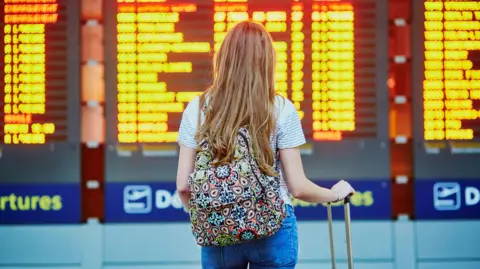
Airlines have cut 13,000 flights globally in May as jet fuel prices soar due to the conflict in the Middle East.
Airlines have removed nearly two million seats from flights over May, new data shows. The cuts come ahead of the UK half-term holidays at the end of the month.
Istanbul and Munich have seen the largest reduction in flights, according to figures from aviation analytics firm Cirium.
Airlines are usually reluctant to cancel flights as it can cost them valuable take-off and landing slots in airports, but under new contingency plans in the UK they would be shielded from this.
Jet fuel prices have more than doubled since the beginning of the war — one tonne was trading at $831 in late February, and by early April, it hit a high of $1,838.
Airlines have said they are not currently experiencing fuel supply problems, but experts have warned that disruption to deliveries because of the Iran war could bring shortages within weeks.
Many airlines have already pushed up ticket prices. Air France, KLM, Air Canada, Delta and SAS have already trimmed their summer schedules.
In mid-April, the head of the International Energy Agency (IEA), which advises 32 member governments on energy supply and security, warned that Europe had Europe would face jet fuel shortages by June unless more can be secured from elsewhere.
In the UK, the government is preparing a number of concessions. These include allowing airlines to cancel flights at busy airports like Heathrow well in advance, without the risk of losing valuable take-off and landing slots.
Alexander said there was currently no disruption to the supply of jet fuel, but "this clearly is an evolving situation".
The UK imports about 65% of the jet fuel it uses, a significant portion of which comes from the Middle East under normal circumstances.
But the closure of the Strait of Hormuz - a key route for oil and liquefied natural gas - means those supplies cannot get through.